What Defines Biophilic Style
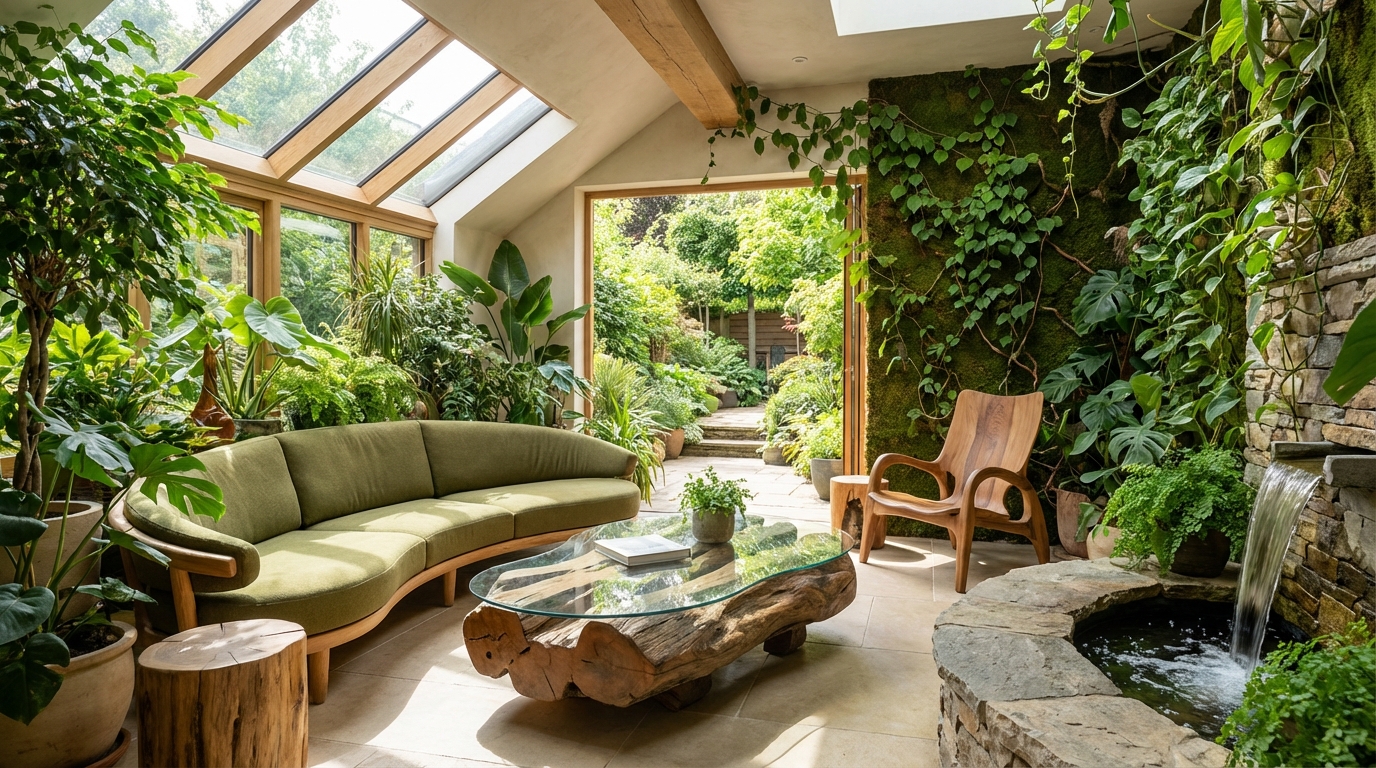
Biophilic design is far more than simply adding a few houseplants to your living room—it's a holistic approach to interior design rooted in our innate biological connection to nature. The term "biophilia," meaning "love of life," was popularized by biologist E.O. Wilson in 1984, though humans have intuitively understood this connection for millennia. Biophilic design translates this deep-seated human need for nature into built environments, creating spaces that actively support our physical and psychological well-being.
The philosophy emerged as a response to increasingly urbanized lifestyles and growing awareness of nature-deficit disorder in modern society. Research from the 1980s and 1990s demonstrated that exposure to natural elements—even indirect exposure through windows, images, or materials—measurably reduces stress hormones, lowers blood pressure, and improves cognitive function. These findings gave scientific credibility to what designers and architects had long suspected: spaces that incorporate natural elements simply make us feel better.
Today, biophilic design resonates powerfully with homeowners seeking refuge from screen-dominated, concrete-heavy modern life. The COVID-19 pandemic amplified this desire, as people spent unprecedented time in their homes and recognized the profound impact their immediate environment has on mental health. Biophilic living rooms offer a daily antidote to urban stress—a place where the boundary between indoors and outdoors becomes beautifully blurred.
What distinguishes biophilic design from similar nature-inspired styles like rustic or farmhouse is its evidence-based approach and emphasis on authentic connection rather than aesthetic mimicry. While rustic design might use reclaimed wood purely for visual charm, biophilic design incorporates natural materials specifically to trigger our evolutionary responses to nature. It's not about creating a literal forest in your living room, but rather strategically employing patterns, materials, light, and living elements that our brains recognize and respond to positively.
Key characteristics include abundant natural light, organic shapes and patterns, visible connections to outdoor spaces, natural materials in their authentic states, living plants as integral design elements, and sensory variability that mimics nature's complexity. The style embraces imperfection—the irregular grain of wood, the asymmetry of stone, the unpredictable growth of plants—because these variations are what our minds recognize as genuinely natural.
What Defines Biophilic Style
Essential Elements for Your Biophilic Living Room
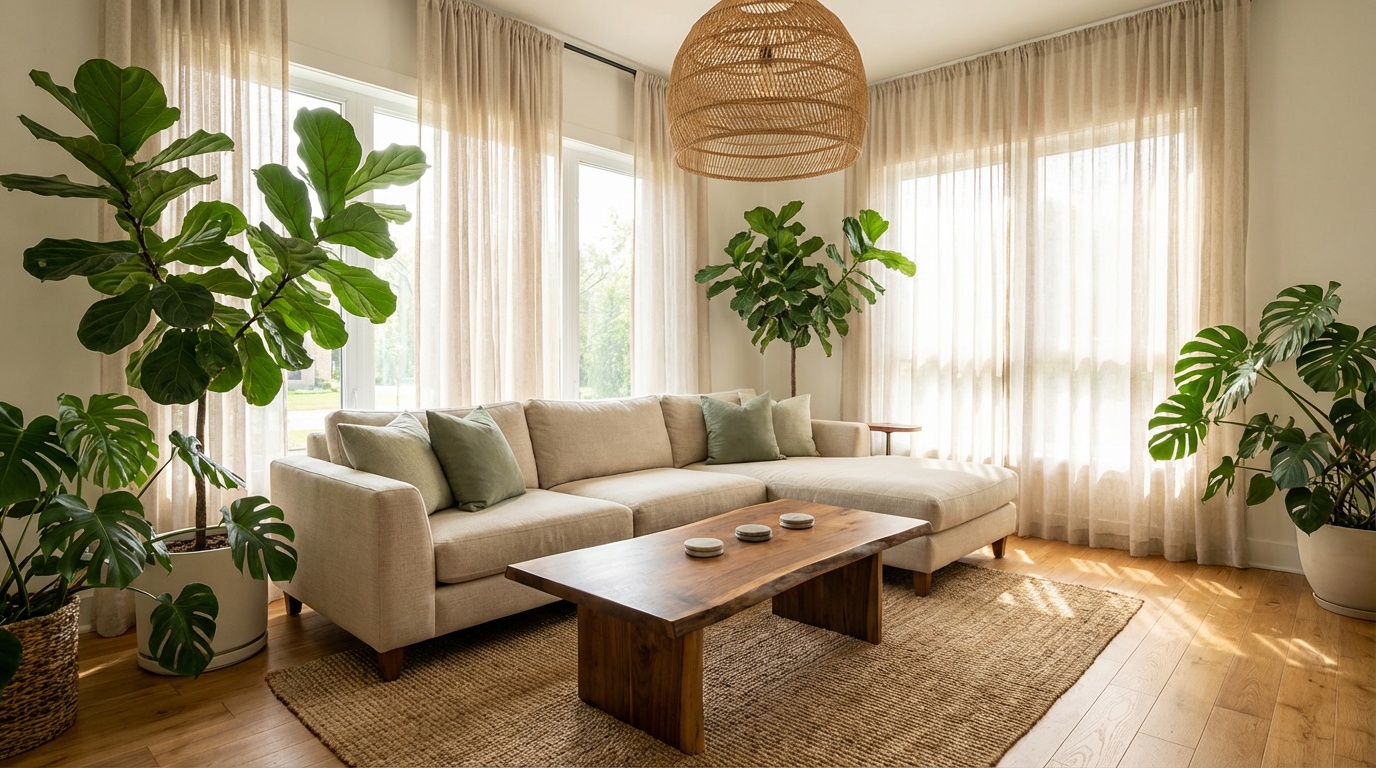
Creating an authentic biophilic living room begins with carefully selected furniture that honors natural forms and materials. Your sofa should feature organic, curved lines rather than sharp geometric angles—think rounded arms and flowing silhouettes that echo natural landforms. Look for pieces upholstered in natural fiber fabrics like linen, organic cotton, hemp, or wool in earthy tones. The frame matters too; solid wood construction in oak, walnut, or teak provides both durability and that crucial tactile connection to nature.
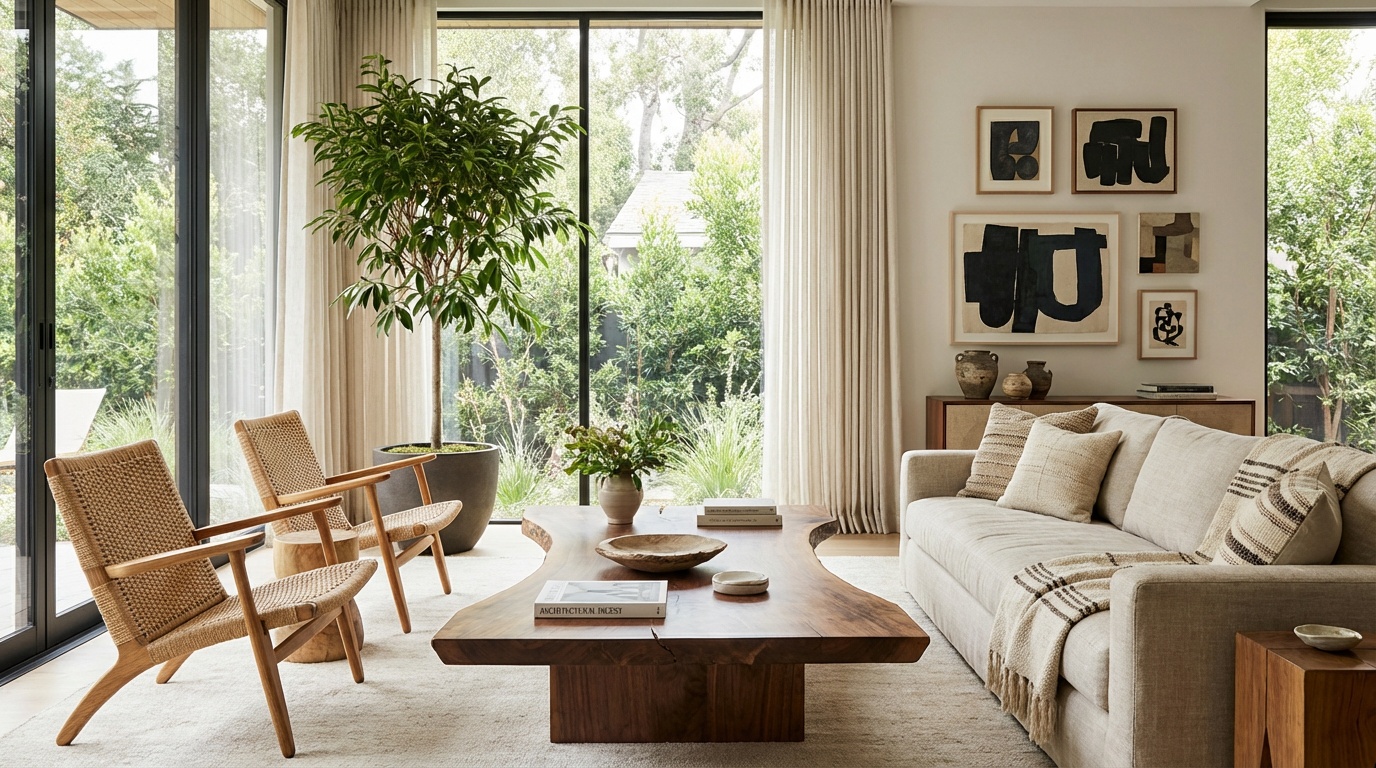
A coffee table crafted from natural materials becomes a focal point in biophilic design. Consider live-edge wood tables that preserve the tree's original contours, stone tables in marble or travertine, or woven rattan pieces. The key is selecting materials that show their origin story—visible wood grain, natural stone veining, or the intricate patterns of woven natural fibers. Glass tops can work when paired with natural bases, as they maintain visual lightness and allow plants beneath to receive light.
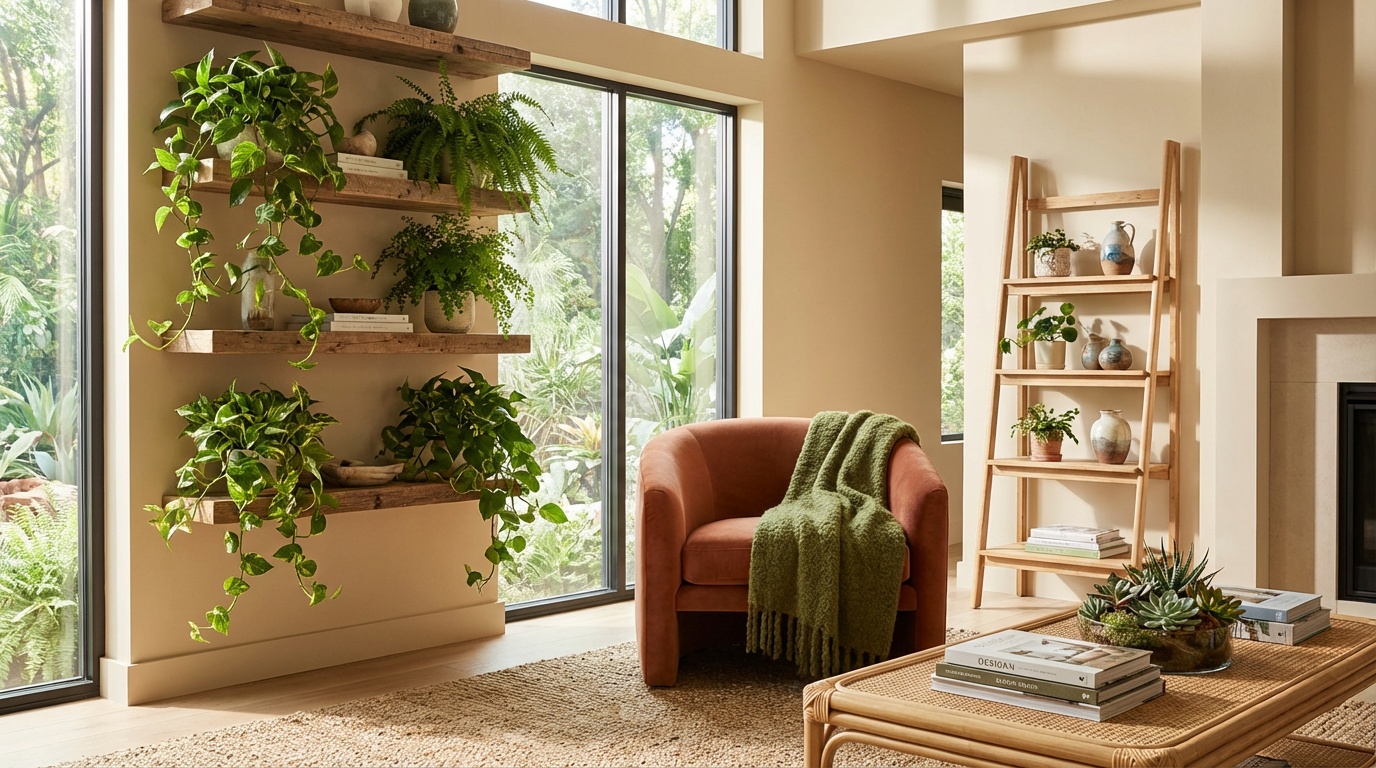
Seating variety enhances the biophilic experience. Include a rattan or wicker accent chair with organic curves, perhaps paired with natural linen cushions. A wooden rocking chair or a sculptural piece in bent wood adds movement and organic form. Poufs or floor cushions in jute, wool, or cork-based materials provide flexible seating while introducing varied textures that engage the senses.
Shelving and storage in biophilic living rooms should feel like natural extensions of the space rather than impositions upon it. Floating wooden shelves in varying lengths mimic the randomness of tree branches. Ladder-style shelving in bamboo or light wood maintains airiness while providing display space for plants and natural objects. Avoid heavy, closed cabinetry that blocks light and visual flow; instead, opt for open storage that allows the eye to move freely through the space.
Materials to prioritize include solid hardwoods (oak, walnut, maple, teak), natural stone (marble, slate, limestone, river rock), natural fibers (linen, cotton, wool, jute, sisal, hemp), rattan and bamboo, cork, leather (vegetable-tanned when possible), and ceramic and terracotta. Each material should be finished minimally to preserve its natural texture and appearance—think matte or satin finishes rather than high-gloss treatments that obscure the material's origin.
Essential Elements for Your Biophilic Living Room
Color Palettes & Combinations
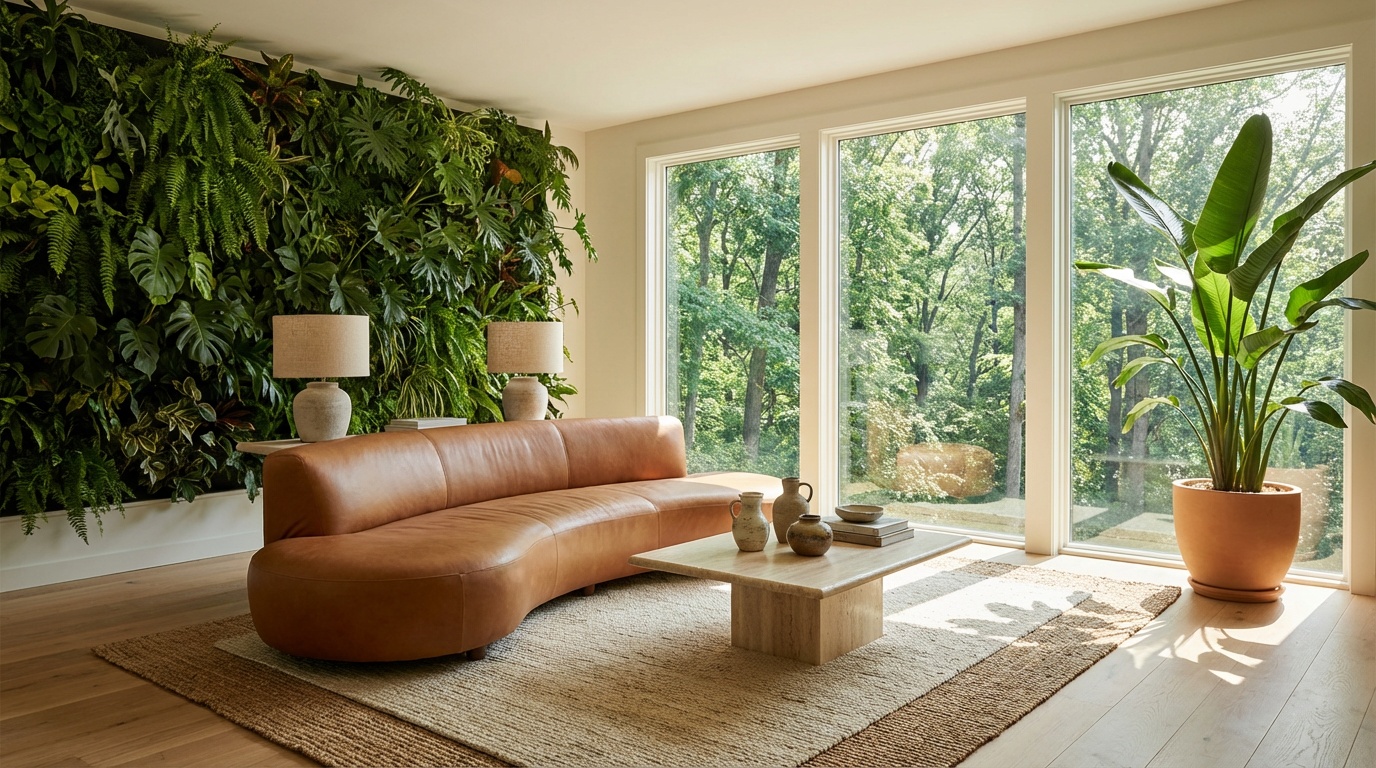
Biophilic color palettes draw directly from nature's most restorative environments, creating living rooms that feel grounded, serene, and alive. The foundation begins with earthy neutrals that anchor the space: warm honey oak, soft sandstone beige, warm gray river stone, and creamy ivory reminiscent of natural linen. These aren't the stark whites and cool grays of minimalism, but rather the warm, complex neutrals found in natural materials—colors that shift subtly in different lighting conditions just as nature does.
Primary accent colors should reflect the greens of living plants: deep forest green for grounding and drama, sage green for softness and tranquility, moss green for richness without overwhelming, and olive green for sophisticated earthiness. These greens work because they're literally the colors our eyes evolved to find most restful—our ancestors spent millennia in green environments, and our nervous systems still respond to these hues with measurable relaxation.
Secondary accent colors expand the palette while maintaining natural authenticity: terracotta and clay tones add warmth and connection to earth, warm browns from caramel to chocolate echo wood and soil, dusty blues like sky blue or slate bring in water and air elements, and warm ochre or mustard adds sunshine without artificial brightness. These colors should appear in their muted, complex forms rather than saturated versions—think of colors filtered through natural light and weathering.
Balancing neutrals with color in biophilic design follows nature's own proportions. Walls should typically remain in the neutral range—warm whites, soft beiges, or gentle greiges—to maximize light reflection and create a calm backdrop. Consider one accent wall in a deeper tone like sage or terracotta if the room receives abundant natural light. Large furniture pieces work best in neutral to medium tones—a linen sofa in natural beige, a leather chair in cognac brown, wooden pieces in their natural finish.
Accent colors appear through smaller furniture pieces, textiles, and decorative objects. A forest green velvet accent chair, sage green throw pillows, terracotta ceramic vases, and ochre wool throws introduce color in manageable doses. Plants themselves become crucial color elements—their various shades of green, plus occasional flowers, provide dynamic color that changes with seasons and growth.
The 60-30-10 rule adapts beautifully to biophilic design: 60% warm neutrals (walls, large furniture), 30% medium earth tones (area rugs, curtains, secondary furniture), and 10% deeper accent colors (pillows, throws, decorative objects). However, biophilic design adds a crucial element: living green from plants sits outside this calculation, acting as a variable accent that can comprise anywhere from 5-20% of the visual field depending on your plant density.
Seasonal variations can enhance biophilic connection. In spring and summer, introduce lighter linens in soft greens and sky blues, add flowering plants for pops of natural color, and lighten the overall palette to reflect longer days. In fall and winter, layer in deeper forest greens, richer browns, terracotta accents, and textured wools to create coziness while maintaining the natural connection. This seasonal shifting mimics nature's own cycles and keeps the space feeling dynamic and alive.
Color Palettes & Combinations
Lighting & Ambiance
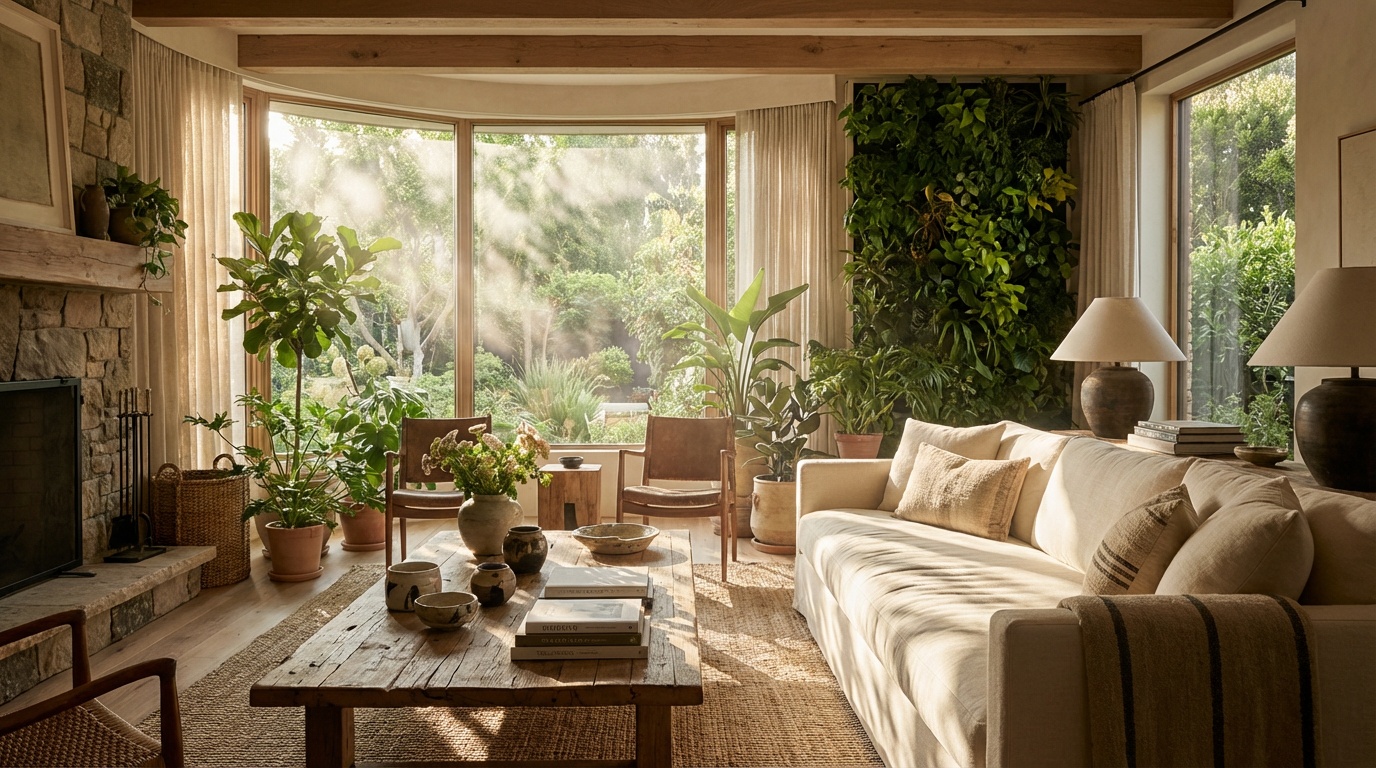
Natural light is the cornerstone of biophilic living room design—nothing impacts our well-being more profoundly than our exposure to daylight. Maximize existing windows by keeping treatments minimal and functional. Sheer linen curtains filter harsh light while maintaining brightness, or consider top-down bottom-up shades that provide privacy while allowing light from above. Remove heavy drapes that block light, and avoid placing tall furniture in front of windows.
If your living room has limited natural light, consider structural changes if possible: enlarging existing windows, adding skylights, or installing glass doors that open to outdoor spaces. Even small improvements—replacing a solid door with a glass-paneled version, or adding a transom window—can significantly increase daylight penetration. Position mirrors strategically to reflect and amplify available natural light, effectively doubling its impact.
Artificial lighting in biophilic spaces should mimic natural light's quality and variability. Layer three types of lighting for flexibility and depth. Ambient lighting provides overall illumination; choose warm-white LED bulbs (2700-3000K) that approximate sunlight's warm glow rather than cool, institutional tones. Ceiling fixtures in natural materials—woven rattan pendants, wooden beam-mounted lights, or fixtures with organic shapes—maintain the biophilic aesthetic while providing necessary light.
Task lighting serves specific functions without overwhelming the space. Floor lamps with linen shades positioned beside reading chairs, table lamps on side tables with ceramic or wooden bases, and adjustable arm lamps in brass or bronze finishes provide focused light where needed. Choose bulbs that render colors accurately to showcase the natural materials and plant life in your space.
Accent lighting creates drama and highlights biophilic elements. Use uplighting to wash textured stone or wood walls with gentle illumination, picture lights to showcase botanical artwork, and LED strip lighting hidden behind floating shelves to create a subtle glow that makes plants appear to float. Small spotlights can highlight particularly beautiful plants or natural objects, creating focal points that draw the eye through the space.
Dimmers are essential for biophilic living rooms, allowing you to adjust lighting to match natural cycles. Bright, energizing light during the day supports alertness and activity, while dimmed, warm lighting in the evening promotes relaxation and doesn't disrupt circadian rhythms. Smart bulbs that automatically adjust color temperature throughout the day—cooler and brighter in morning, warmer and dimmer in evening—can enhance this natural rhythm.
Consider candlelight as a biophilic lighting element. Humans have gathered around fire for hundreds of thousands of years, and flickering flames trigger deep relaxation responses. Group candles in varying heights on natural wood or stone surfaces, use lanterns in metal and glass, or invest in a bioethanol fireplace for the ambiance of fire without the installation requirements of traditional fireplaces.
Window placement and orientation matter significantly. South-facing windows (in the Northern Hemisphere) provide the most consistent natural light, while east-facing windows offer energizing morning sun, and west-facing windows deliver warm afternoon light. Work with your room's orientation rather than against it, embracing the natural light patterns and supplementing with artificial light where needed.
Lighting & Ambiance
Furniture & Decor Shopping Guide
Investment pieces worth splurging on include your sofa, which should be both beautiful and built to last. Look for hardwood frames, eight-way hand-tied springs, and natural fiber upholstery from brands like Article, Burrow, or West Elm's sustainable collections ($1,500-$4,000). A quality live-edge coffee table from a local woodworker or retailers like CB2 or Room & Board becomes an heirloom piece that improves with age ($800-$3,000). A statement rattan or cane accent chair from brands like Serena & Lily or Anthropologie provides both comfort and visual impact ($600-$1,500).
Budget-friendly alternatives deliver biophilic style without the premium price. IKEA's solid wood furniture line offers genuine materials at accessible prices—their LISABO coffee table and STOCKSUND sofa series provide natural aesthetics for a fraction of boutique costs. Target's Threshold and Project 62 lines frequently feature rattan, wood, and natural fiber pieces under $300. Wayfair's vast selection includes affordable options in every biophilic category, though quality varies—read reviews carefully and prioritize solid materials over veneers.
Where to shop depends on your budget and priorities. For high-quality investment pieces: West Elm, CB2, Room & Board, Article, and Joybird offer modern biophilic furniture with transparent sourcing. For mid-range options: World Market, HomeGoods, and Crate & Barrel balance quality and price. For budget-conscious shopping: IKEA, Target, Amazon Basics, and Wayfair provide entry points, though longevity may be limited.
Online retailers specializing in sustainable and natural goods include The Citizenry (globally-sourced artisan pieces), Sabai (sustainable, modular furniture), Medley (non-toxic, customizable furniture), and Etsy (for unique handmade items and vintage finds). Many offer virtual room visualization, though nothing compares to the instant transformation possible with RoomStudioAI.
Vintage and secondhand shopping aligns perfectly with biophilic principles of sustainability and authentic materials. Mid-century modern pieces in solid wood, vintage rattan and wicker furniture, antique wooden trunks and chests, and reclaimed architectural elements all enhance biophilic spaces. Shop estate sales, Craigslist, Facebook Marketplace, Chairish, and local antique stores. Older furniture was often built with solid wood rather than particleboard, making vintage pieces both more sustainable and more authentically biophilic than many new options.
DIY projects make biophilic design accessible on any budget. Create a living wall using mounted planters or a vertical garden system ($50-$200 in materials). Build floating shelves from reclaimed wood to display plants and natural objects ($30-$100). Macramé plant hangers require only cord and basic knotting skills ($10-$30). Transform plain terracotta pots with natural dyes or leave them beautifully bare (nearly free). Create botanical art by pressing and framing leaves, ferns, or flowers from your yard ($20-$50).
Refresh existing furniture with biophilic touches: reupholster a chair in natural linen, replace synthetic pillow covers with organic cotton or linen versions, sand and oil wooden furniture to reveal natural grain, or add jute or sisal area rugs to ground the space. These incremental changes accumulate into significant transformation without requiring complete room overhauls.
For plants specifically, local nurseries often offer better prices and healthier specimens than big-box stores, plus expert advice for your specific conditions. Online plant retailers like The Sill, Bloomscape, and Léon & George deliver healthy plants with care instructions. Start with easy, forgiving varieties—pothos, snake plants, ZZ plants—before investing in more demanding species.
Furniture & Decor Shopping Guide
Common Mistakes to Avoid
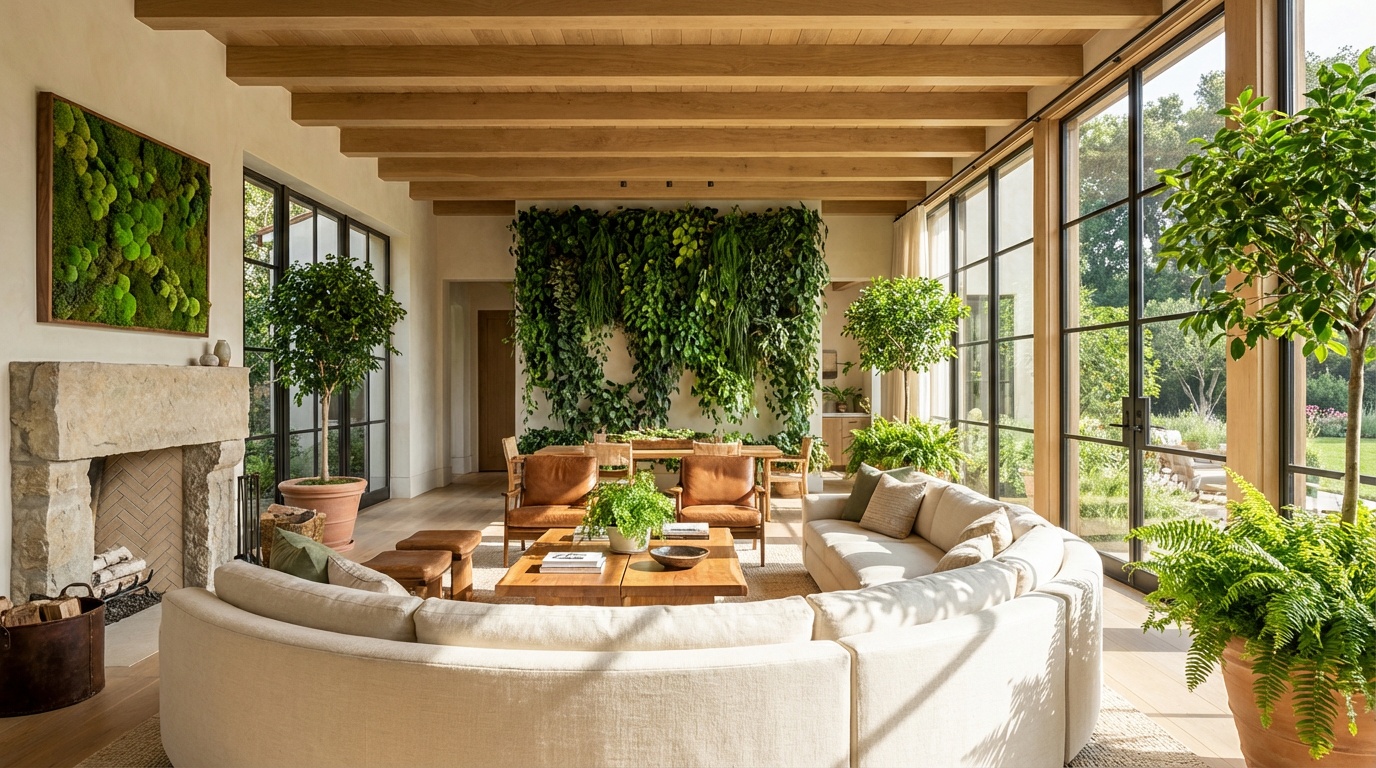
Mistake #1: Using fake plants instead of real ones. While artificial plants have improved aesthetically, they provide none of biophilic design's psychological or air-quality benefits. Our brains evolved to detect living things, and even convincing fakes fail to trigger the stress-reduction responses that real plants provide. If plant care seems daunting, start with genuinely low-maintenance varieties like snake plants or pothos that tolerate neglect and low light. Even one or two real plants outperform dozens of artificial ones in biophilic terms. If you absolutely must use faux plants in very low-light areas, combine them with real plants elsewhere so your space includes actual living elements.
Mistake #2: Choosing materials that only look natural. Laminate "wood" flooring, plastic "rattan," and synthetic fabrics printed with botanical patterns might fit a biophilic color scheme, but they lack the tactile and visual complexity that makes biophilic design effective. Our senses detect authenticity—real wood has varied grain, subtle color shifts, and distinctive texture that synthetic versions can't replicate. Prioritize even small amounts of genuine materials over larger quantities of imitations. A single real wood coffee table provides more biophilic benefit than an entire room of wood-look laminate.
Mistake #3: Blocking natural light with heavy window treatments or poor furniture placement. Natural light is biophilic design's most crucial element, yet many people inadvertantly obstruct it. Heavy curtains that remain closed, tall bookcases positioned in front of windows, or sofas with backs to windows all diminish natural light's impact. Instead, arrange furniture to face or complement windows, use sheer or minimal window treatments, and keep window areas clear. If privacy is a concern, consider frosted window film, top-down shades, or strategically placed plants rather than light-blocking curtains.
Mistake #4: Creating a monochromatic green space. While plants are central to biophilic design, an all-green room can feel monotonous and lacks nature's true diversity. Real natural environments include varied colors—earth browns, stone grays, sky blues, flower accents. Balance abundant greenery with warm wood tones, neutral textiles, and varied accent colors. Think of a forest floor: yes, there's green canopy, but also brown earth, gray stones, colorful mushrooms, and dappled light creating infinite variation. Your living room should reflect this complexity.
Mistake #5: Neglecting sensory elements beyond the visual. Biophilic design engages all senses, but many people focus exclusively on how the room looks. Incorporate texture through varied materials—smooth stone, rough jute, soft linen, nubbly wool. Add sound with a small water feature, wind chimes near an open window, or simply the rustle of plant leaves in airflow. Include scent through fresh flowers, herbs like lavender or rosemary in pots, or natural essential oil diffusers with plant-based scents. Even taste can play a role—growing edible herbs or small citrus trees in your living room connects you to nature's abundance.
Signs your space is missing the mark include feeling sterile despite biophilic elements (likely too minimal or too perfect), feeling cluttered or chaotic (too many competing elements without cohesion), feeling dark or closed-in (insufficient natural light or too-heavy materials), or simply not feeling different from your previous design (not enough commitment to biophilic principles). The space should feel noticeably calmer and more restorative than typical living rooms.
The balance between over-styling and under-styling in biophilic design leans toward curated abundance rather than minimalism. Unlike Scandinavian or modern minimalist styles, biophilic design embraces complexity and layering—but with intention. Every element should serve the connection to nature. If something is purely decorative without natural materials, organic forms, or living qualities, question whether it belongs. Conversely, don't be afraid of fullness; a room rich with plants, varied textures, and natural materials reflects nature's own abundance.
Common Mistakes to Avoid
Styling for Different Budgets & Spaces
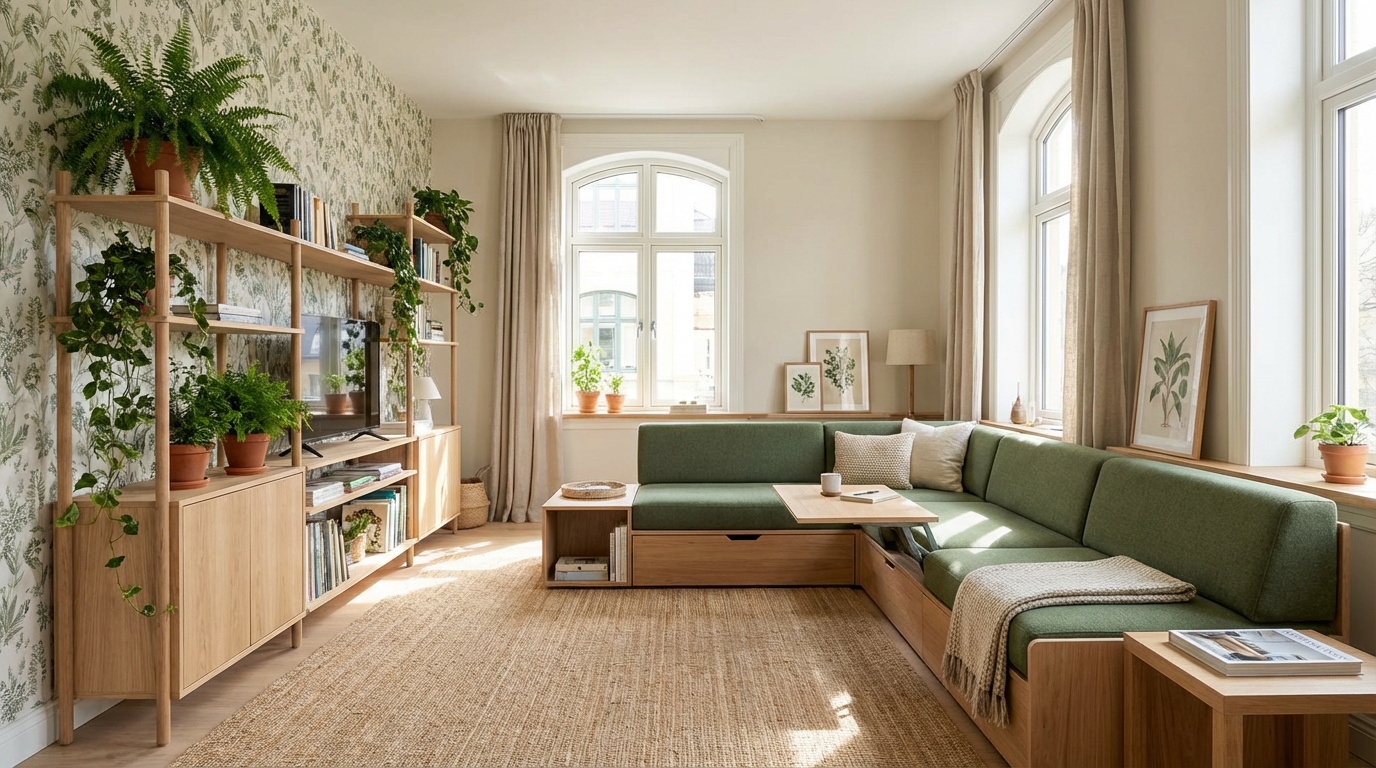
Small living rooms benefit enormously from biophilic design, as natural elements make compact spaces feel more open and breathable. Maximize vertical space with wall-mounted planters, hanging plants, and tall, narrow plant stands that draw the eye upward. Choose furniture with exposed legs rather than skirted pieces—this creates visual flow and makes the room feel larger. A single large plant (like a fiddle leaf fig or bird of paradise) often works better than many small ones, creating a focal point without clutter.
In tight quarters, multi-functional furniture becomes essential. A storage ottoman in natural jute or leather provides seating and organization, a nesting coffee table in wood offers flexibility, and wall-mounted fold-down desks preserve floor space. Keep the color palette lighter—warm whites, soft beiges, light woods—to maximize the sense of spaciousness, then add depth through varied textures rather than dark colors.
Mirrors strategically placed to reflect windows or plants effectively double your biophilic elements. A large mirror opposite a window brings in additional natural light, while a mirror behind a plant grouping creates the illusion of a more abundant indoor garden. Choose mirrors with natural wood frames or simple metal frames to maintain the aesthetic.
Rental-friendly approaches allow biophilic transformation without permanent changes. Focus on moveable elements: freestanding plants in attractive pots, removable peel-and-stick wallpaper in botanical prints or natural textures, area rugs in jute or wool to cover existing flooring, and furniture that you'll take with you. Tension rods allow you to hang lightweight linen curtains without damaging walls, and removable hooks support hanging planters.
Under $500 transformation: Start with paint if allowed ($100-150 for a warm neutral), add 3-5 substantial plants in basic terracotta or ceramic pots ($100-150), include a jute or sisal area rug from a discount retailer ($80-150), swap existing pillows and throws for natural fiber versions from Target or IKEA ($80-100), and add simple wooden floating shelves to display plants and natural objects ($40-60). This foundation establishes biophilic principles without major furniture investment.
$500-2,000 transformation: Include everything above, plus replace one major furniture piece with a natural option—perhaps a rattan accent chair ($400-600), live-edge coffee table ($300-500), or linen sofa cover to transform an existing piece ($150-300). Add layered lighting with a natural material pendant or floor lamp ($100-200), invest in larger statement plants like a fiddle leaf fig or monstera ($50-100 each), and include natural fiber window treatments ($150-300). This budget allows for significant visual impact and authentic materials.
$2,000+ transformation: At this level, you can replace multiple furniture pieces with high-quality natural options, invest in a statement piece like a custom live-edge table or designer rattan chair, add architectural elements like a living wall system or water feature, upgrade flooring to natural materials if you own your home, and create a comprehensive plant collection with varied species and heights. This budget supports a complete biophilic transformation that rivals professionally designed spaces.
Phasing the transformation makes biophilic design accessible regardless of budget. Month 1: Paint and add plants—the highest-impact, lowest-cost changes. Month 2-3: Add textiles and window treatments to soften the space. Month 4-6: Replace one major furniture piece. Month 7-9: Add lighting and smaller furniture pieces. Month 10-12: Refine with accessories, additional plants, and artwork. This gradual approach allows you to live with changes, adjust as needed, and spread costs over time.
Start with the elements that will impact your daily experience most. If you spend evenings reading in your living room, prioritize a comfortable natural-fiber chair and good lighting. If you entertain frequently, focus on a beautiful natural coffee table and adequate seating. Let your lifestyle guide your priorities rather than following a rigid formula.
Styling for Different Budgets & Spaces
Bringing Your Vision to Life
The gap between inspiration and implementation can feel overwhelming—you've gathered ideas, perhaps created a Pinterest board, but translating those images into your specific living room with its unique dimensions, lighting, and existing elements remains challenging. This is where visualization becomes invaluable, allowing you to experiment with biophilic elements before committing time and money to purchases.
Traditional interior design visualization required expensive software, professional expertise, or simply imagining how things might look—a process prone to costly mistakes. You might buy a rattan chair that overwhelms your space, choose a paint color that reads differently in your lighting, or arrange plants in ways that create visual clutter rather than serenity.
RoomStudioAI transforms this process by letting you see your living room redesigned in biophilic style instantly. Simply upload a photo of your current space, select biophilic design (or experiment with other styles for comparison), and within seconds, you'll see a realistic visualization of how natural materials, plants, earth-tone colors, and organic forms could transform your room. This isn't a generic template—the AI considers your room's specific architecture, lighting, and proportions to generate a tailored design.
The power of this approach lies in risk-free experimentation. Try different intensities of biophilic design—from subtle natural accents to full botanical immersion—to find what resonates with you. Compare biophilic style against contemporary living room ideas or other aesthetics to confirm your direction. See how different furniture arrangements might work before moving a single piece. This visualization helps you make confident decisions about which elements to prioritize and which might not work in your specific space.
Once you've visualized your ideal biophilic living room, use the image as a shopping guide. Notice which elements create the strongest impact—perhaps it's the abundance of plants, the warm wood coffee table, or the natural fiber rug—and prioritize those in your budget. The visualization helps you avoid purchasing items that won't contribute to the overall effect, saving money and preventing clutter.
The free AI design tool at RoomStudioAI requires no design expertise, no software installation, and no commitment. In the time it takes to scroll through a few Pinterest images, you can see your actual living room transformed, giving you clarity and confidence to begin your biophilic journey. Whether you're planning a complete renovation or simply want to understand how a few biophilic elements might enhance your space, visualization provides the insight you need.
Your biophilic living room awaits—a space where nature's restorative power infuses your daily life, where stress melts away as you sink into a linen sofa surrounded by living greenery, where natural light dances across wood grain and stone, where every element connects you to the natural world. The transformation begins with vision, continues with thoughtful selection of materials and elements, and results in a living room that nurtures your well-being as beautifully as it pleases your eye. Start your visualization today and discover how biophilic design can transform not just your living room, but your daily experience of home.