What Defines Dark Academia Style
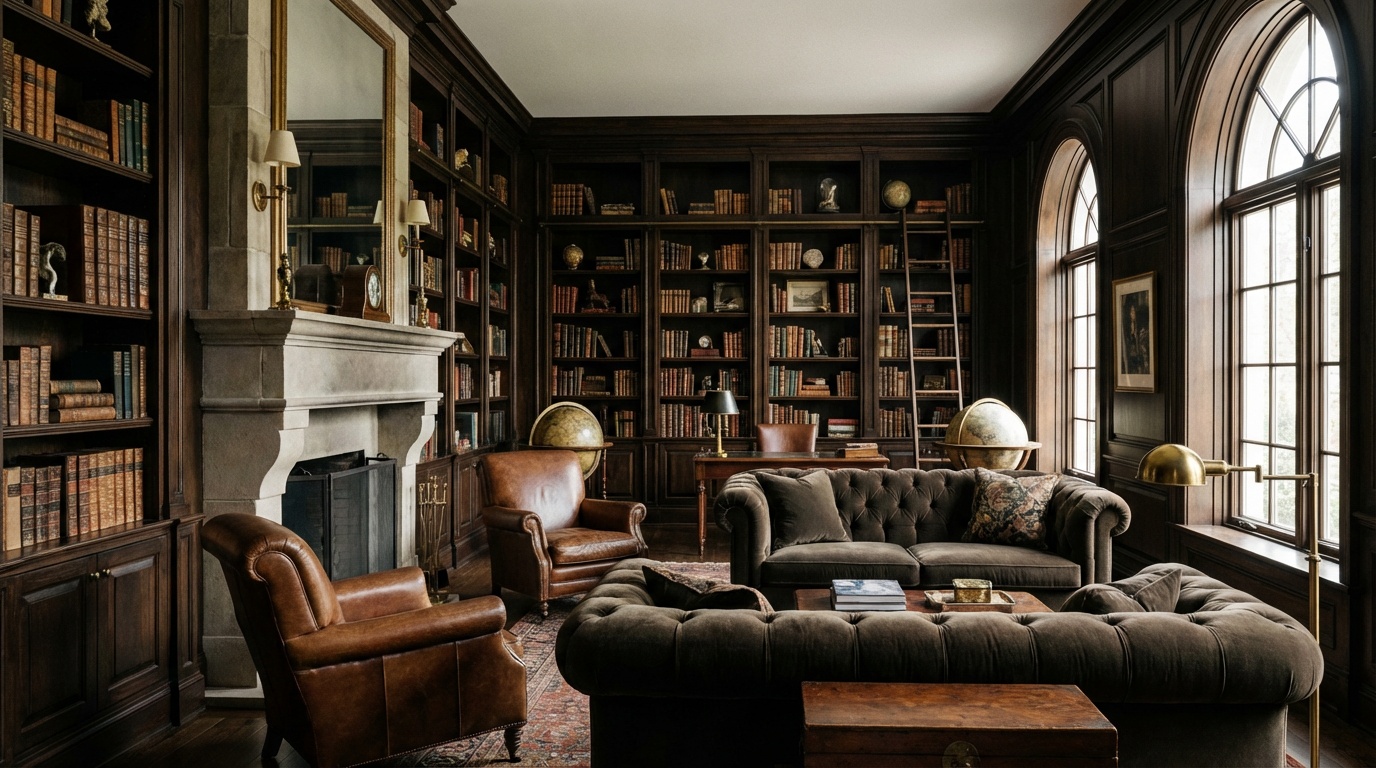
Dark academia is more than just an interior design trend—it's a cultural aesthetic that romanticizes classical education, literature, and the pursuit of knowledge. Born from social media platforms like Tumblr and TikTok in the late 2010s, this style draws inspiration from Gothic architecture, Ivy League universities, and the atmospheric settings of classic literature from authors like Donna Tartt and Oscar Wilde.
At its core, dark academia celebrates intellectual curiosity and timeless elegance. The aesthetic emerged as a counter-movement to minimalism's stark simplicity, instead embracing maximalist layers, historical references, and a certain melancholic beauty. It's heavily influenced by the architecture and interiors of Oxford and Cambridge universities, old-world European libraries, and the golden age of classical education.
This style resonates deeply with modern homeowners for several compelling reasons. In our increasingly digital world, dark academia offers a tangible connection to analog learning and traditional craftsmanship. It creates spaces that encourage reading, reflection, and meaningful conversation—a welcome antidote to the constant stimulation of screens. The aesthetic also appeals to those who appreciate vintage quality over fast furniture, sustainability through secondhand shopping, and spaces with genuine character and depth.
What distinguishes dark academia from similar styles like traditional or Victorian design is its specific focus on scholarly pursuits and a slightly moody, mysterious atmosphere. While traditional design might feel formal and stiff, dark academia maintains an approachable, lived-in quality. Unlike Gothic design, which can veer into the macabre, dark academia keeps one foot firmly planted in the warmth of intellectual comfort. It's less about grandeur and more about creating an intimate sanctuary for the mind.
What Defines Dark Academia Style
Essential Elements for Your Dark Academia Living Room
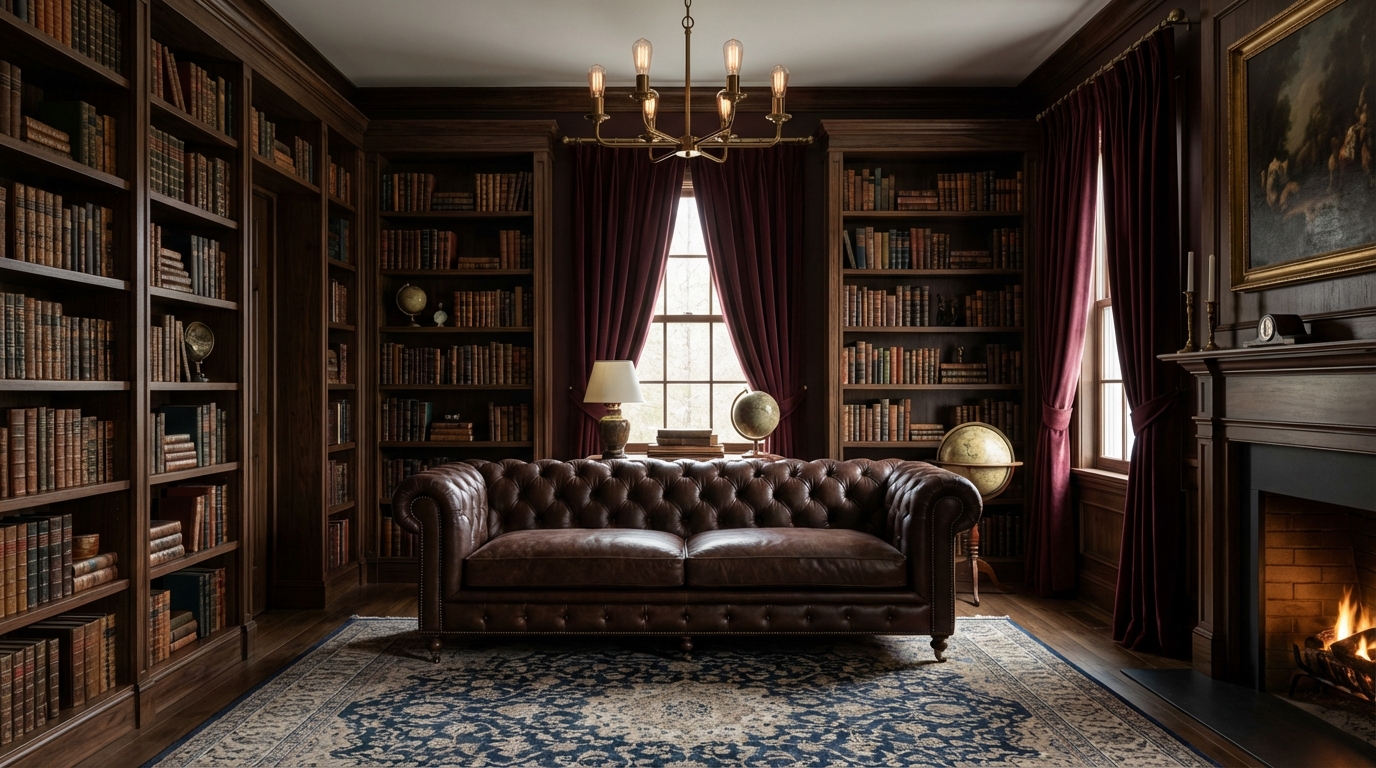
The foundation of any dark academia living room begins with carefully selected furniture that balances comfort with classical elegance. A Chesterfield sofa or tufted leather couch in rich brown or deep green serves as the ideal centerpiece—look for genuine or high-quality faux leather with button tufting and rolled arms. These pieces reference the smoking rooms and faculty lounges of historic universities while providing the comfort needed for long reading sessions.
Complementing your main seating, incorporate wingback chairs upholstered in worn leather, burgundy velvet, or herringbone tweed. These chairs not only provide additional seating but also create intimate reading nooks when paired with a side table and lamp. The high backs and enclosed sides create a cocooning effect perfect for losing yourself in a book.
Bookshelf selection is crucial in dark academia design—they're not merely functional but serve as the room's intellectual soul. Floor-to-ceiling wooden bookshelves in dark walnut, mahogany, or ebony-stained oak should be substantial and traditional in design. Built-in shelving is ideal, but freestanding units with crown molding and adjustable shelves work beautifully. Fill them not just with books but with vintage globes, brass telescopes, antique boxes, and botanical specimens.
For coffee and side tables, seek out pieces in dark wood with ornate details—carved legs, inlaid designs, or claw feet add the historical gravitas this style demands. A vintage trunk repurposed as a coffee table brings both storage and authenticity. Side tables in brass, bronze, or wrought iron with marble or wood tops create perfect perches for table lamps and teacups.
Key materials include rich hardwoods like walnut, mahogany, and cherry; metals in aged brass, oil-rubbed bronze, and wrought iron; and fabrics such as leather, velvet, wool tweed, linen, and heavy cotton canvas. Avoid anything overly shiny, plastic, or contemporary in finish—patina and age are assets in this aesthetic.
Essential Elements for Your Dark Academia Living Room
Color Palettes & Combinations
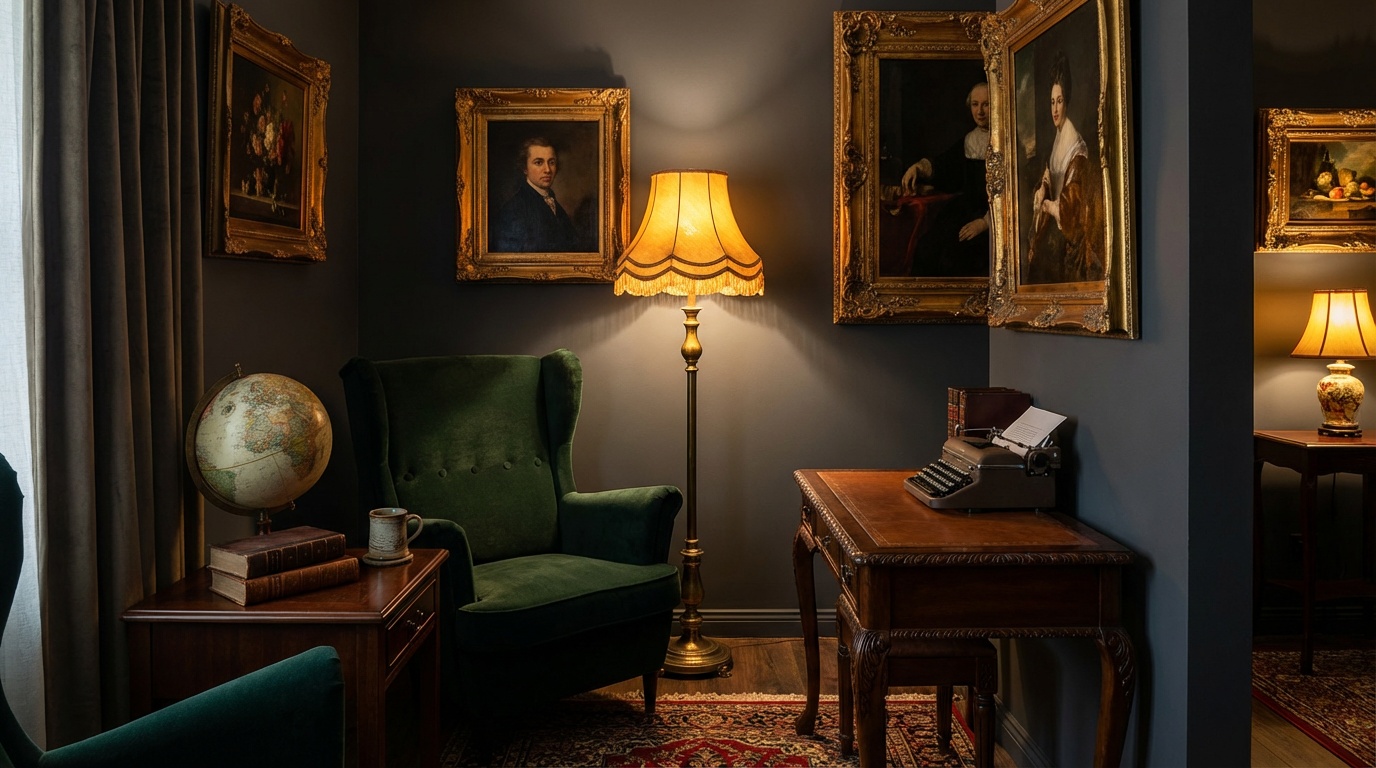
The dark academia color palette draws directly from the materials found in historic libraries and universities—think aged paper, leather bindings, and wood paneling warmed by firelight. Your primary palette should center on deep forest green, rich chocolate brown, charcoal gray, and warm cognac leather tones. These colors create the moody, enveloping atmosphere essential to the style.
For wall colors, consider hunter green, navy blue bordering on black, deep burgundy, or warm charcoal. If painting all walls in such dark hues feels too bold, try a feature wall behind your bookshelf or fireplace, keeping remaining walls in warm cream, aged parchment, or soft greige. The contrast between dark and light creates architectural interest while preventing the space from feeling cave-like.
Accent colors should be used sparingly but deliberately. Burgundy wine, mustard gold, burnt orange, and deep teal work beautifully in throw pillows, book spines, and decorative objects. These jewel tones reference the rich pigments found in medieval manuscripts and academic regalia. Brass and gold metallics serve as your primary metallic accent, appearing in lamp bases, picture frames, and hardware.
Balancing neutrals with color is essential to prevent the space from feeling overwhelming. Use your dark primary colors for larger furniture pieces and walls, but introduce cream, beige, and soft gray through area rugs, curtains, and some upholstery. A large Persian or Oriental rug in faded burgundy, navy, and cream tones can anchor the entire color scheme while adding pattern and warmth underfoot.
Distribute colors thoughtfully: walls and large furniture carry your deepest tones, medium-sized furniture and textiles introduce your accent colors, and smaller decorative items provide pops of metallics and lighter neutrals. This creates visual hierarchy and prevents monotony.
While dark academia traditionally maintains its moody palette year-round, you can introduce subtle seasonal variations. In autumn and winter, layer in more burgundy, burnt orange, and chocolate brown through throws and pillows. During spring and summer, lighten the mood slightly with more cream and beige textiles, and introduce fresh greenery to brighten dark corners.
Color Palettes & Combinations
Lighting & Ambiance
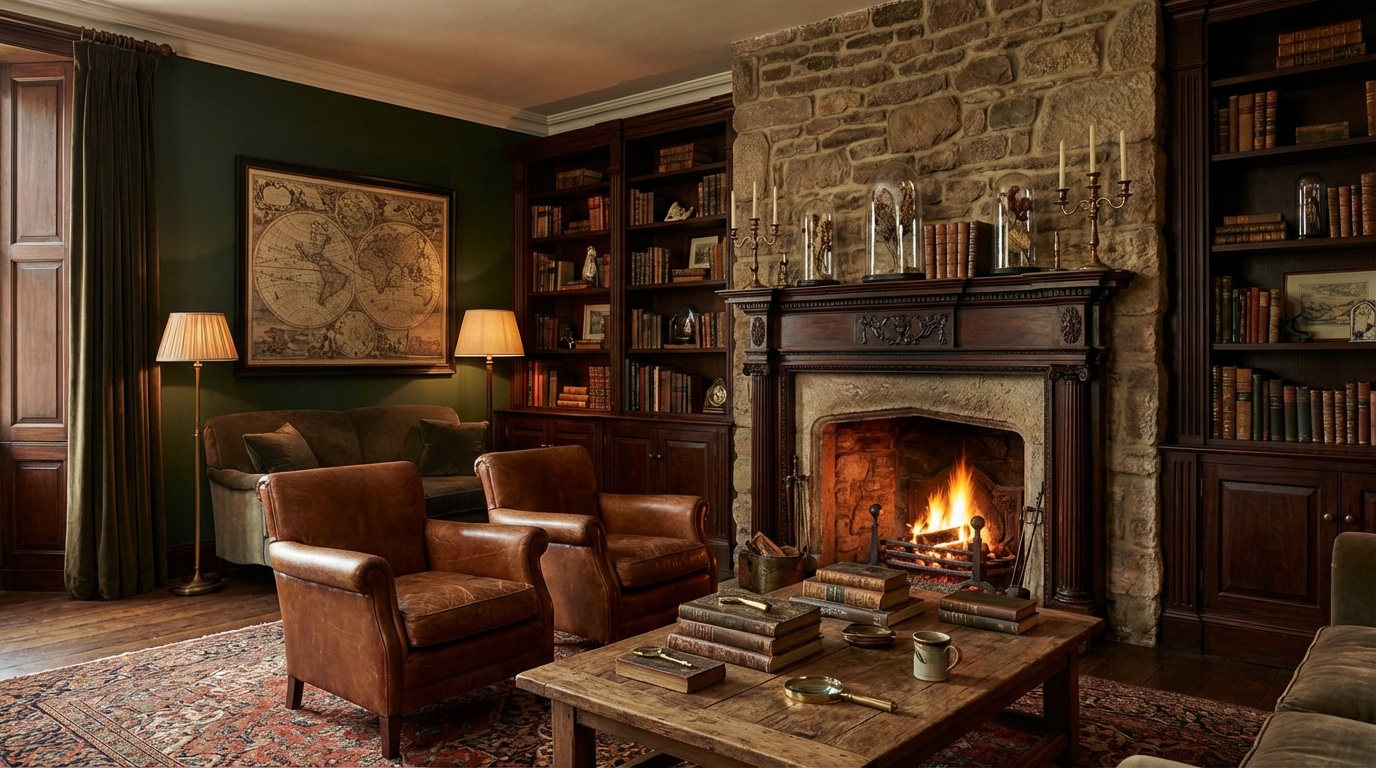
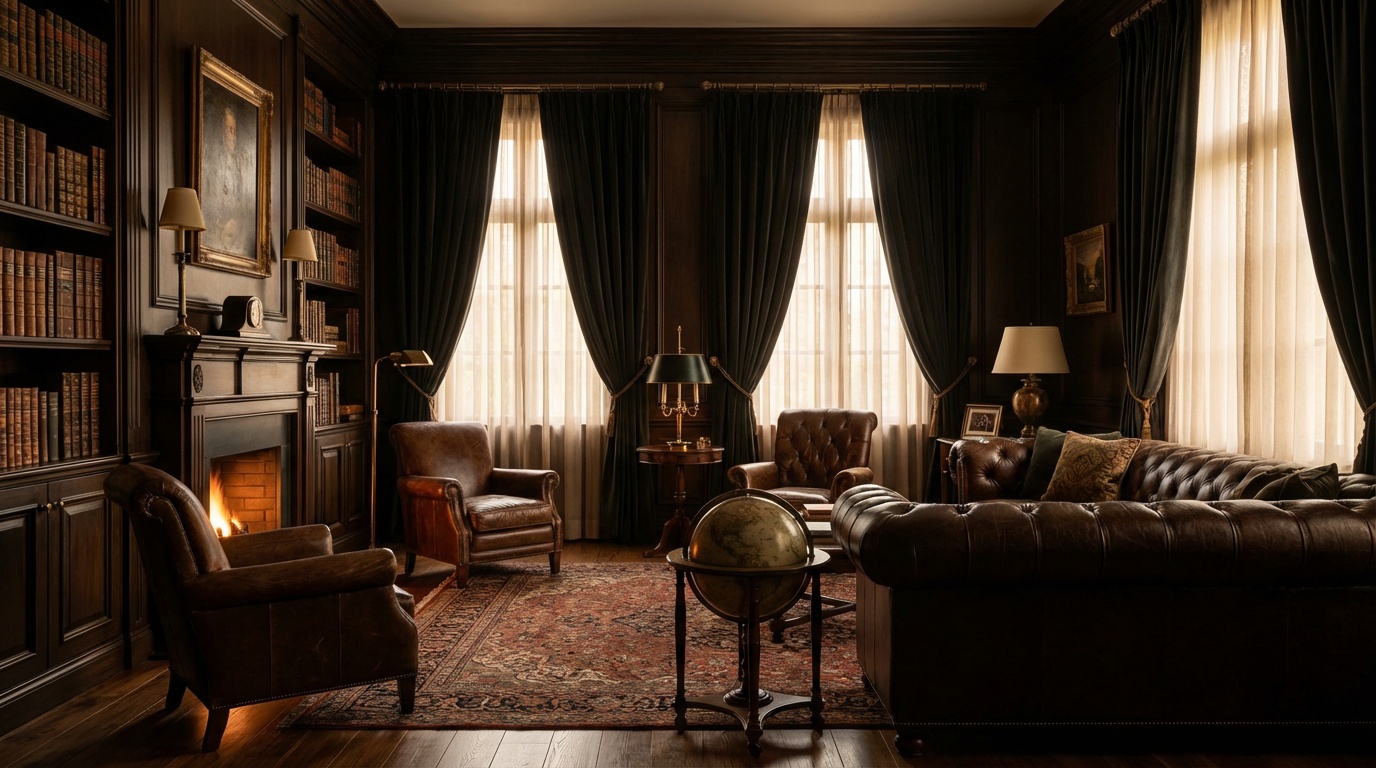
Lighting makes or breaks a dark academia living room—too bright and you lose the moody atmosphere; too dim and the space becomes dreary rather than inviting. The goal is to create pools of warm, golden light that encourage reading and conversation while maintaining an overall sense of intimacy.
Natural lighting should be embraced but controlled. Large windows are assets, but avoid harsh direct sunlight that might damage books and leather furniture. Install heavy curtains in velvet, thick linen, or damask in deep green, burgundy, or charcoal. During the day, pull them partially open to allow filtered light; in the evening, close them to create a cocooned sanctuary. Sheer curtains underneath in cream or ivory soften the light while maintaining privacy.
Your artificial lighting should work in distinct layers. For ambient lighting, avoid modern recessed lights or bright overhead fixtures. Instead, opt for a traditional chandelier in aged brass or wrought iron, or if ceiling height is limited, a semi-flush mount fixture with amber or frosted glass shades. Install dimmer switches to adjust the overall mood—this single upgrade dramatically increases your lighting flexibility.
Task lighting is crucial in a dark academia space where reading is paramount. Position table lamps with brass or bronze bases and fabric shades in cream, green banker's lamp style, or amber glass beside every seating area. Adjustable floor lamps with articulated arms in pharmacy or arc lamp styles provide flexible reading light. Look for fixtures with Edison bulbs or warm-toned LED bulbs (2700K or lower) that cast a golden, candlelight-like glow.
Accent lighting adds drama and highlights your carefully curated collections. Install picture lights above significant artwork, use LED strip lighting along the top of bookshelves to create a soft glow, or place small spotlights to illuminate sculptures or botanical specimens. Candles—real or high-quality flameless—scattered throughout the room in brass candlesticks or hurricane lanterns add both light and atmosphere.
Specific fixture styles that complement dark academia include banker's lamps with green or amber glass shades, Tiffany-style lamps with stained glass in jewel tones, candlestick-style table lamps with fabric shades, library sconces in aged brass flanking the fireplace or bookshelves, and vintage-inspired chandeliers with candle-style bulbs.
Placement is as important as fixture selection. Create multiple lighting zones rather than relying on a single overhead source. Position lamps at different heights—some on side tables, one on a bookshelf, a floor lamp in the corner—to create depth and dimension. The goal is to never have a single bright light source, but rather multiple gentle glows that overlap to illuminate the entire space warmly.
Lighting & Ambiance
Furniture & Decor Shopping Guide
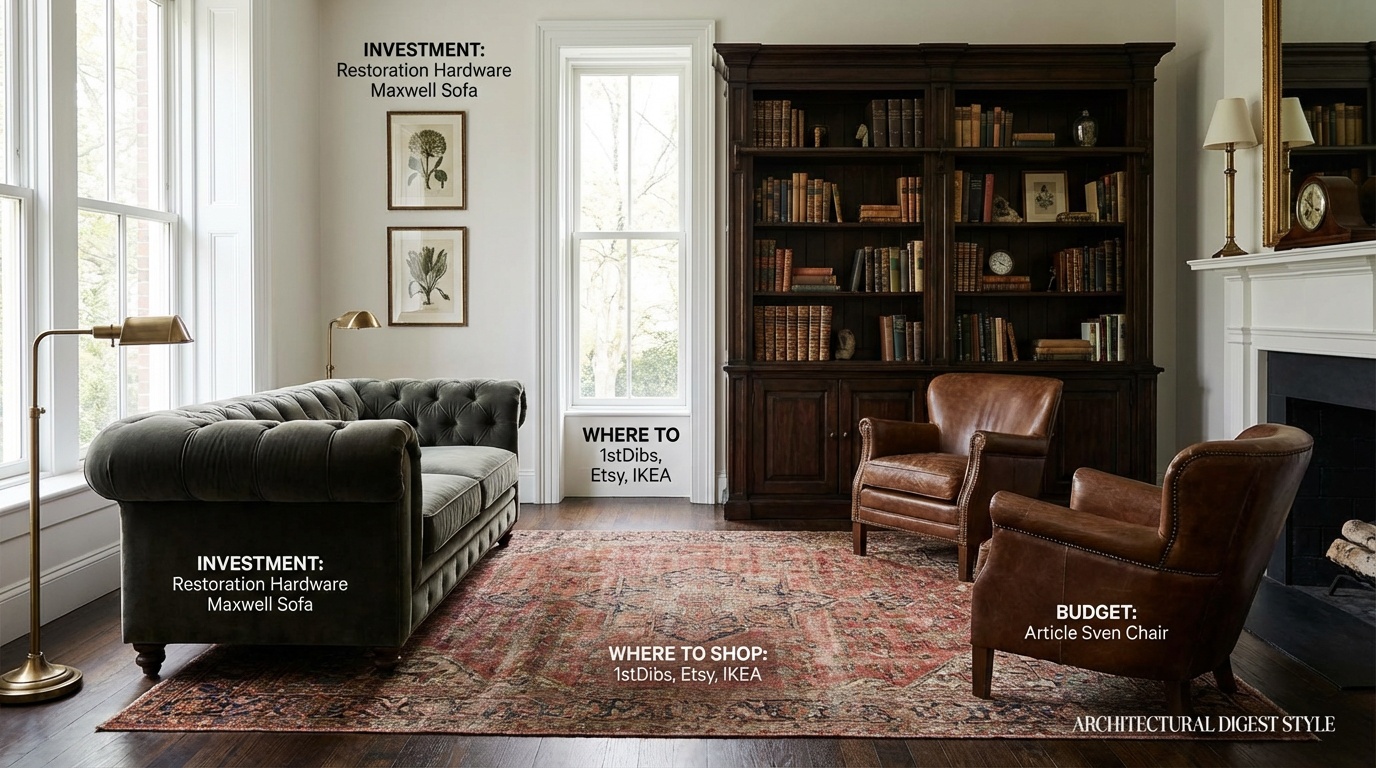
When budgeting for a dark academia living room transformation, certain pieces warrant investment while others can be achieved affordably. Your key investment pieces should include a quality leather sofa or Chesterfield, which will last decades and only improve with age. Expect to spend $1,500-$4,000 for a genuine leather piece, or $800-$1,500 for high-quality faux leather. Solid wood bookshelves are another worthwhile investment—well-constructed pieces from brands like Pottery Barn, Restoration Hardware, or custom carpentry will serve you for life.
For budget-friendly alternatives, consider IKEA's BILLY bookcases painted or stained in dark walnut tones—they're surprisingly customizable with crown molding added to the top. Facebook Marketplace, estate sales, and thrift stores are goldmines for dark academia furniture. That worn leather chair or vintage wood desk someone else considers outdated is exactly what you're seeking. A $50 estate sale wingback chair can be transformed with a $150 reupholstery job or simply embraced for its authentic wear.
Where to shop depends on your budget and patience. For new furniture with dark academia appeal, explore Pottery Barn, Restoration Hardware (especially their outlet), World Market, and Wayfair's traditional furniture sections. West Elm occasionally carries pieces that work well, particularly their leather seating and brass lighting. For truly authentic vintage finds, haunt estate sales, antique malls, university surplus sales, and online marketplaces like Chairish, 1stDibs (for high-end pieces), and eBay.
Book lovers should visit used bookstores not just for reading material but for decorative leather-bound volumes—many used bookstores sell damaged or outdated books by the pound. Library sales often offer beautiful old encyclopedias and reference books perfect for styling. For accessories, check HomeGoods, TJ Maxx, and Marshalls for brass candlesticks, vintage-style globes, and decorative boxes at fraction of boutique prices.
Vintage and secondhand finds that work particularly well include wooden filing cabinets and card catalogs (perfect for storage), old school desks and library tables, vintage trunks and suitcases, antique maps and botanical prints in ornate frames, brass scientific instruments, old leather suitcases, and worn Persian or Oriental rugs. These pieces bring authentic patina impossible to replicate with new items.
Furniture & Decor Shopping Guide
Common Mistakes to Avoid
Even with the best intentions, several common pitfalls can prevent your dark academia living room from reaching its full potential. Understanding these mistakes helps you create a space that's atmospheric rather than oppressive, curated rather than cluttered.
Mistake #1: Making the space too dark. While dark academia embraces moody tones, a room that's genuinely dark becomes uninviting and depressing. The fix is balancing dark walls and furniture with adequate lighting, lighter textiles, and strategic use of mirrors to reflect light. If you've painted walls dark and the room feels like a cave, add more lamps, hang a large mirror opposite the window, and incorporate cream-colored throw pillows and a light-colored rug.
Mistake #2: Buying everything new and matchy-matchy. Dark academia's charm lies in its collected-over-time aesthetic. A room full of matching furniture from a single store lacks the depth and authenticity this style demands. The solution is mixing vintage and new pieces, varying your wood tones slightly, and shopping from multiple sources. Your leather sofa, wooden coffee table, and bookshelves shouldn't look like they came as a set—they should look like treasured finds accumulated through years of scholarly pursuits.
Mistake #3: Neglecting comfort for aesthetics. A living room that looks perfect but offers nowhere comfortable to sit fails its primary function. Dark academia should feel like a professor's cozy study, not a museum. Ensure your seating is genuinely comfortable with adequate cushioning, add soft throws and pillows, include footstools or ottomans, and arrange furniture for actual conversation and reading rather than just visual appeal. That beautiful antique chair might need a cushion to be truly usable.
Mistake #4: Overdoing the theme with literal academic props. There's a fine line between dark academia inspiration and a college professor costume. Avoid filling every surface with obvious props like graduation caps, literal chalkboards with equations, or university pennants. Instead, suggest the scholarly aesthetic through quality books you'll actually read, functional vintage objects like magnifying glasses or letter openers, and subtle nods like botanical prints or antique maps. The style should feel like your authentic interests, not a stage set.
Mistake #5: Forgetting about scale and proportion. In smaller spaces especially, oversized furniture and too many dark colors can overwhelm. Signs your space is missing the mark include difficulty moving through the room, feeling claustrophobic rather than cozy, inability to see decorative objects because there are too many, or the room feeling like a storage unit rather than a living space. The balance between over-styling and under-styling comes from editing—display your best pieces, store the rest, and leave some breathing room on shelves and walls.
Common Mistakes to Avoid
Styling for Different Budgets & Spaces
Dark academia living room design adapts beautifully to various spatial and financial constraints with thoughtful planning and strategic choices.
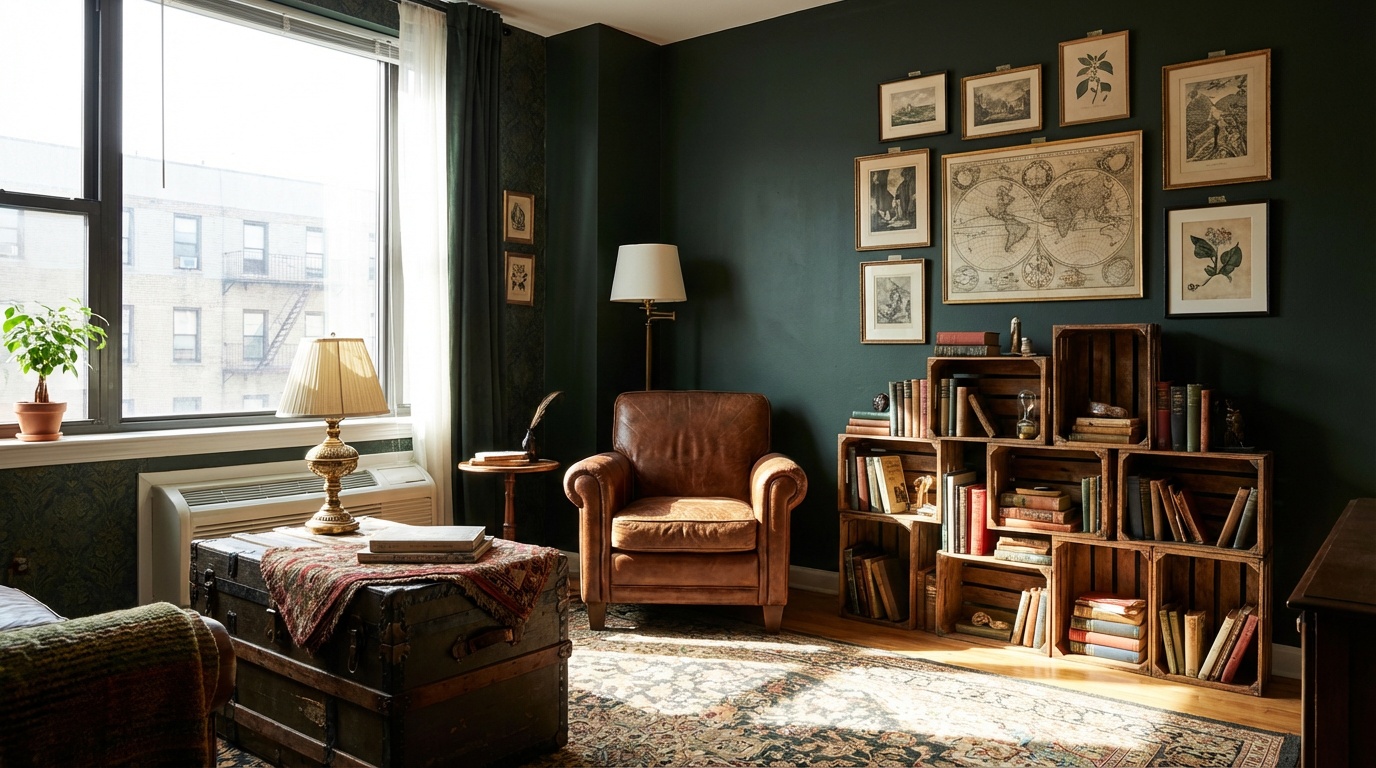
Small space adaptations require particular attention to scale and color balance. In apartments or compact living rooms, avoid painting all walls dark—instead, create a feature wall behind your seating area or bookshelves while keeping other walls in warm cream or soft gray. Choose a loveseat or apartment-scale sofa rather than a full Chesterfield. Utilize vertical space with tall, narrow bookshelves that draw the eye upward. Mirrors are essential in small dark academia spaces—a large ornate mirror in an antique gold frame both reflects light and adds decorative impact. Multi-functional furniture like storage ottomans, nesting tables, and sofa tables with shelving maximize limited square footage.
Rental-friendly approaches allow you to achieve the aesthetic without permanent changes. Focus on furniture and decor rather than paint—a large area rug in deep colors can anchor the palette, and removable wallpaper in dark colors or classic patterns transforms walls without angering landlords. Freestanding bookshelves, furniture, and lighting do the heavy lifting. Use command strips for hanging lightweight frames and mirrors. Layer textiles—curtains, throws, pillows—to introduce color and texture without modification. When you move, everything comes with you.
Budget tier: Under $500 transformations focus on paint, textiles, and thrifted finds. Paint existing bookshelves dark walnut ($30), add dark curtains from Target or IKEA ($60-100), source vintage books and decorative objects from thrift stores ($50-100), create DIY art from framed vintage maps or book pages ($40-60), add brass-finish lamp from HomeGoods ($40-80), purchase dark throw pillows and a cozy blanket ($60-100), and find a used leather chair or small vintage table on Facebook Marketplace ($80-150). The remaining budget covers small brass accessories, candles, and plants.
Budget tier: $500-$2,000 allows for significant furniture investments. Allocate $600-1,000 for a quality faux leather Chesterfield or tufted sofa, $200-400 for solid wood bookshelves or a vintage find, $100-200 for window treatments, $150-300 for lighting including table lamps and a statement piece, $200-300 for a quality area rug, and the remainder for art, accessories, books, and smaller furniture pieces. This budget creates a substantially transformed space with lasting pieces.
Budget tier: $2,000+ enables a complete, high-quality transformation. Invest in genuine leather seating ($1,500-3,000), custom or high-end bookshelves ($500-1,500), a statement chandelier or multiple quality light fixtures ($300-800), a vintage or high-quality Persian rug ($400-1,200), a wingback chair or additional seating ($400-900), and substantial remaining budget for art, accessories, side tables, and decorative objects. At this tier, you can mix investment pieces with carefully chosen vintage finds for an authentically layered look.
Phasing the transformation over time makes the project manageable financially and allows for thoughtful curation. Start with paint and lighting in month one—these create immediate atmospheric impact. Month two, invest in your main seating piece. Month three, add bookshelves and begin filling them. Months four through six, gradually add lighting, textiles, art, and accessories as you find pieces you love. This approach also allows you to live in the space and understand what you truly need versus what initially seemed appealing.
Styling for Different Budgets & Spaces
Bringing Your Vision to Life
The gap between inspiration and reality often feels daunting when embarking on a design transformation. You've saved countless Pinterest images and bookmarked Instagram posts, but how do you know if dark academia will actually work in your specific living room with its unique layout, lighting, and architectural features?
This is where visualization becomes invaluable. Before purchasing a single piece of furniture or committing to a paint color, seeing your actual space transformed helps you make confident decisions and avoid expensive mistakes. You might discover that the dark green walls you imagined actually make your north-facing room too dim, or that your space can handle more drama than you thought.
RoomStudioAI offers exactly this capability—the ability to see your living room transformed into a dark academia haven instantly, without the commitment or cost. Simply upload a photo of your current living room, select the dark academia style, and watch as AI technology reimagines your space with the rich colors, classic furniture, and scholarly atmosphere you're envisioning. You can experiment with different variations, try bolder or more subtle interpretations, and share options with family members or roommates before making any purchases.
This risk-free experimentation is particularly valuable for dark academia design, which requires balancing numerous elements—color darkness, furniture styles, accessory density—to achieve the right mood. You might test a version with dark walls versus lighter walls with dark furniture, or see how much difference lighting fixtures make to the overall atmosphere. These insights guide your shopping and renovation decisions, potentially saving hundreds or thousands of dollars in returns and repainting.
The process is remarkably simple: photograph your living room from the angle that best captures the space, upload it to RoomStudioAI, select dark academia from the style options, and receive your AI-generated transformation in moments. The tool considers your room's existing architecture, lighting, and proportions while reimagining it in your chosen style. You can generate multiple variations, download your favorites for reference while shopping, and use them to communicate your vision to contractors or family members.
Beyond practical planning, visualization reignites your excitement for the project. Seeing your actual living room—not a stranger's Pinterest-perfect space—transformed into the dark academia retreat you've been dreaming about makes the goal feel achievable and real. It bridges the gap between abstract inspiration and concrete next steps.
Your dark academia living room awaits—a space where intellectual curiosity meets timeless comfort, where every element tells a story, and where you'll create countless memories curled up with books, engaged in deep conversations, or simply enjoying the peaceful atmosphere of scholarly beauty. Start by visualizing your transformation with RoomStudioAI's free tool, then begin the rewarding journey of bringing this richly layered aesthetic into your home. The pursuit of knowledge and beauty begins with a single step—or in this case, a single photo upload.