What Defines Eclectic Style
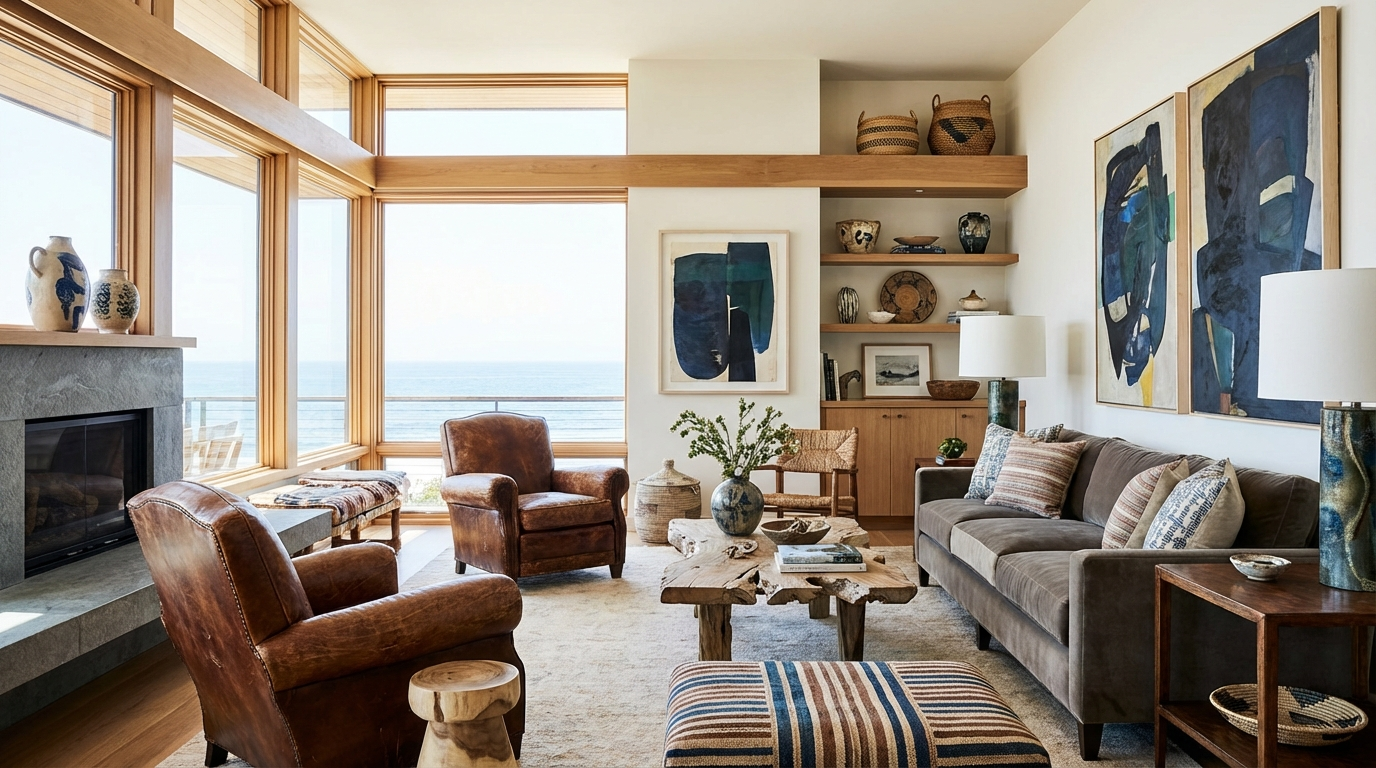
The word "eclectic" derives from the Greek "eklektikos," meaning "selective" or "choosing the best." In interior design, eclectic style represents a thoughtful curation of elements from various design periods, cultures, and aesthetics, unified by a common thread—usually color palette, scale, or personal narrative.
Unlike other design styles that follow strict rules, eclectic design emerged as a rebellion against rigid decorating conventions. The style gained significant traction in the late 20th century as globalization made diverse cultural artifacts more accessible and as homeowners began rejecting the matchy-matchy furniture sets that dominated previous decades. Today's eclectic style has roots in the bohemian movements of the 1960s and 70s, the maximalist revival of the 1980s, and the current trend toward personalization over perfection.
What makes eclectic design resonate so powerfully with modern homeowners is its inherent flexibility and authenticity. In an era of mass production and Instagram-perfect spaces, eclectic rooms feel refreshingly human. They tell stories—about travels abroad, family heirlooms, flea market scores, and evolving tastes. This style doesn't demand you throw out everything you own to achieve a cohesive look; instead, it celebrates the pieces you already love and teaches you how to make them work together.
The key characteristics that distinguish eclectic from simply "mismatched" include:
- Intentional variety: Mixing styles deliberately rather than randomly
- Unifying elements: Common colors, textures, or themes that tie disparate pieces together
- Balanced contrast: Pairing opposites (old with new, rough with smooth) in harmonious ways
- Curated collections: Displaying meaningful objects rather than generic decor
- Layered complexity: Building depth through textiles, patterns, and accessories
- Personal narrative: Every piece has a purpose or story
While eclectic might seem similar to bohemian or maximalist styles, it's more disciplined than boho (which leans heavily into natural materials and global textiles) and more edited than maximalism (which embraces "more is more" without necessarily mixing historical periods).
What Defines Eclectic Style
Essential Elements for Your Eclectic Living Room
Creating an eclectic living room requires certain foundational pieces that provide structure while allowing for creative expression. The beauty lies in choosing items from different style families that somehow speak to each other.
Must-Have Furniture Pieces:
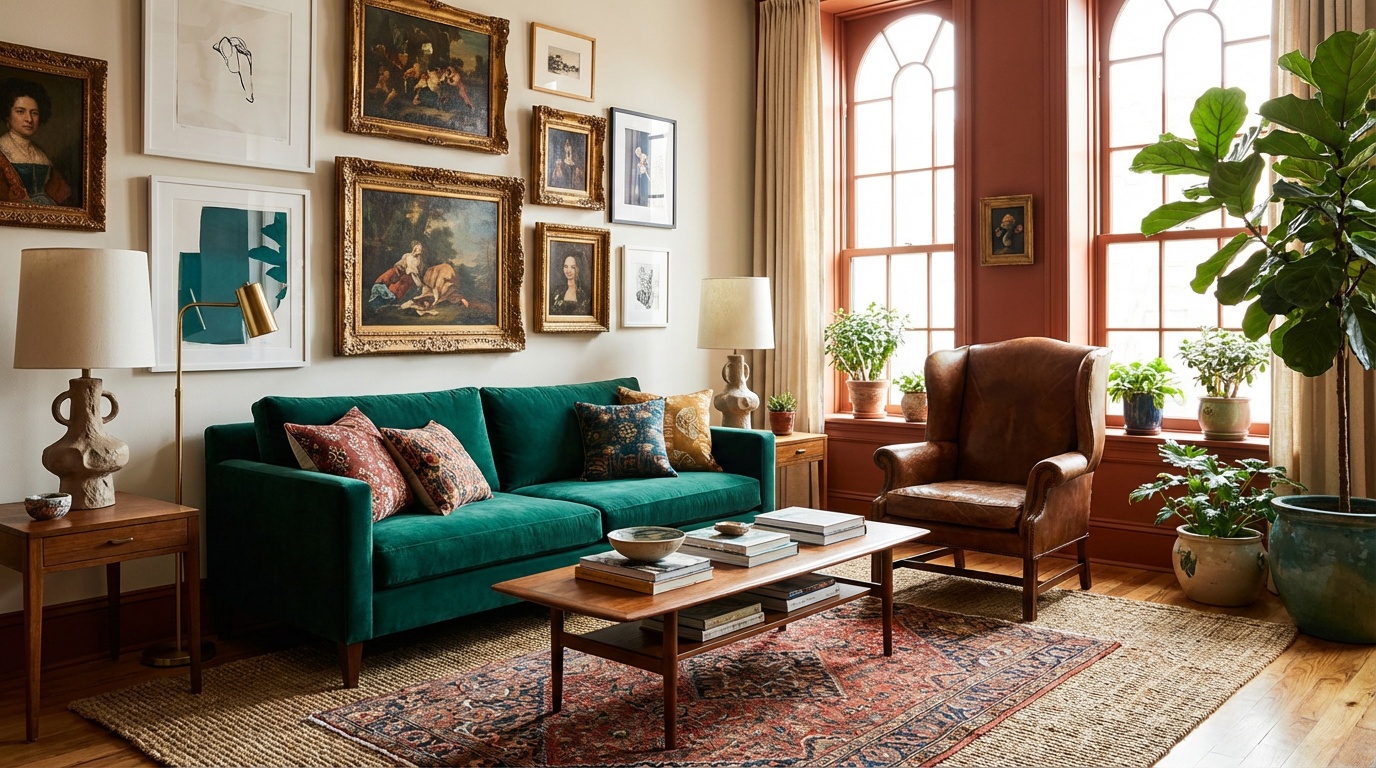
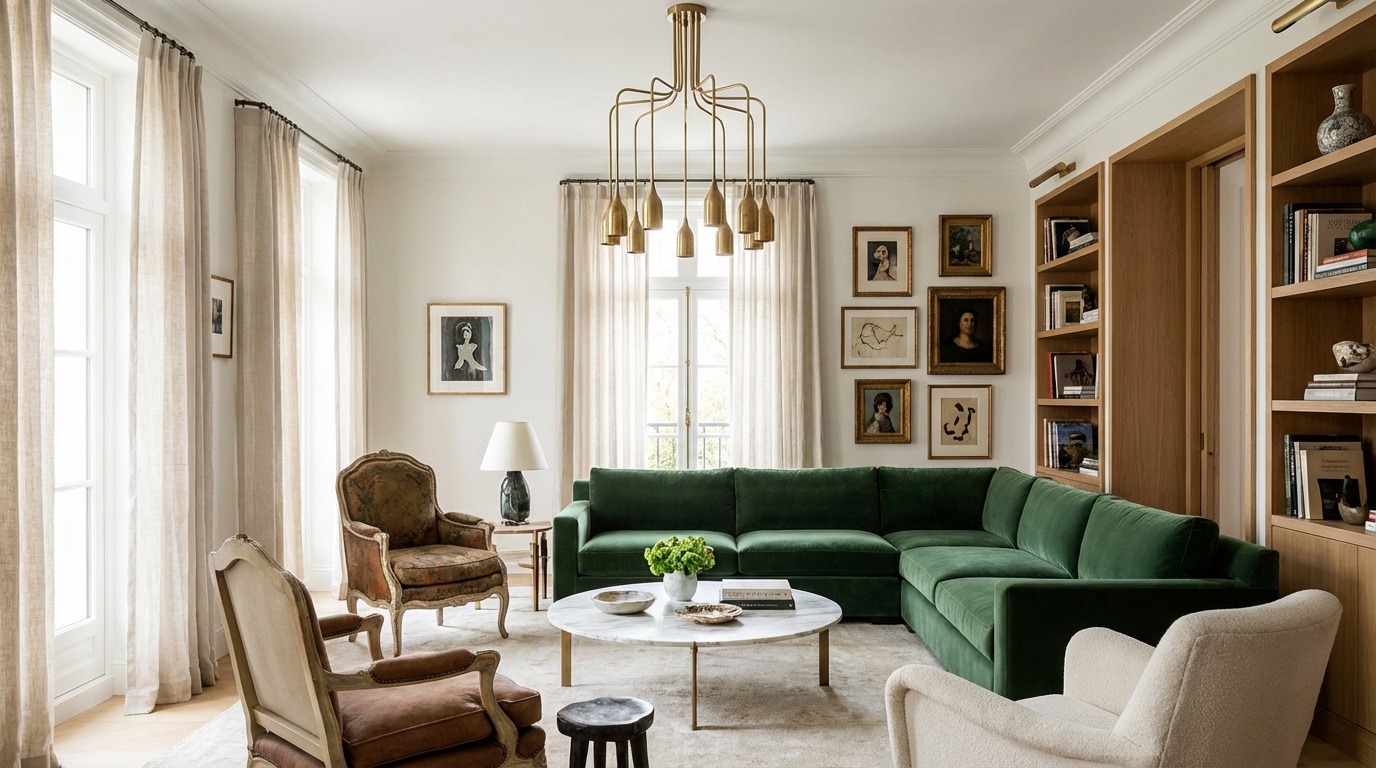
The Statement Sofa: This is often your anchor piece. Consider a mid-century modern silhouette in a bold jewel tone like emerald velvet, or a traditional Chesterfield in unexpected burnt orange leather. The sofa should be comfortable and substantial enough to ground the room, but interesting enough to spark conversation. Look for quality hardwood frames with eight-way hand-tied springs if you're investing for the long term.
Mismatched Seating: This is where eclectic truly shines. Pair your sofa with an antique wingback chair reupholstered in contemporary geometric fabric, or a sleek Eames-style lounger beside a Moroccan pouf. The key is varying the heights, shapes, and styles while maintaining some visual connection—perhaps similar wood tones or complementary colors.
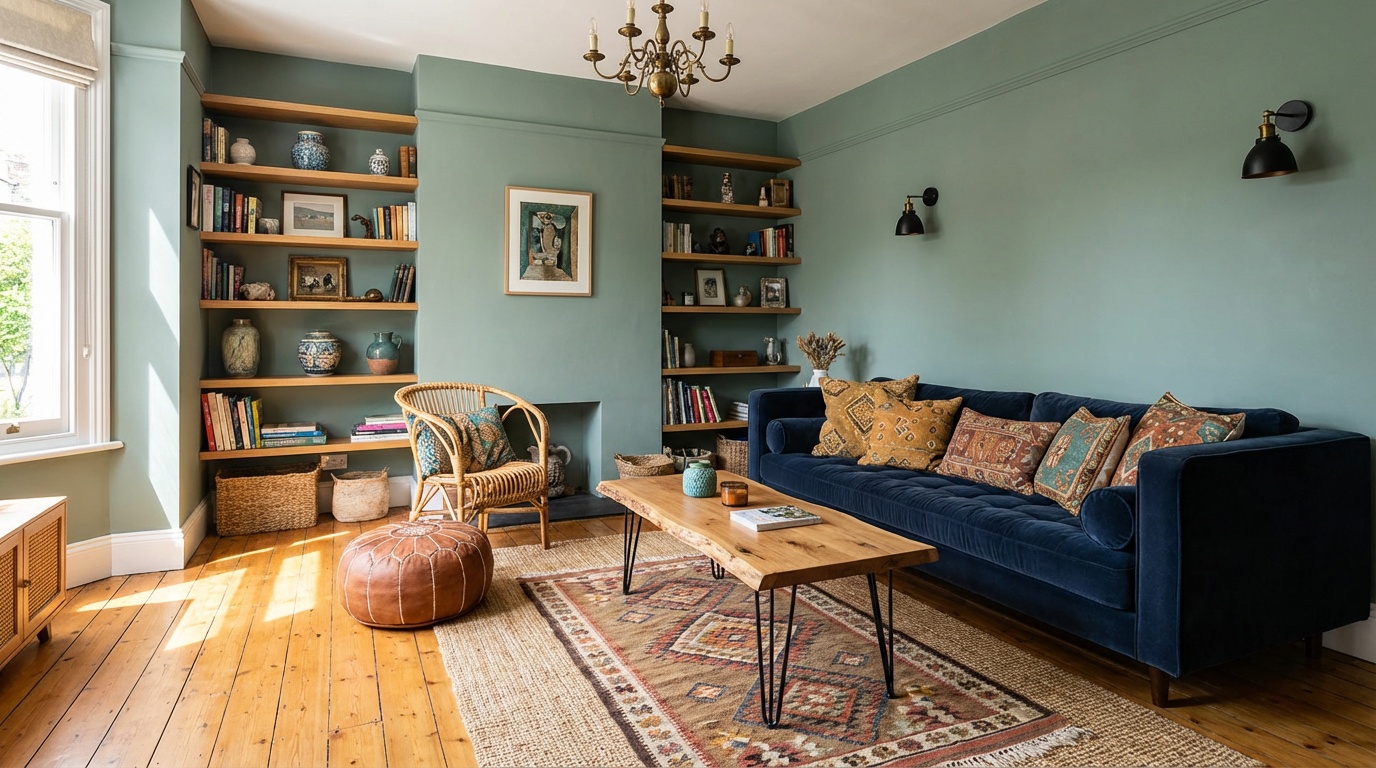
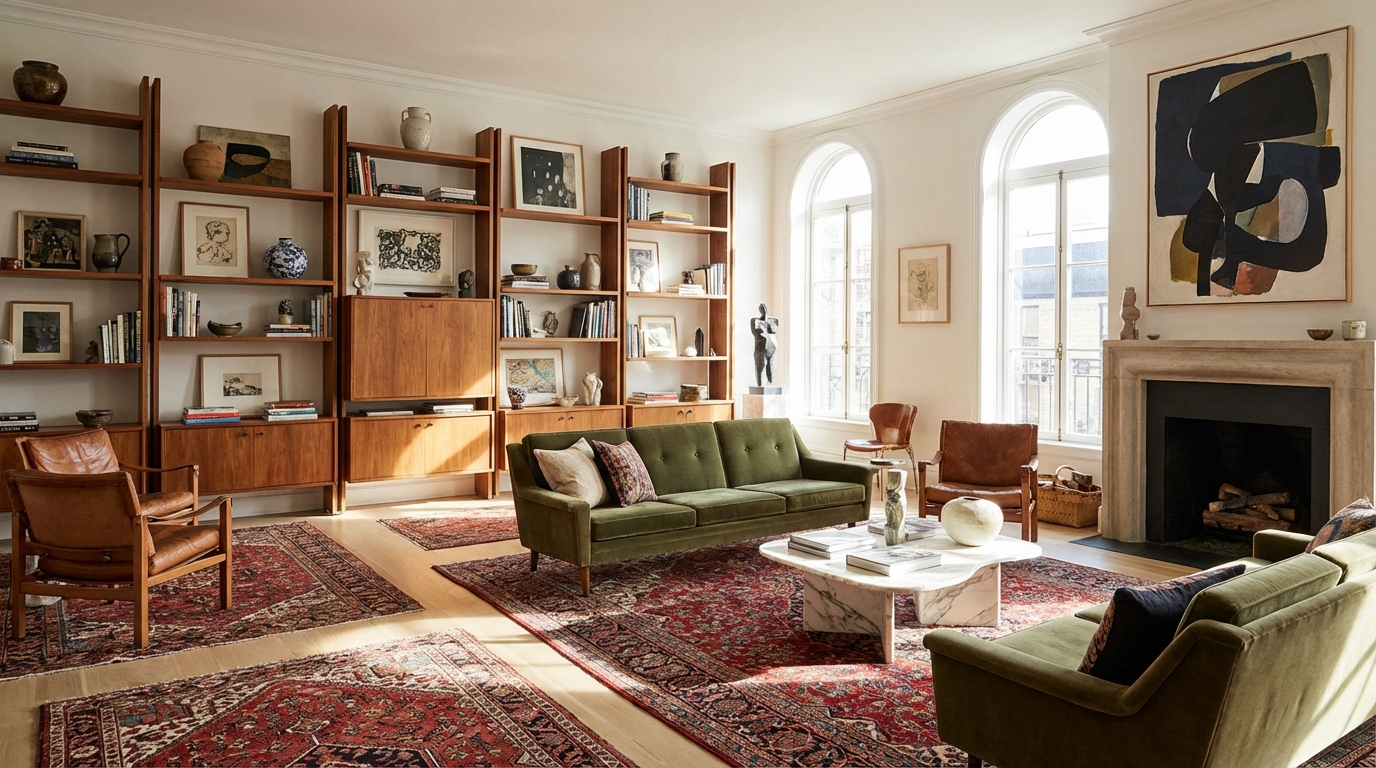
The Unexpected Coffee Table: Skip the matching set and choose something with character—a vintage steamer trunk, a live-edge wood slab on hairpin legs, or a Lucite table that lets your layered rugs shine through. Materials like reclaimed wood, hammered metal, or marble all work beautifully in eclectic spaces.
Open Shelving or Eclectic Bookcase: Display is crucial in eclectic design. A floor-to-ceiling bookshelf (whether industrial metal, mid-century teak, or painted vintage) gives you space to showcase your curated collections, art books, plants, and meaningful objects.
Signature Shapes and Silhouettes:
Eclectic living rooms thrive on contrasting silhouettes. Pair curvy, organic shapes (a kidney-shaped side table, rounded mirror, or curved sofa) with angular, geometric pieces (a square ottoman, linear bookshelf, or triangular floor lamp). This interplay creates visual interest while preventing the space from feeling too busy.
Key Materials:
- Woods: Mix wood tones freely—warm walnut with bleached oak, or glossy mahogany with weathered pine. The eclectic approach rejects the outdated rule that all woods must match
- Metals: Combine brass accents with black iron, or copper with brushed nickel. Varying metal finishes adds depth
- Fabrics: Layer velvet with linen, silk with cotton, and leather with wool. Texture variety is essential
- Natural elements: Rattan, jute, stone, and ceramic ground the mix of styles
Essential Elements for Your Eclectic Living Room
Color Palettes & Combinations
Color is the secret weapon that transforms eclectic from chaotic to cohesive. While eclectic rooms can technically incorporate any color, the most successful spaces follow strategic color distribution.
Primary Color Palette:
Start with a foundation of three to four main colors that will appear throughout the room:
- Warm terracotta or rust: Earthy and grounding, this color works beautifully in textiles and pottery
- Deep teal or peacock blue: Rich and sophisticated, perfect for upholstery or accent walls
- Warm cream or ivory: The neutral that lets bolder colors shine
- Charcoal or soft black: Provides definition and prevents the palette from feeling too sweet
Alternatively, you might build around:
- Dusty sage green paired with blush pink, warm honey oak, and off-white
- Navy blue with burnt orange, brass gold, and crisp white
- Eggplant purple alongside mustard yellow, forest green, and warm gray
Accent Colors:
Once your primary palette is established, introduce two to three accent colors in smaller doses—through throw pillows, artwork, or decorative objects. These might include:
- Jewel tones like emerald, sapphire, or ruby
- Metallics like rose gold, antique brass, or copper
- Unexpected pops like coral, chartreuse, or fuchsia
Balancing Neutrals with Color:
Follow the 60-30-10 rule as a starting point:
- 60% neutral foundation (walls, large furniture, flooring)
- 30% secondary colors (accent chairs, curtains, rugs)
- 10% bold accent colors (pillows, art, accessories)
In eclectic spaces, you can push this to 50-30-20 for more drama, but maintain the hierarchy to prevent visual chaos.
Color Distribution Strategy:
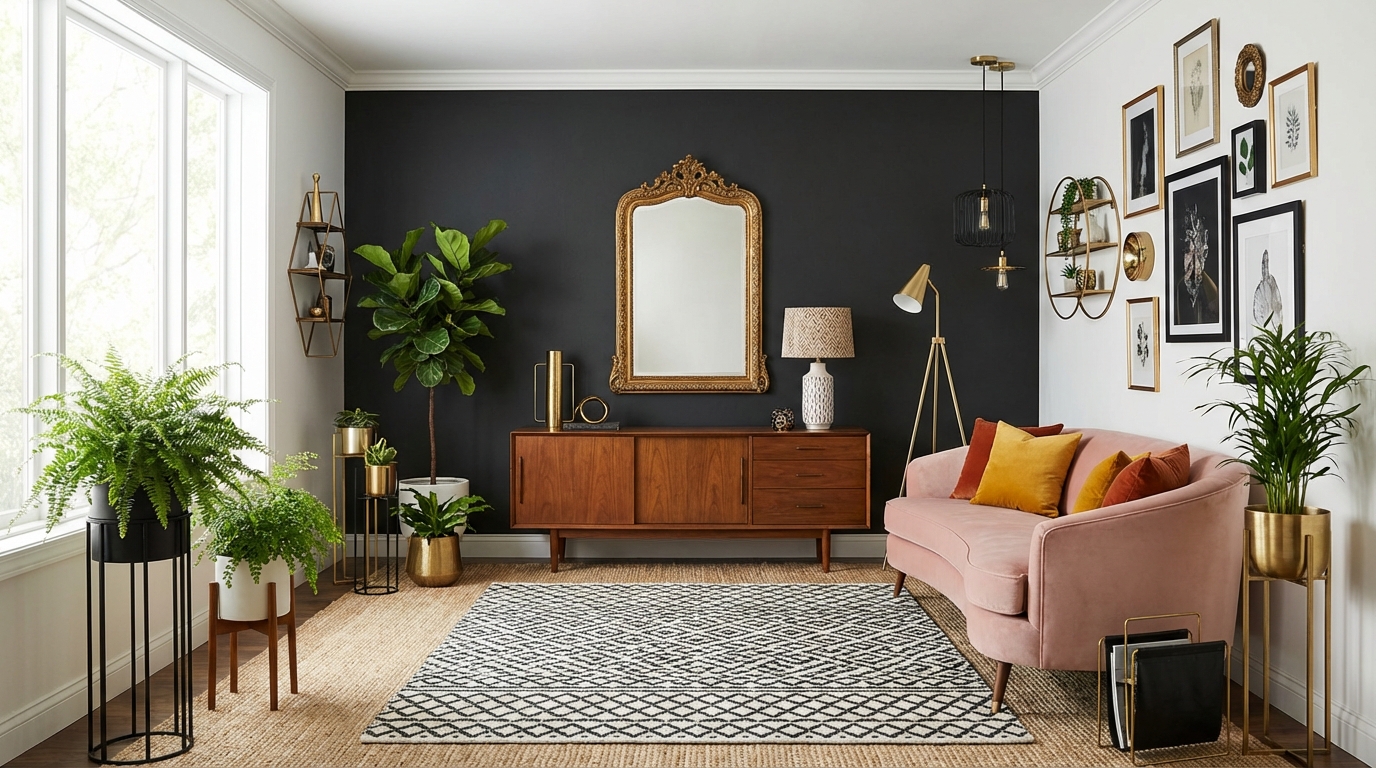
- Walls: Keep walls relatively neutral (warm white, greige, or soft sage) to serve as a gallery backdrop, or choose one accent wall in a deeper tone
- Large furniture: This can go either way—neutral sofas with colorful chairs, or a bold sofa with neutral supporting pieces
- Textiles and accessories: This is where you layer in pattern and color through rugs, pillows, throws, and curtains
Seasonal Variations:
One advantage of eclectic design is easy seasonal refreshing. Swap pillow covers and throws from rich velvets in burgundy and navy for winter to light linens in coral and turquoise for summer. Your foundational pieces remain constant while accessories shift the mood.
Color Palettes & Combinations
Lighting & Ambiance
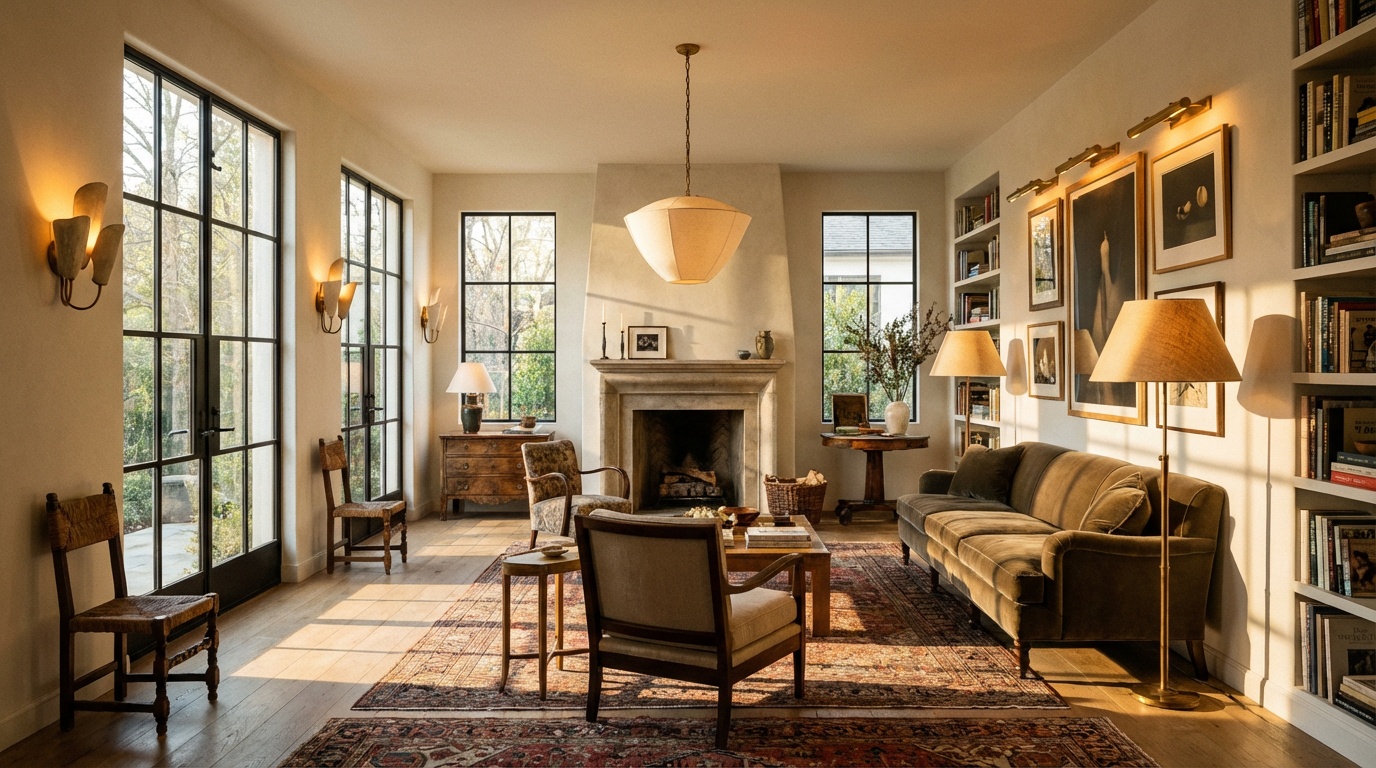
Lighting can make or break an eclectic living room. The goal is to create multiple mood options while highlighting your carefully curated collections.
Natural Lighting Optimization:
Maximize natural light by:
- Using sheer curtains in natural fibers (linen, cotton) that filter rather than block light
- Positioning mirrors opposite windows to bounce light deeper into the room
- Keeping window areas uncluttered—avoid heavy, dark drapes that overwhelm
- Choosing furniture arrangements that don't block light pathways
In eclectic spaces, window treatments themselves can be statement pieces—think vintage embroidered panels, globally-inspired prints, or unexpected combinations like bamboo shades topped with colorful valances.
Layered Artificial Lighting:
Eclectic rooms demand multiple light sources at varying heights:
Ambient Lighting: Your base layer might include:
- A statement chandelier or pendant (vintage crystal, modern geometric, or artisan-crafted)
- Recessed lighting on dimmers for flexibility
- Architectural lighting like cove or toe-kick lights for drama
Task Lighting: Functional illumination includes:
- Reading lamps beside seating areas—mix styles like a traditional brass pharmacy lamp with a contemporary arc floor lamp
- Table lamps on side tables and consoles (this is where you can really play with eclectic pairings)
Accent Lighting: Highlighting your collections:
- Picture lights above artwork
- LED strip lighting inside shelving units
- Uplighting for plants or architectural features
- Candles and lanterns for warmth (group various heights and styles)
Specific Fixture Styles:
The beauty of eclectic lighting is mixing periods and styles:
- Pair a mid-century Sputnik chandelier with vintage glass table lamps
- Combine an industrial tripod floor lamp with ornate ceramic table lamps
- Mix modern Edison bulb pendants with traditional silk-shade sconces
The unifying factor might be similar metal finishes (all warm brass), coordinating colors (all black bases), or complementary scales (all appropriately sized for their locations).
Creating Mood:
Install dimmers on all overhead lighting to transition from bright and energetic for entertaining to soft and intimate for movie nights. Layer at least three different light sources in any seating area, and ensure no single fixture is doing all the work. The goal is pools of light at varying heights that create depth and shadow—much more interesting than flat, even illumination.
Lighting & Ambiance
Furniture & Decor Shopping Guide
Building an eclectic living room is a treasure hunt, and knowing where to look makes all the difference.
Investment Pieces Worth Splurging On:
Quality Upholstered Seating ($1,500-$4,000): Your sofa or primary chairs should be comfortable and durable. Look for hardwood frames, quality cushioning, and timeless silhouettes you can reupholster later if tastes change.
Statement Lighting ($300-$1,500): A showstopping chandelier or unique floor lamp becomes sculptural art that also serves a function.
Antique or Vintage Accent Pieces ($200-$2,000): One truly special antique—whether a hand-carved side table, vintage credenza, or inherited armchair—adds instant authenticity and history.
Handmade Textiles ($300-$1,200): An authentic vintage rug, hand-woven throw, or artisan-made pillows bring texture and craftsmanship that mass-produced items can't match.
Budget-Friendly Alternatives:
- Reupholster existing furniture: A $50 yard of fabric and basic DIY skills can transform a dated chair into an eclectic showpiece
- Reproduction lighting: Many retailers offer affordable versions of iconic mid-century and industrial fixtures
- Printed rugs: Modern printed rugs can mimic vintage patterns at a fraction of the cost
- Paint and hardware updates: Transform basic furniture with paint, new knobs, or decorative appliques
Where to Shop:
High-End Investment Pieces:
- Anthropologie: For globally-inspired furniture with unique details
- West Elm: Mid-century modern pieces that mix well with other styles
- Article: Affordable-luxury furniture with clean lines
- 1stDibs: Curated antiques and vintage designer pieces
Mid-Range Options:
- World Market: Global textiles, furniture, and accessories
- CB2: Contemporary pieces that work well in eclectic mixes
- Wayfair: Vast selection across all styles and price points
- Target's Studio McGee Collection: Affordable basics with style
Vintage and Secondhand:
- Local estate sales: Often the best source for quality antiques at reasonable prices
- Facebook Marketplace and Craigslist: Require patience but yield amazing finds
- Chairish and Etsy Vintage: Curated online vintage with easier searching
- Thrift stores and Goodwill: Hit-or-miss but occasionally incredible
- Architectural salvage yards: For unique shelving, mantels, and decorative elements
DIY Projects:
- Create a gallery wall: Mix thrifted frames (spray-painted in coordinating colors) with personal photos, art prints, and found objects
- Reupholster dining chairs: Use different fabrics on each chair for intentional mismatch
- Build floating shelves: Display collections against a painted accent wall
- Decoupage furniture: Add pattern and personality to plain pieces
- Make custom pillows: Use vintage scarves, fabric remnants, or even framed textile art as pillow covers
The key to successful eclectic shopping is patience. Unlike buying a complete room set, building an eclectic space takes time. Purchase pieces you genuinely love rather than rushing to fill space, and trust that the right items will reveal themselves.
Furniture & Decor Shopping Guide
Common Mistakes to Avoid
Even experienced designers can stumble when creating eclectic spaces. Here are the most common pitfalls and how to avoid them:
Mistake #1: No Unifying Element
The Problem: Collecting random pieces without a common thread results in chaos rather than curated eclecticism. When nothing connects—not color, not scale, not style family—the room feels disjointed.
The Fix: Choose at least one unifying element that appears throughout the room. This might be a color that repeats in various pieces, similar wood tones, consistent metal finishes, or a recurring pattern motif. For example, if your sofa is navy, echo that blue in artwork, a patterned rug, and ceramic accessories.
Mistake #2: Ignoring Scale and Proportion
The Problem: Mixing styles doesn't mean ignoring size relationships. A massive sectional paired with only tiny accent pieces, or a small loveseat overwhelmed by an enormous coffee table, creates visual imbalance.
The Fix: Vary heights and sizes, but ensure pieces relate proportionally to each other and the room. Use the rule of thirds: fill roughly one-third of wall height with furniture, leaving two-thirds for art and visual breathing room. Place tall elements (floor lamps, plants, bookcases) throughout the room rather than clustering them in one corner.
Mistake #3: Too Many Competing Focal Points
The Problem: When everything is bold—a bright patterned sofa, busy wallpaper, large-scale artwork, and colorful rugs all fighting for attention—the eye doesn't know where to land. The result is exhausting rather than energizing.
The Fix: Choose one or two primary focal points (perhaps a statement sofa and a gallery wall) and let other elements support rather than compete. If your rug is highly patterned, keep upholstery more subdued. If your walls are bold, choose simpler furniture. Create a visual hierarchy where some pieces lead and others follow.
Mistake #4: Neglecting Negative Space
The Problem: Eclectic doesn't mean cluttered. Filling every surface and wall with objects creates visual noise that obscures the beautiful pieces you've collected.
The Fix: Embrace empty space as a design element. Leave some wall areas bare, keep some surfaces clear, and allow breathing room around furniture groupings. This negative space gives the eye rest and actually makes your statement pieces stand out more. Consider the 70% rule: fill about 70% of available space, leaving 30% open.
Mistake #5: Forcing Pieces That Don't Work
The Problem: Sometimes we love a piece but it genuinely doesn't fit the room—wrong scale, clashing undertones, or competing with rather than complementing existing elements.
The Fix: Be willing to edit. Not every beloved item belongs in every room. If something isn't working after trying multiple placements and styling approaches, move it to a different room or store it temporarily. Your living room should feel cohesive, and sometimes that means making tough choices. Consider whether a piece needs a simple update (new fabric, different placement) or truly doesn't belong.
Signs Your Space Is Missing the Mark:
- You feel anxious or overwhelmed rather than energized when entering
- Guests' eyes dart around without landing anywhere comfortable
- You can't identify a clear color story or theme
- The room feels more like a storage unit than a curated collection
- Nothing seems to relate to anything else
The Over-Styling vs. Under-Styling Balance:
Eclectic rooms walk a fine line. Too sparse, and the space loses its personality; too busy, and it becomes chaotic. Aim for curated abundance—layers of texture, pattern, and objects that feel intentional rather than accidental. Step back frequently during styling, take photos (the camera reveals what your eye might miss), and remove 10-20% of what you initially place. You can always add back, but starting with less helps you identify what's truly essential.
Common Mistakes to Avoid
Styling for Different Budgets & Spaces
Eclectic design is remarkably adaptable to various constraints, making it accessible regardless of your square footage or budget.
Small Space Adaptations:
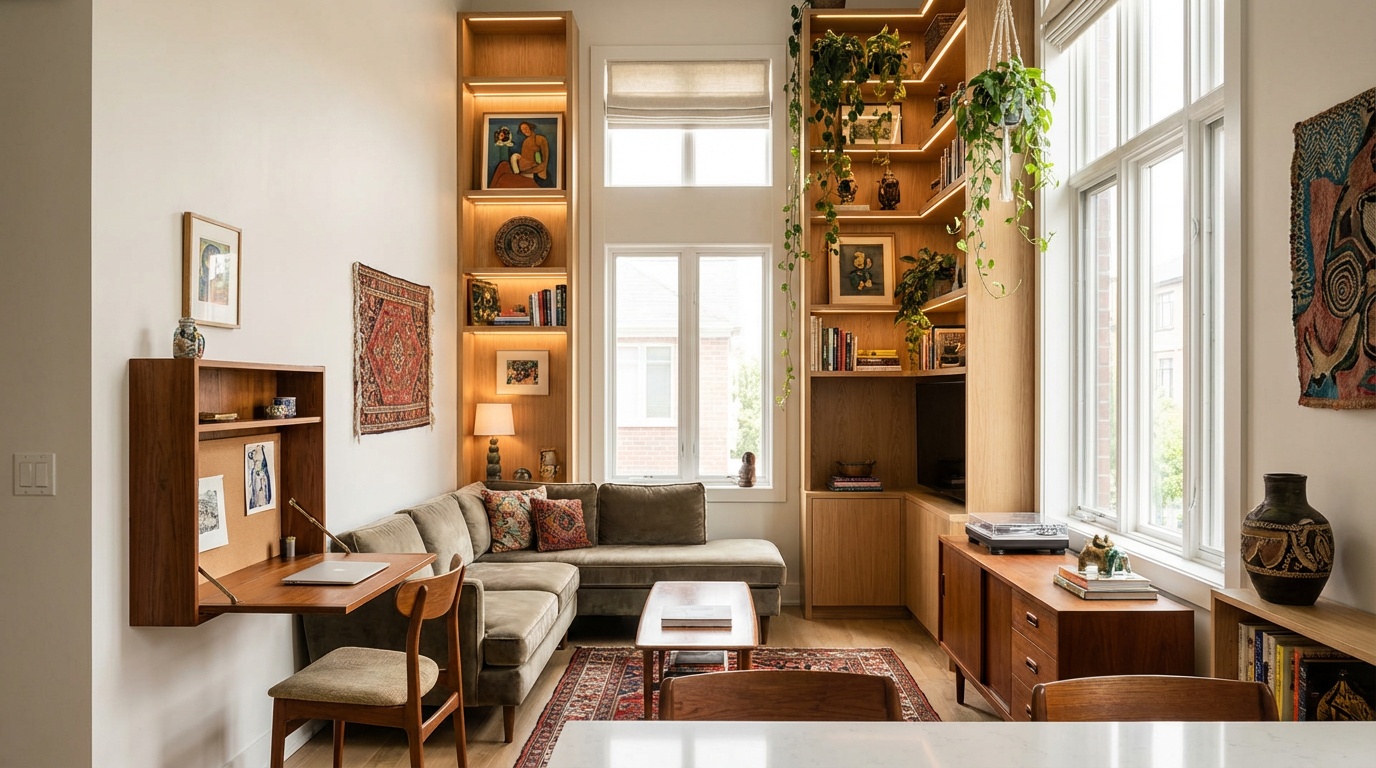
Eclectic style actually works beautifully in compact living rooms because it emphasizes quality over quantity and encourages multi-functional pieces.
Small Space Strategies:
- Use vertical space: Floor-to-ceiling shelving draws the eye up and provides display space without consuming floor area
- Choose furniture with legs: Pieces that sit on visible legs (rather than skirted or box-style) create visual lightness and make rooms feel larger
- Opt for transparent elements: A Lucite coffee table or ghost chair adds eclectic interest without visual weight
- Embrace multi-function pieces: An antique trunk as a coffee table provides storage; a vintage desk doubles as a console
- Create zones: Use rugs and furniture arrangement to define conversation and reading areas even in small footprints
- Limit the color palette: In tight spaces, stick to three main colors to prevent overwhelm
Rental-Friendly Approaches:
You don't need to paint walls or make permanent changes to achieve eclectic style.
Renter-Friendly Tactics:
- Removable wallpaper: Create an accent wall with peel-and-stick options in bold patterns
- Large-scale art: Lean oversized frames against walls rather than hanging
- Furniture as focal points: Invest in statement furniture rather than architectural changes
- Layered rugs: Cover boring carpet with vintage or patterned rugs
- Temporary lighting: Use plug-in sconces and statement floor lamps instead of replacing fixtures
- Curtains as architecture: Floor-to-ceiling drapes add drama without alterations
Many renters find eclectic style perfect because it emphasizes portable pieces you can take to your next home, similar to how you might approach a contemporary living room with movable statement pieces.
Budget Tiers:
Under $500 Transformation: Focus on accessories and DIY:
- Paint one accent wall: $50
- Thrifted vintage chair, reupholstered: $150
- New throw pillows in eclectic mix: $100
- Secondhand rug: $100
- Gallery wall with thrifted frames: $75
- Plants and pots: $25
This budget prioritizes small changes with big impact, using paint, textiles, and found objects to shift the room's personality.
$500-$2,000 Transformation: Add some new furniture:
- Statement sofa or pair of accent chairs: $800
- Vintage coffee table: $200
- New lighting fixture: $300
- Window treatments: $200
- Textiles (rug, pillows, throw): $300
- Art and accessories: $200
This mid-range budget allows for one or two significant furniture investments plus supporting elements.
$2,000+ Transformation: Complete room overhaul:
- Quality sofa: $2,000
- Mix of vintage and new seating: $1,000
- Statement lighting: $500
- Custom or high-quality rug: $800
- Window treatments: $400
- Art collection: $500
- Shelving and storage: $400
- Accessories and styling: $400
This budget creates a fully realized eclectic living room with investment pieces that will last decades.
Phasing Over Time:
Most successful eclectic rooms evolve rather than appearing overnight. Consider this timeline:
Phase 1 (Months 1-2): Establish your color palette and purchase your anchor piece (usually the sofa). Paint if needed.
Phase 2 (Months 3-4): Add secondary seating and your primary rug. These major pieces define the room's layout.
Phase 3 (Months 5-6): Introduce lighting, window treatments, and a coffee table. The room becomes functional.
Phase 4 (Months 7-12): Layer in accessories, art, plants, and textiles. This is where eclectic personality truly emerges.
Ongoing: Continue curating—adding special finds, rotating seasonal elements, and editing pieces that no longer serve the vision.
This measured approach prevents costly mistakes and allows you to live with pieces before committing to the next layer.
Styling for Different Budgets & Spaces
Bringing Your Vision to Life
The gap between inspiration and reality can feel overwhelming, especially with eclectic style's inherent complexity. How do you know if that vintage velvet chair will actually work with your existing sofa? Will that bold wallpaper overwhelm your small space? This is where visualization becomes invaluable.
Start with Visualization Before Purchasing:
Before investing in furniture, paint, or decor, seeing your vision come to life helps you:
- Test color combinations without commitment
- Understand how different styles interact in your specific space
- Identify what's missing or what might be too much
- Gain confidence in bold choices
- Avoid expensive mistakes
Traditional mood boards help, but they can't show you how elements will actually look in your room with your lighting, architecture, and existing pieces.
How RoomStudioAI Can Help:
RoomStudioAI transforms the design process by letting you visualize your eclectic living room before making a single purchase. Here's how it works:
- Upload a photo of your current living room—any angle, any condition
- Select eclectic style from the design options
- Watch as AI instantly transforms your space, showing you how eclectic elements would look in your actual room
- Experiment with variations—try different color palettes, furniture arrangements, and styling approaches
- Save and compare multiple versions to see which resonates most
The technology understands your room's dimensions, lighting, and architecture, generating realistic visualizations that help you make informed decisions. You can see whether that bold color palette will energize or overwhelm, whether mixing mid-century and traditional pieces creates harmony or chaos in your specific space.
Try Risk-Free Experimentation:
The beauty of AI visualization is freedom to experiment without consequences. Try that jewel-tone velvet sofa you're nervous about. Test a gallery wall arrangement. See how layered rugs might look. Each visualization takes seconds, letting you explore dozens of possibilities in the time it would take to visit a single furniture store.
For eclectic style especially—where success depends on balancing diverse elements—this visualization capability is transformative. You can push boundaries confidently, knowing you've seen how bold choices will actually appear in your space.
Your Eclectic Living Room Awaits:
Creating an eclectic living room is a deeply personal journey. It's about trusting your instincts, celebrating the pieces that speak to you, and learning to see connections between seemingly disparate elements. The room you create will be unlike any other—a true reflection of your experiences, travels, and evolving taste.
Start by visualizing your possibilities with RoomStudioAI's free tool. Upload a photo of your living room today and see how eclectic style could transform your space. Once you see your vision realized, you'll have the confidence to bring it to life, one carefully chosen piece at a time. Your perfectly imperfect, beautifully eclectic living room is waiting to be discovered.