What Defines Japandi Style
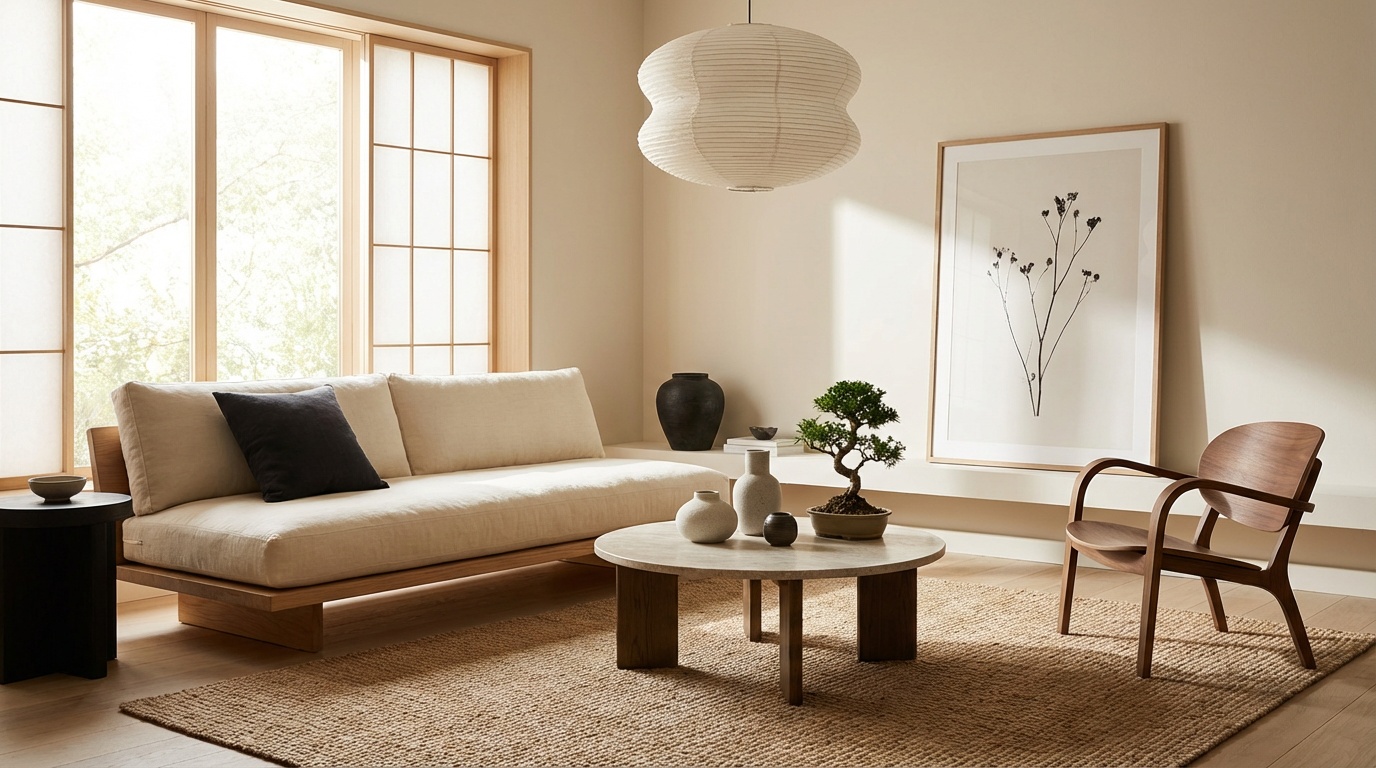
Japandi style represents the beautiful marriage of two design philosophies: Japanese wabi-sabi (finding beauty in imperfection) and Scandinavian hygge (creating cozy, comfortable spaces). This design movement emerged in the late 2010s as designers and homeowners began recognizing the natural synergy between these two aesthetics, both of which prioritize simplicity, natural materials, and functional beauty.
At its core, Japandi embraces minimalism with warmth. Unlike stark minimalist interiors that can feel cold or unwelcoming, Japandi spaces incorporate the Scandinavian love of texture, comfort, and soft lighting alongside Japanese principles of restraint, craftsmanship, and connection to nature. The philosophy centers on owning fewer, better things—pieces that serve a purpose and bring genuine joy.
This style resonates deeply with modern homeowners for several compelling reasons. In our increasingly chaotic world, Japandi living rooms offer a sanctuary from overstimulation. The aesthetic supports mindful living and sustainability through its emphasis on quality over quantity and timeless design over trends. Additionally, Japandi's neutral palette and clean lines create versatile spaces that adapt beautifully as your life evolves.
What distinguishes Japandi from purely Japanese or Scandinavian design? While Japanese interiors often feature low furniture, tatami mats, and stark simplicity, and Scandinavian spaces embrace bright whites and playful patterns, Japandi finds the middle ground. It's warmer than traditional Japanese minimalism but more restrained than typical Scandinavian design. You'll see higher furniture than traditional Japanese rooms, more texture than minimalist spaces, and a more muted color palette than bright Scandinavian interiors.
What Defines Japandi Style
Essential Elements for Your Japandi Living Room
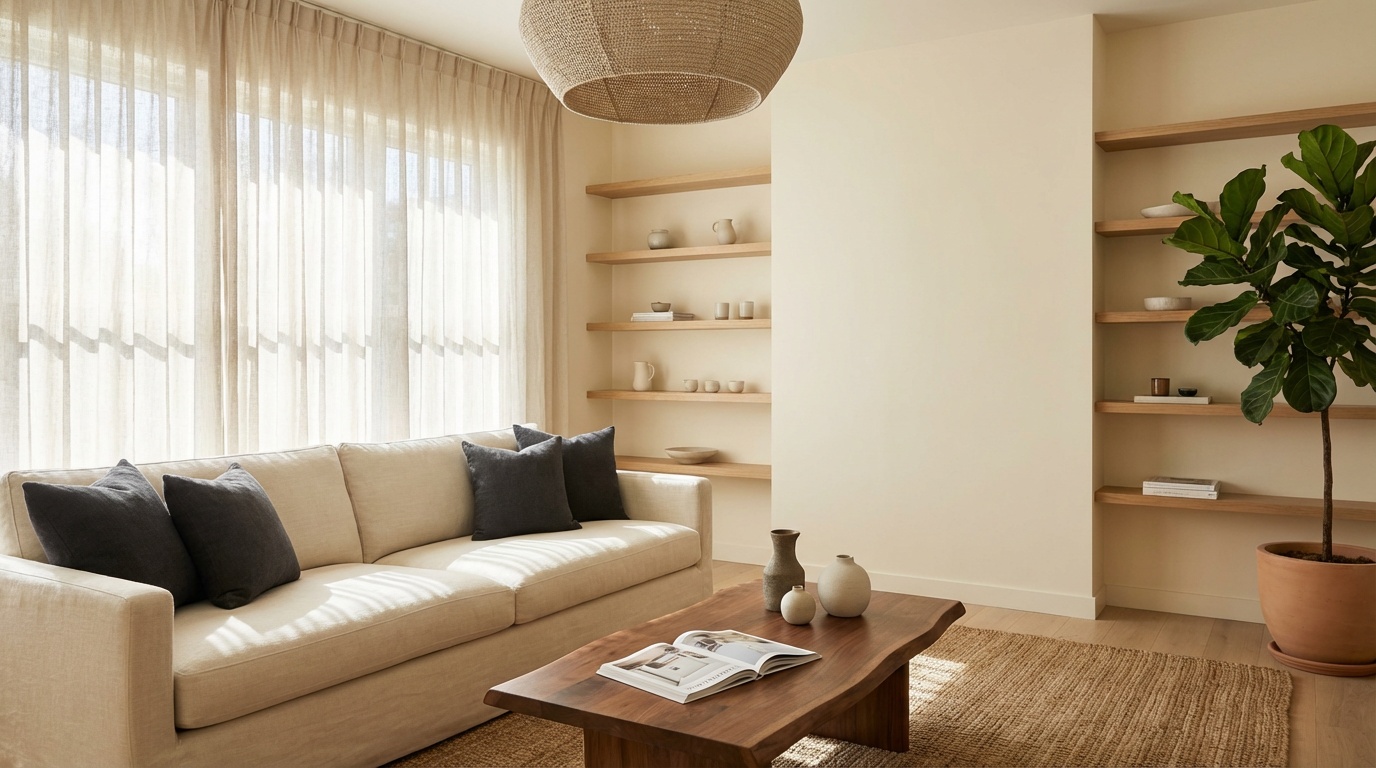
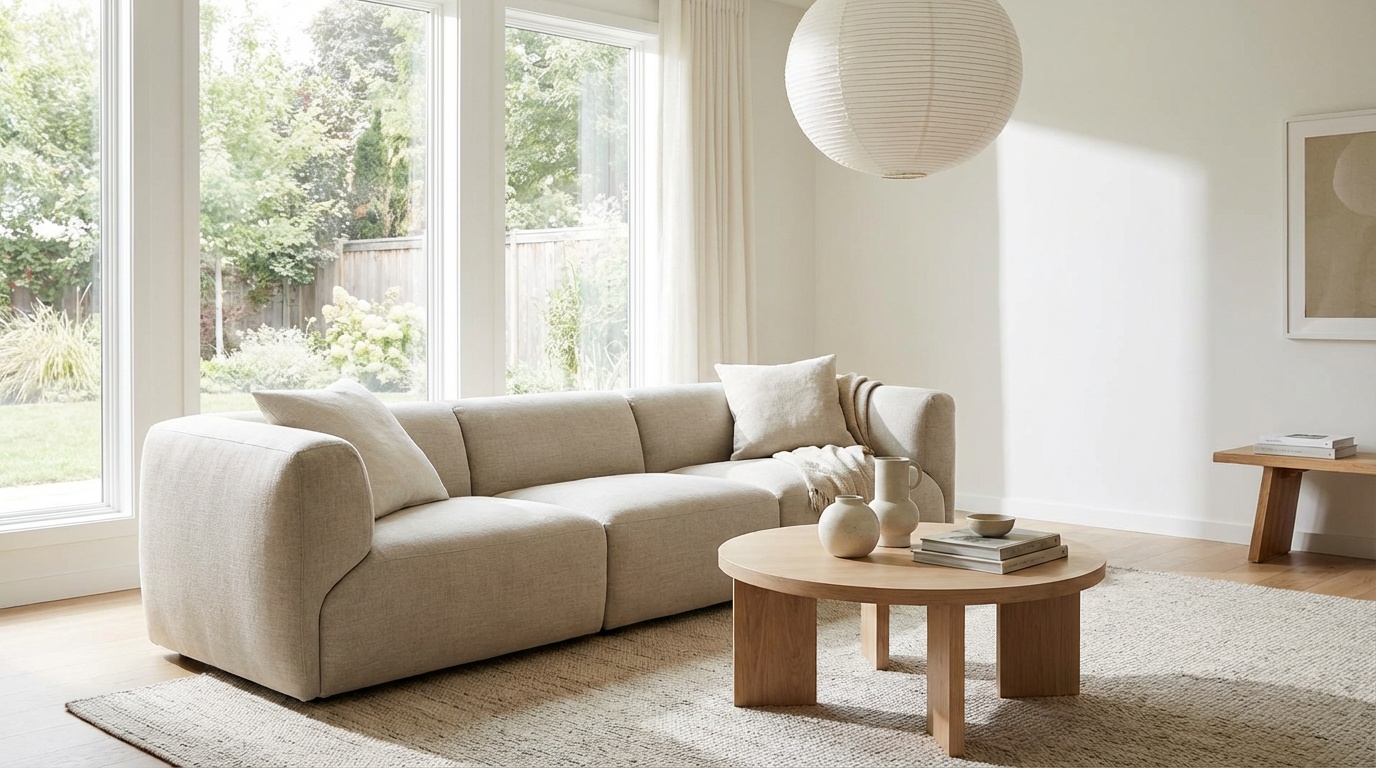
Creating an authentic Japandi living room starts with selecting the right foundational pieces. Your sofa should feature clean lines and low-profile silhouettes—think streamlined sectionals or simple three-seaters in neutral linen, bouclé, or textured cotton. Avoid overstuffed, heavily tufted designs in favor of pieces with exposed wooden legs in light oak or walnut.
A low-profile coffee table is non-negotiable in Japandi design. Look for pieces in natural wood with visible grain patterns, ideally in organic shapes like rounded rectangles or ovals. Materials should include solid oak, ash, walnut, or bamboo—never glass-and-chrome combinations. The height should allow for comfortable use while maintaining visual openness.
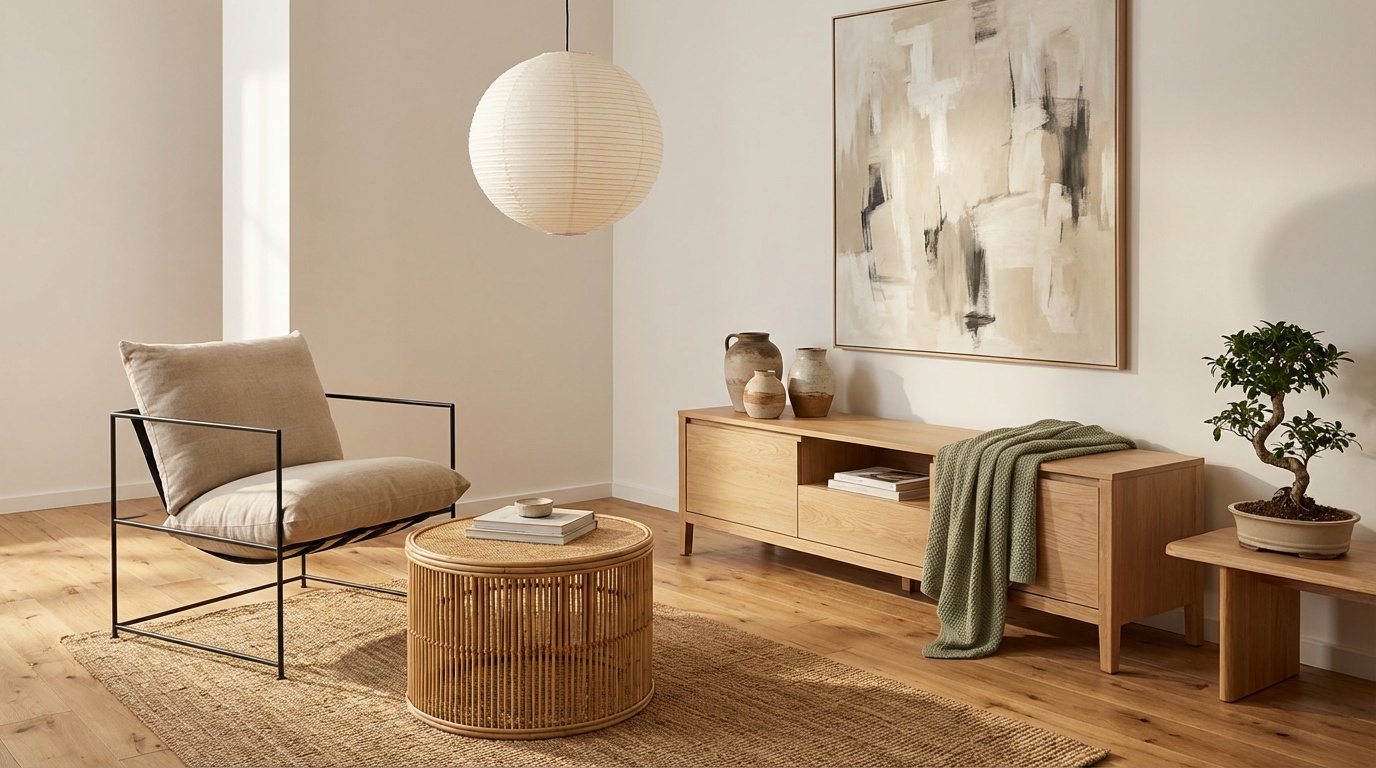
For seating variety, incorporate accent chairs with sculptural wooden frames and simple cushions. Japanese-inspired papasan chairs modernized with neutral cushions or Scandinavian-style lounge chairs in leather or fabric both work beautifully. The key is maintaining that signature blend of organic form and functional comfort.
Storage solutions should be both beautiful and practical. Low credenzas, floating shelves in light wood, and minimal bookcases with clean lines keep clutter hidden while displaying carefully curated objects. Choose pieces with natural wood finishes rather than painted or laminated surfaces.
Material selection defines Japandi authenticity. Light woods—particularly white oak, ash, beech, and bamboo—form the foundation. These should be complemented by darker accent woods like walnut or teak for depth. Metals should be minimal and matte: brushed brass, black steel, or natural iron in small doses. For fabrics, embrace natural fibers: linen for curtains and throw pillows, cotton for upholstery, wool for throws and area rugs, and jute or sisal for textural layering.
Essential Elements for Your Japandi Living Room
Color Palettes & Combinations
The Japandi color story revolves around sophisticated neutrals that create calm without feeling sterile. Your primary palette should include three to four foundational shades that work harmoniously throughout the space.
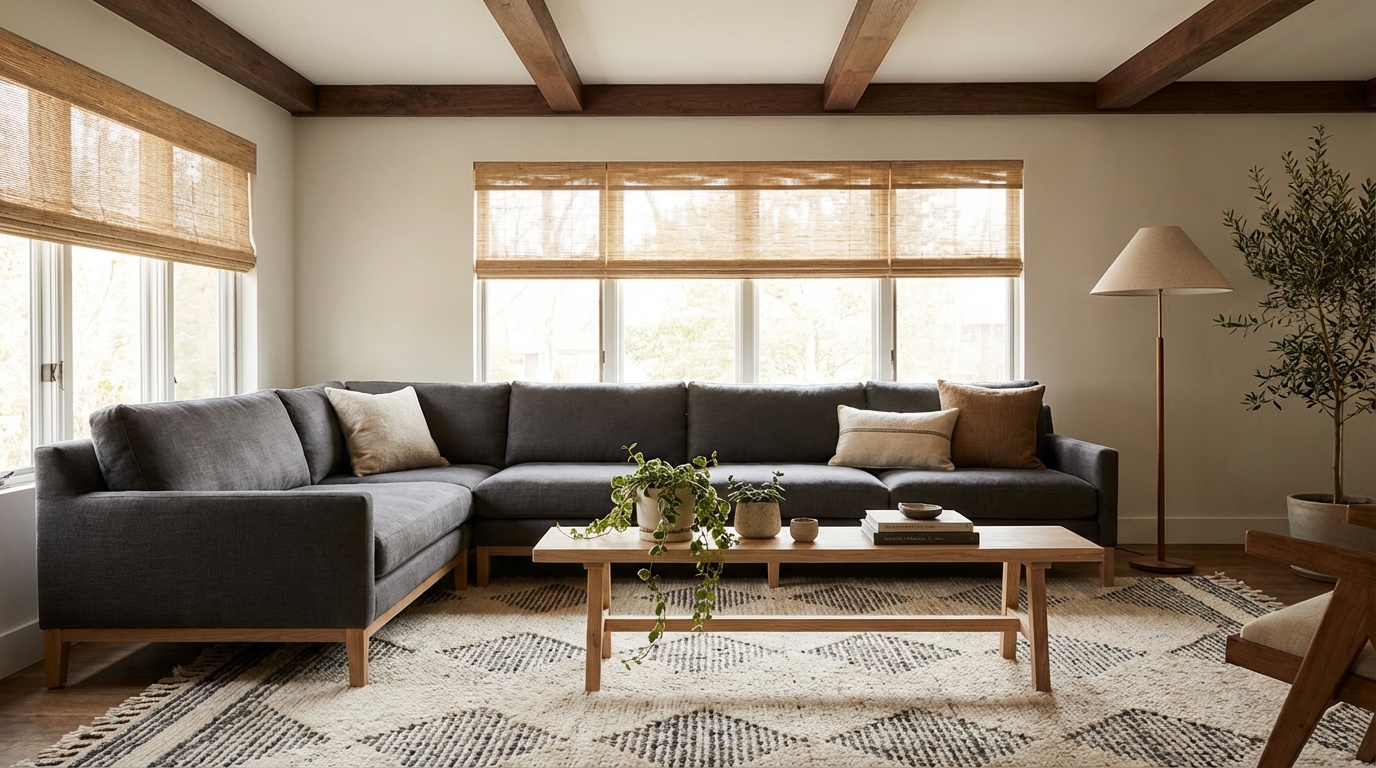
Start with warm whites and creams for walls—think colors like "rice paper white," "natural linen," or "warm ivory" rather than stark bright white. These create a soft, enveloping backdrop that changes beautifully with natural light throughout the day. For larger furniture pieces, embrace warm honey oak and weathered ash tones that bring organic warmth without overwhelming the space.
Introduce depth through charcoal grays and soft blacks in accent pieces. A charcoal wool throw, black ceramic vases, or dark walnut side tables prevent the space from feeling too light or washed out. The Japanese influence encourages these darker elements as grounding forces.
Accent colors in Japandi spaces lean toward muted, nature-inspired hues. Consider "dusty sage" green, "clay terracotta," "soft slate blue," or "warm sand" for throw pillows, artwork, or a single accent chair. These colors should feel like they've been filtered through a neutral lens—never bright or saturated, always softened and subdued.
Balancing neutrals with color requires restraint. Follow the 80-20 rule: 80% neutrals (whites, creams, woods, grays) and 20% subtle color accents. This maintains the serene foundation while preventing monotony. Your accent colors should appear in small, intentional doses—a ceramic planter, linen cushions, or a vintage rug with faded tones.
For color distribution, keep walls neutral in warm whites or very pale greiges. Your large furniture should primarily feature natural wood tones and neutral upholstery in cream, beige, or soft gray. Reserve color accents for easily changeable decor items: pillows, throws, artwork, and plants.
Japandi style also adapts beautifully to seasons. In autumn and winter, layer in warmer terracottas, deeper charcoals, and rich chocolate browns through textiles. For spring and summer, lighten the palette with more creams, pale sage greens, and soft blues while removing heavier layers. This seasonal flexibility keeps the space feeling fresh without requiring major overhauls.
Color Palettes & Combinations
Lighting & Ambiance
Lighting makes or breaks a Japandi living room, as both Japanese and Scandinavian design traditions deeply value the interplay of light and shadow. Natural light should be your starting point—maximize it through sheer linen curtains or woven bamboo shades that filter rather than block sunlight. Avoid heavy drapes or dark window treatments that fight against the style's airy sensibility.
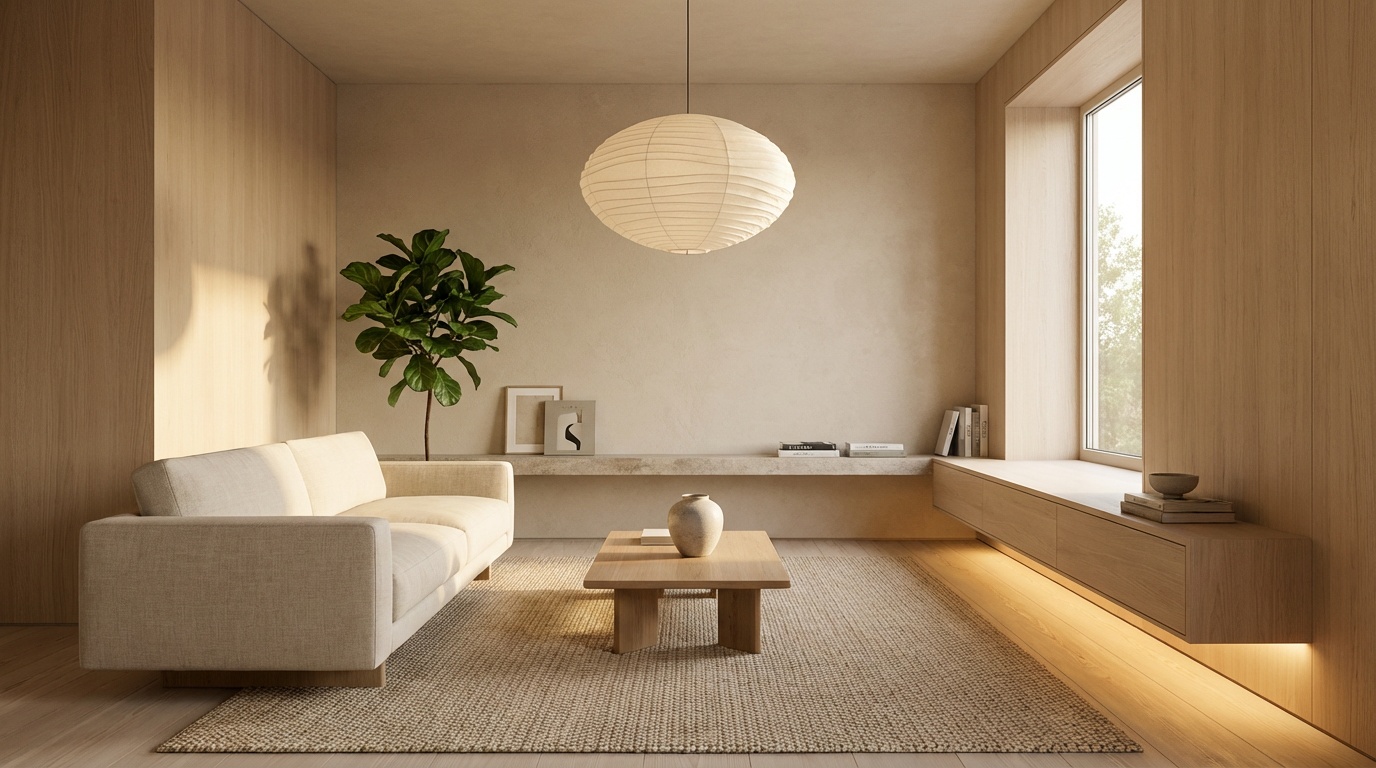
For artificial lighting, think in layers. Your ambient lighting provides overall illumination—consider recessed ceiling lights on dimmers or a simple, sculptural pendant in rice paper, linen, or natural rattan. Japanese-inspired akari lamps or Scandinavian paper pendants both work beautifully as centerpieces that cast soft, diffused light.
Task lighting addresses specific activities without disrupting the aesthetic. A slender floor lamp with a linen shade positioned near your reading chair, or a minimal table lamp on a side table provides focused light. Choose fixtures with wooden bases, ceramic bodies, or simple metal frames in matte black or brass—nothing ornate or overly decorative.
Accent lighting adds drama and depth. Picture lights above artwork, LED strips hidden beneath floating shelves, or small uplights highlighting a fiddle leaf fig create visual interest after dark. Keep these subtle—Japandi lighting should never feel theatrical or obvious.
Specific fixture styles that complement Japandi design include washi paper lanterns, wooden tripod floor lamps, ceramic table lamps with simple drum shades, woven pendant lights in natural fibers, and minimal track lighting in matte black. Avoid crystal chandeliers, industrial Edison bulbs, or anything with excessive ornamentation.
Creating the right atmosphere means understanding that Japandi spaces should feel softly illuminated rather than brightly lit. Use warm white bulbs (2700-3000K) rather than cool whites, and install dimmers wherever possible. Evening lighting should create pools of gentle illumination rather than flooding the entire room. This approach honors the Japanese concept of in'ei (shadows and nuance) while maintaining Scandinavian coziness.
Lighting & Ambiance
Furniture & Decor Shopping Guide
Investing wisely in Japandi pieces means knowing where to splurge and where to save. Your key investment pieces should include your sofa (plan for $1,500-$4,000 for quality construction and natural materials), your coffee table (solid wood pieces run $600-$1,500), and at least one statement lounge chair ($800-$2,000). These foundational pieces anchor your space and should last decades with proper care.
For budget-friendly alternatives, consider these strategies. IKEA offers surprisingly good Japandi-compatible pieces—their Stockholm, Lisabo, and Skogsta lines feature solid wood and clean lines at accessible prices. Target's Project 62 and Threshold lines frequently include Japandi-appropriate items. West Elm's mid-range pieces often capture the aesthetic without premium price tags.
Online retailers worth exploring include Article (excellent for mid-century-meets-Japandi sofas and chairs), Burrow (modular, minimalist seating), Muji (authentic Japanese simplicity at reasonable prices), and Hem (Scandinavian design with Japanese influences). For decor and smaller items, check Etsy for handmade ceramics, linen textiles, and artisan pieces that bring authentic craftsmanship to your space.
Don't overlook vintage and secondhand sources. Mid-century modern pieces from the 1950s-70s often align perfectly with Japandi aesthetics—look for teak credenzas, simple wooden chairs, and ceramic lamps at estate sales, Chairish, or Facebook Marketplace. Vintage pieces add character and sustainability to your design while often costing less than new alternatives.
DIY projects can achieve the look affordably. Create your own abstract artwork using neutral acrylics on canvas, dip-dye linen pillow covers in natural dyes, build simple floating shelves from light wood, or refinish a secondhand wooden coffee table with natural oil. The key is maintaining that handcrafted, imperfect quality that wabi-sabi celebrates.
When shopping, prioritize quality over quantity. One beautiful solid wood chair beats three particleboard versions. This mindset shift—central to both Japanese and Scandinavian design philosophy—actually saves money long-term while creating more authentic, satisfying spaces.
Furniture & Decor Shopping Guide
Common Mistakes to Avoid
Even with the best intentions, several pitfalls can derail your Japandi living room. Here are the top five mistakes and how to correct them:
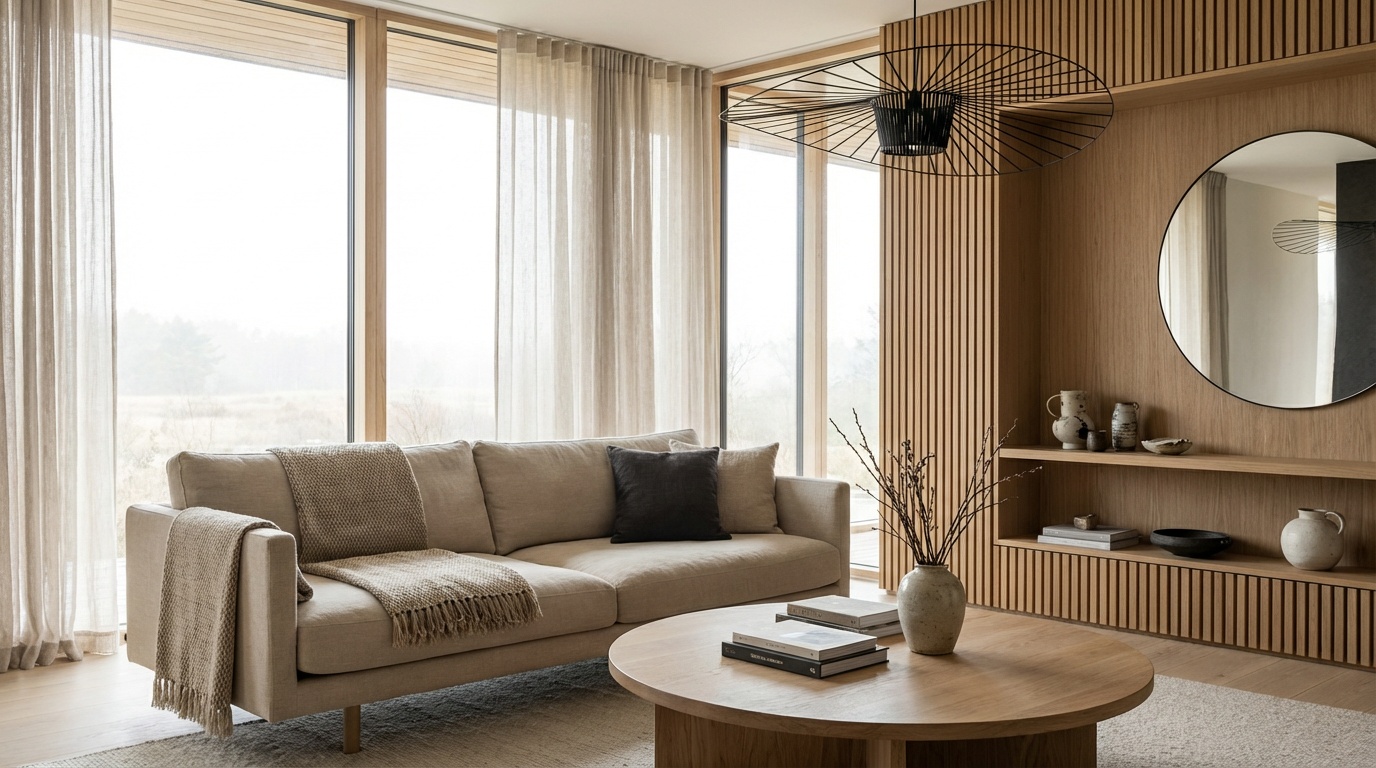
Mistake #1: Going too cold and sterile. Many people interpret Japandi's minimalism as removing all personality, creating spaces that feel more like waiting rooms than homes. The fix: Layer in textiles generously—chunky knit throws, linen pillows in varying textures, a handwoven rug. Add living plants, display a few meaningful objects, and ensure your lighting creates warmth. Japandi should feel lived-in and welcoming, not like a museum.
Mistake #2: Mixing too many wood tones. While Japandi celebrates natural wood, combining five different wood species creates visual chaos. The fix: Choose 2-3 complementary wood tones maximum. For example, pair light oak furniture with walnut accents and bamboo accessories. Ensure these tones share similar undertones (all warm or all cool) for cohesion.
Mistake #3: Neglecting the handmade element. Filling your space entirely with mass-produced items misses the craftsmanship central to Japanese design philosophy. The fix: Include at least 3-5 handmade or artisan pieces—a ceramic vase from a local potter, a handwoven basket, linen curtains from a small maker, or vintage finds with history and character. These imperfect, unique pieces bring soul to the space.
Mistake #4: Adding too much contrast. Some designers overdo the black-and-white contrast, creating spaces that feel more Scandinavian-modern than Japandi. The fix: Embrace the subtle gradations between shades. Instead of stark white walls with jet black accents, use warm ivory walls with charcoal gray and rich walnut tones. Japandi thrives on nuance, not drama.
Mistake #5: Forgetting functionality. Getting so focused on aesthetics that you sacrifice comfort and usability contradicts both design traditions. The fix: Ensure your sofa is actually comfortable, your coffee table is the right height for use, and you have adequate storage for real-life clutter. Beautiful objects should also be functional—that's the entire point.
Signs your space is missing the mark include feeling cold when you enter, struggling to find places for everyday items, having no comfortable seating, or the room looking beautiful but unused. Japandi spaces should invite you to sit, relax, and stay awhile.
The balance between over-styling and under-styling requires calibration. Under-styled Japandi feels empty and incomplete—just a beige couch in a white room. Over-styled Japandi becomes cluttered, with too many objects competing for attention. Aim for intentional curation: each piece should have purpose and breathing room around it.
Common Mistakes to Avoid
Styling for Different Budgets & Spaces
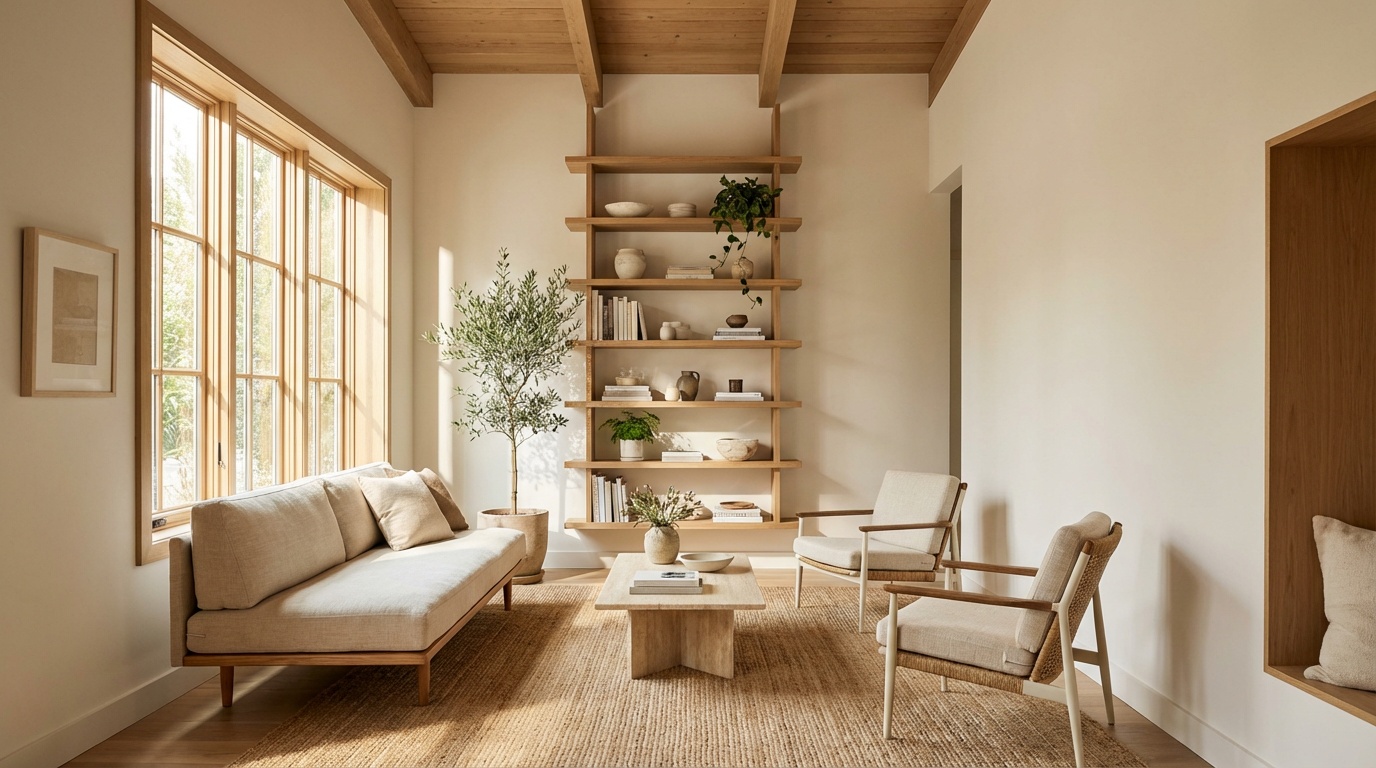
Japandi design adapts beautifully to various spatial and financial constraints. For small living rooms, the style's minimalist foundation actually works to your advantage. Focus on multi-functional furniture like a storage ottoman that serves as both seating and a coffee table, or a low-profile sofa that doesn't visually overwhelm. Use vertical space with floating shelves for storage and display, keeping the floor as clear as possible to maintain visual spaciousness.
In compact spaces, choose furniture with exposed legs rather than skirted pieces—this allows light to flow underneath, creating an airier feel. A round coffee table often works better than rectangular in tight quarters. Mount your TV rather than using a bulky console, or incorporate it into a minimal credenza that serves multiple purposes.
Rental-friendly approaches let you embrace Japandi without permanent changes. Focus on furniture and decor rather than built-ins or paint (though many landlords allow neutral paint colors—warm white walls transform a space dramatically). Use removable wallpaper in subtle textures if you want wall interest. Invest in quality furniture you'll take with you, and use area rugs to define your space and add warmth without installation.
For budget tiers, here's what's achievable:
Under $500 transformation:
- New throw pillows in linen and neutral tones ($80-120)
- Jute or wool area rug ($150-250)
- Bamboo or rattan pendant light ($60-100)
- Secondhand wooden coffee table, refinished ($50-150)
- Plants and simple ceramic planters ($40-80)
- DIY artwork and floating shelves ($20-50)
This budget focuses on textiles, lighting, and accessories that shift the aesthetic without replacing major furniture.
$500-$2,000 transformation:
- Quality linen sofa cover or slipcover ($300-500)
- Solid wood coffee table ($400-700)
- Accent chair, vintage or new ($300-600)
- Multiple lighting updates ($150-300)
- Textiles, plants, and decor ($200-400)
- Area rug upgrade ($150-500)
This tier allows one or two furniture upgrades plus comprehensive accessory changes.
$2,000+ transformation:
- New Japandi-style sofa ($1,500-3,000)
- Solid wood coffee table ($600-1,200)
- Accent chair or two ($800-1,600)
- Credenza or storage piece ($600-1,200)
- Comprehensive lighting plan ($300-600)
- High-quality textiles and rug ($400-800)
- Curated decor and plants ($200-400)
This budget enables a complete furniture overhaul with investment pieces.
To phase your transformation over time, start with paint and lighting—these create the biggest impact for the investment. Next, address your largest furniture piece (usually the sofa), either replacing it or updating it with a quality slipcover. Then add your coffee table and seating. Finally, layer in textiles, artwork, plants, and accessories. This approach spreads costs over 6-12 months while building a cohesive space.
Styling for Different Budgets & Spaces
Bringing Your Vision to Life
The gap between inspiration and reality often feels overwhelming. You've pinned countless Japandi living rooms, but how do you know if those ideas will actually work in your specific space with your existing furniture and layout?
This is where visualization becomes invaluable before making any purchases. Rather than buying a $2,000 sofa only to discover it doesn't create the look you imagined, or painting your walls only to realize the color feels wrong, seeing your actual room transformed digitally removes the guesswork and expensive mistakes.
RoomStudioAI solves this exact problem by letting you upload a photo of your current living room and instantly see it reimagined in Japandi style. The AI understands the principles we've discussed—the neutral palettes, natural materials, clean lines, and balanced minimalism—and applies them to your specific space. You can experiment with different interpretations, try various furniture arrangements, and explore color variations without spending a dollar or moving a single piece of furniture.
The process is remarkably simple: snap a photo of your living room from your phone, upload it to RoomStudioAI, select Japandi style, and within seconds you'll see professional-quality renderings of your space transformed. This lets you make confident decisions about which pieces to keep, what to replace, and how to arrange everything for maximum impact.
Beyond just Japandi, you can compare how your space would look in different aesthetics—maybe you're torn between Japandi and Scandinavian minimalist approaches, or you want to see the difference before committing. This experimentation phase, which traditionally required hiring an interior designer for hundreds or thousands of dollars, is now accessible to everyone.
Try RoomStudioAI's free tool today and see your Japandi living room vision come to life before you invest in a single piece of furniture. There's something magical about seeing your actual space—with your windows, dimensions, and natural light—transformed into the serene, sophisticated sanctuary you've been dreaming about.
Remember, creating a beautiful Japandi living room isn't about perfection—it's about intentionality, quality, and creating a space that truly serves your life. Start with visualization, invest in pieces you love, embrace imperfection, and trust the process. Your peaceful, perfectly balanced living room is closer than you think.