What Defines Maximalist Style
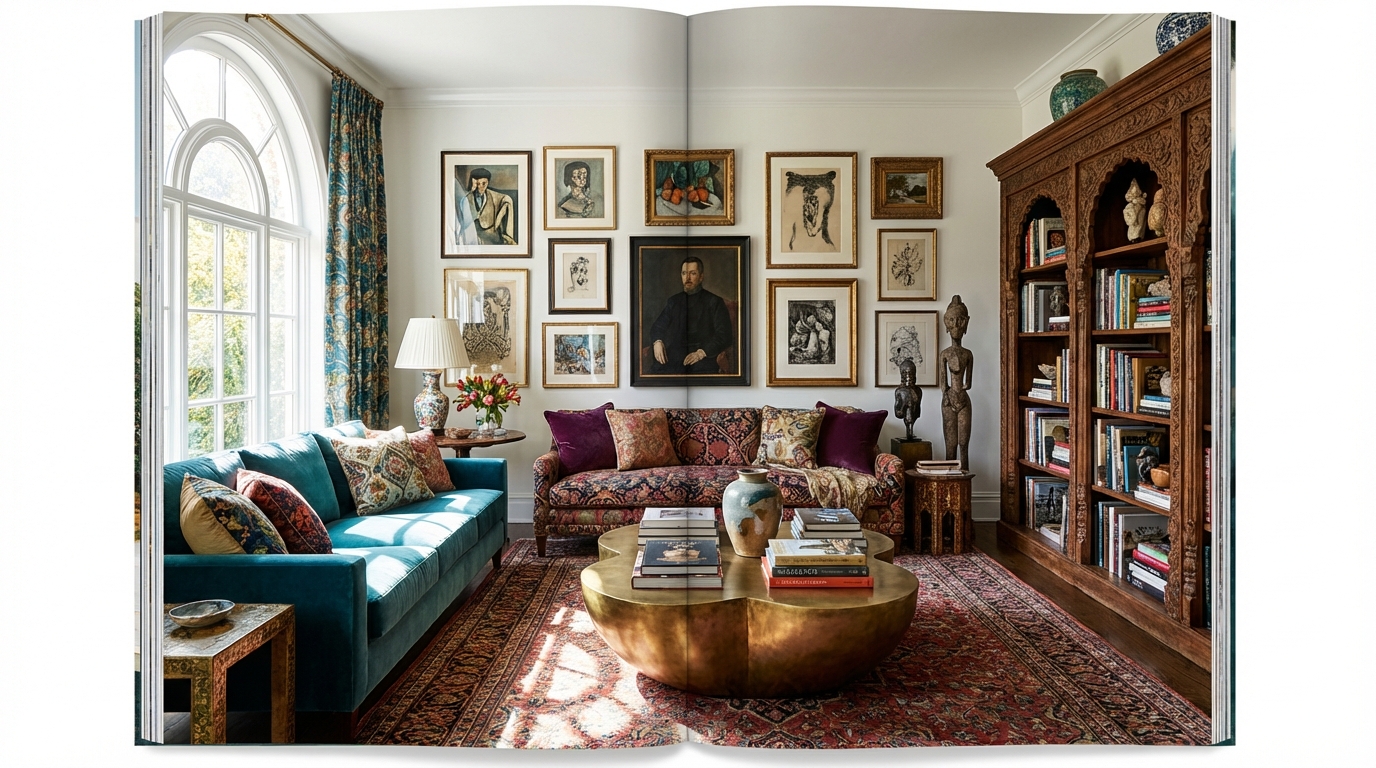
Maximalist design is the art of abundance executed with intention. At its core, maximalism celebrates personality, storytelling, and the rejection of minimalist restraint in favor of visual richness and emotional resonance. Unlike cluttered or disorganized spaces, true maximalist design follows a deliberate philosophy: every element should spark joy, tell a story, or contribute to the overall aesthetic harmony.
Historically, maximalism has roots in the opulent interiors of the Victorian era, the bold patterns of the 1970s, and the eclectic collecting habits of world travelers and artists. The term gained prominence in the late 20th century as a counter-movement to the rising popularity of minimalism. While minimalism asks us to pare down and simplify, maximalism invites us to embrace our collections, celebrate color, and layer textures without apology.
Today's maximalist movement resonates with modern homeowners for several compelling reasons. In an era of mass-produced furniture and cookie-cutter interiors, maximalist living rooms offer a refreshing opportunity for self-expression and individuality. Social media platforms like Instagram and Pinterest have also fueled the trend, showcasing how curated chaos can be both beautiful and livable. Additionally, maximalism aligns with growing interest in sustainability and vintage shopping—encouraging people to cherish what they already own rather than constantly seeking the next minimal, neutral piece.
What distinguishes maximalism from simply having "a lot of stuff" is intentionality and cohesion. While a cluttered room feels overwhelming and random, a maximalist space features carefully considered color relationships, repeated motifs, and balanced visual weight. Key characteristics include:
- Layered patterns: Multiple prints and textures coexist harmoniously through shared color palettes or complementary scales
- Bold color saturation: Rich, deep hues or vibrant brights rather than safe neutrals
- Collections on display: Books, art, ceramics, and treasured objects become part of the decor
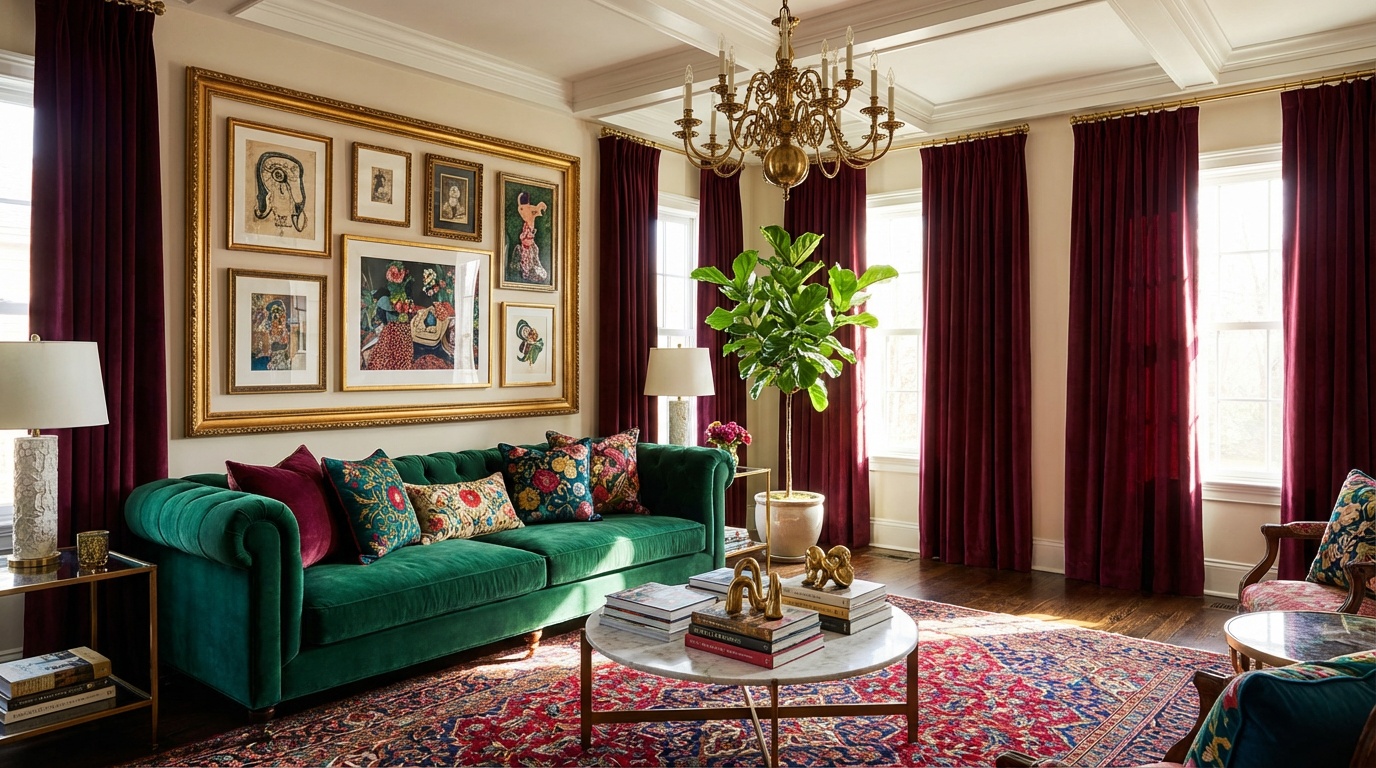
- Texture abundance: Velvet, silk, brass, wood, and stone all appear in a single room
- Gallery wall mentality: Walls are canvases for art, mirrors, plates, and other decorative elements
- No fear of mixing styles: Vintage finds sit comfortably alongside contemporary pieces
What Defines Maximalist Style
Essential Elements for Your Maximalist Living Room
Creating an authentic maximalist living room requires specific furniture pieces that serve as the foundation for your layered design. Unlike minimalist spaces where each piece stands alone, maximalist furniture works together to create visual abundance.
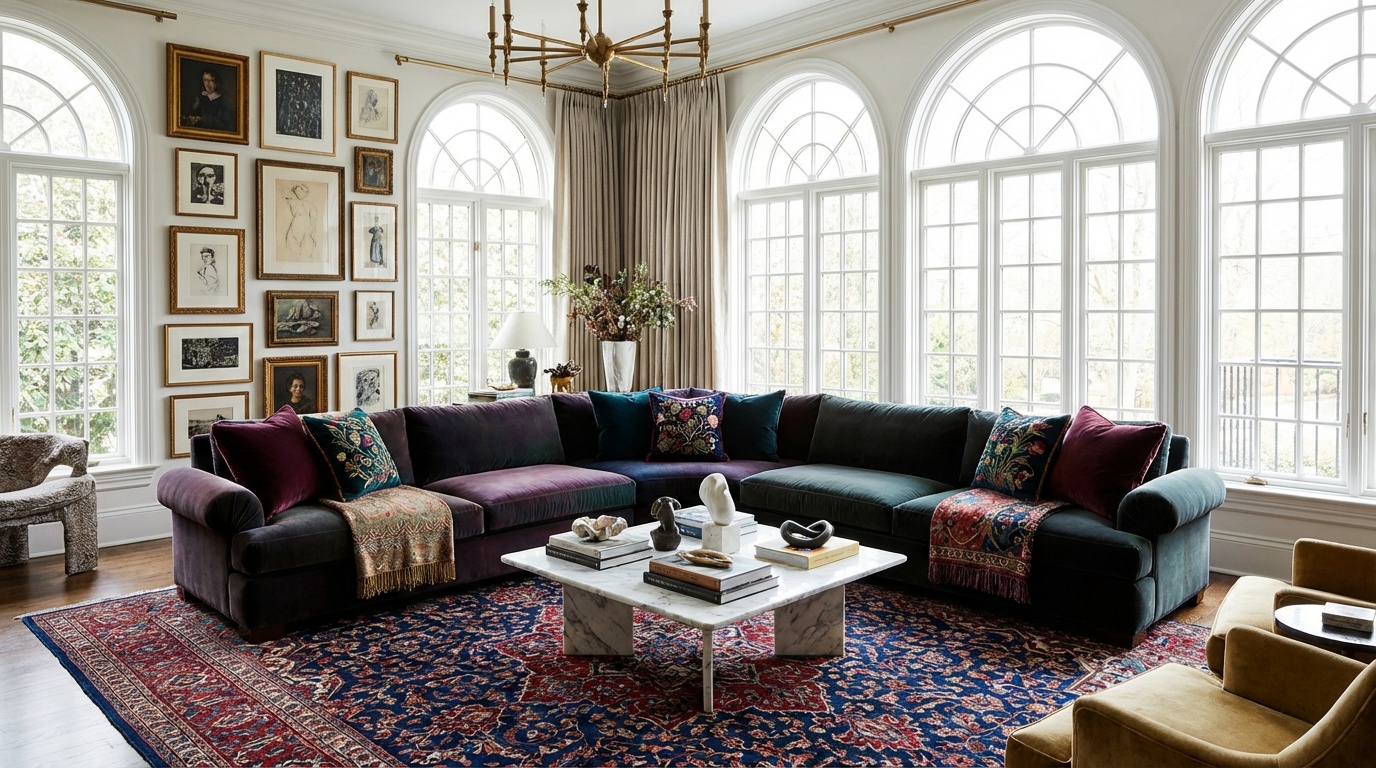
Statement seating forms the anchor of any maximalist living room. Look for a velvet sofa in a jewel tone like emerald green, sapphire blue, or ruby red. Alternatively, consider a bold patterned upholstery featuring florals, geometrics, or chinoiserie designs. The sofa should feel substantial and inviting, with details like tufting, nailhead trim, or carved wooden legs. Pair this with an assortment of accent chairs—perhaps a pair of vintage bergère chairs in contrasting fabric, or a single sculptural piece like a peacock chair or wingback in an unexpected print.
Coffee tables and side tables in maximalist spaces often feature ornate details. Opt for pieces with:
- Brass or gold-finished metal bases with glass or marble tops
- Carved wooden pieces with intricate details
- Lacquered finishes in bold colors like Chinese red or glossy black
- Mixed materials like wood and metal or stone and brass
The living room benefits particularly well from maximalist treatment because it's typically the largest gathering space in a home, offering ample square footage to accommodate layers without feeling cramped. The multiple seating zones, wall space for art, and various surfaces for display make it ideal for the abundant aesthetic.
Signature shapes and silhouettes in maximalist design tend toward the dramatic and curvaceous rather than sleek and angular. Look for:
- Rounded, tufted ottomans rather than sharp-edged benches
- Arched mirrors and doorways
- Scalloped edges on furniture and textiles
- Ornate picture frames with elaborate molding
- Sculptural table lamps with organic or figurative forms
Key materials that work beautifully in maximalist living rooms include:
- Woods: Rich mahogany, warm walnut, exotic rattan, and bamboo
- Metals: Antique brass, oil-rubbed bronze, polished gold, and hammered copper
- Fabrics: Silk velvet, brocade, embroidered linen, printed cotton, and fringed trim
- Stone: Marble (especially veined varieties), malachite, agate, and terrazzo
Don't shy away from mixing these materials liberally—a brass side table next to a velvet sofa with a marble tray and wooden decorative objects creates exactly the kind of textural richness maximalism celebrates.
Essential Elements for Your Maximalist Living Room
Color Palettes & Combinations
Color is where maximalist design truly comes alive. Unlike neutral-dominated styles, maximalism embraces saturated, complex color combinations that create visual excitement and emotional impact.
Primary color palettes for maximalist living rooms typically fall into one of these approaches:
- Jewel Box Palette: Deep emerald green, rich sapphire blue, amethyst purple, and ruby red, grounded with charcoal gray or black accents
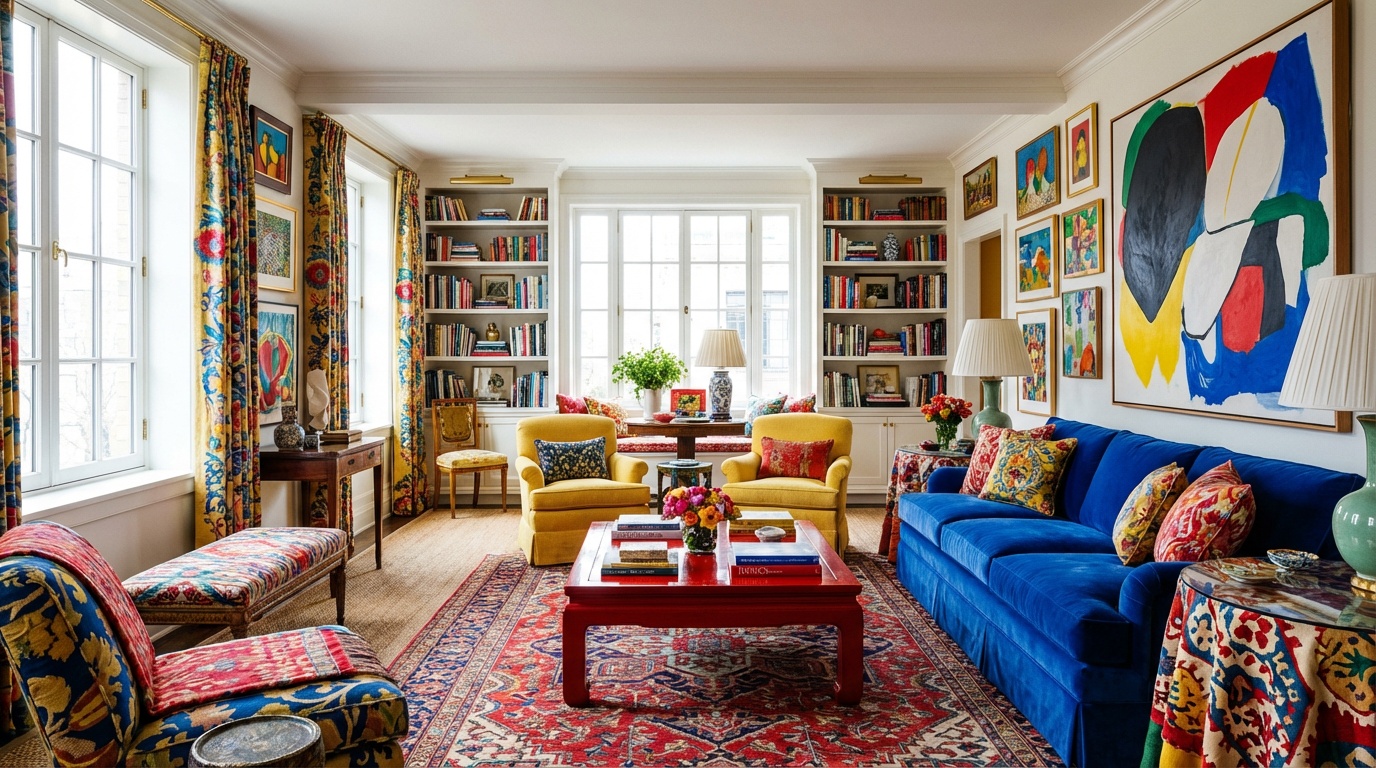
- Warm Bohemian: Burnt terracotta, mustard yellow, deep coral, and warm honey oak, balanced with cream and natural wood tones
- Eclectic Garden: Dusty sage, blush pink, golden yellow, and peacock blue, unified by white or ivory backgrounds
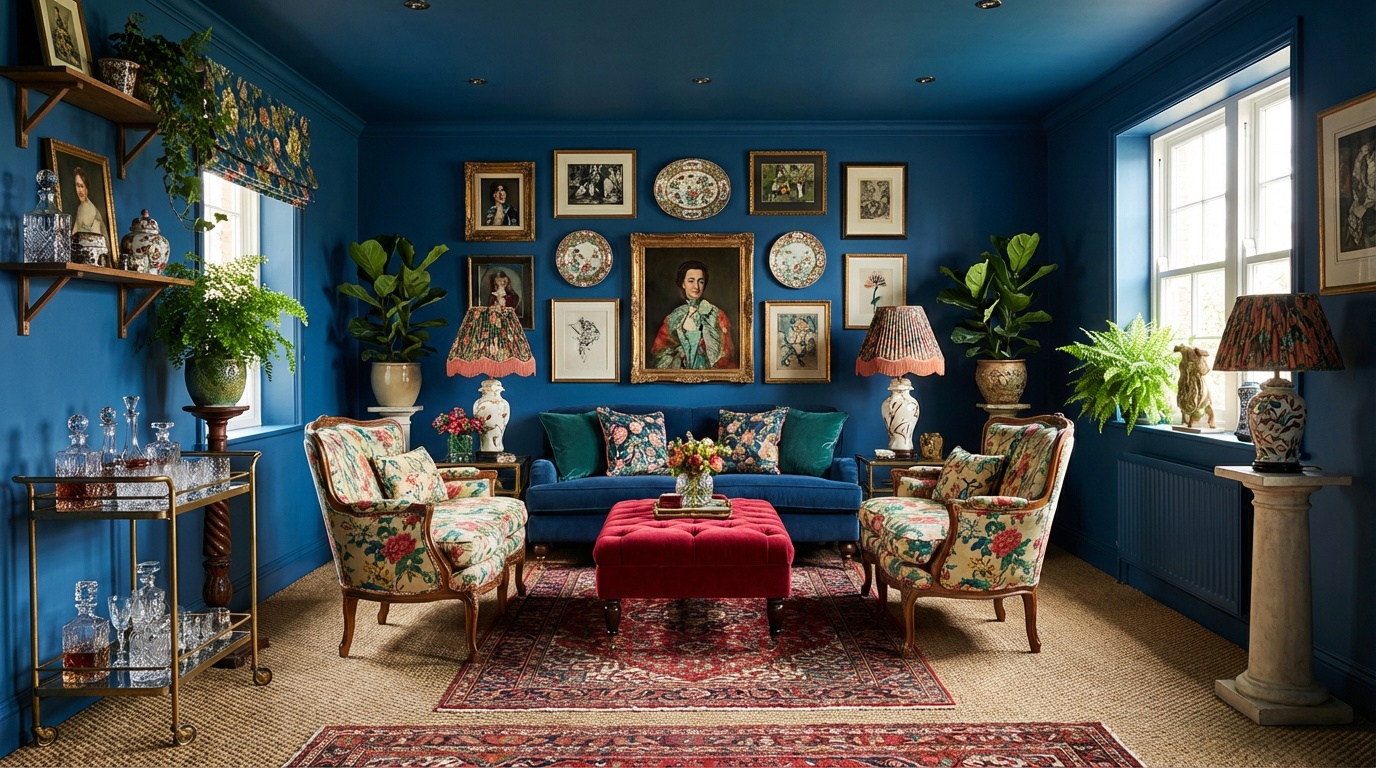
- Moody Maximalism: Navy blue, forest green, burgundy, and cognac brown, punctuated with brass and gold metallics
The key to successful maximalist color schemes is finding a unifying thread—whether that's a metal finish that appears throughout, a neutral that grounds bolder choices, or a specific color that repeats in varying shades.
Accent colors should complement rather than clash with your primary palette. If you're working with jewel tones, add pops of gold, brass, or copper metallics. For warmer palettes, introduce touches of deep teal or navy for contrast. Don't be afraid of pattern-on-pattern combinations, but ensure they share at least one or two colors to maintain cohesion.
Balancing neutrals with bold colors in a maximalist living room doesn't mean equal distribution. Typically, you'll want:
- Walls: Either a bold, saturated color that serves as a backdrop for art and collections, OR a rich neutral like charcoal, navy, or deep green. White or cream walls work if you plan to cover them substantially with art and textiles
- Large furniture pieces: This is where you can go bold with color—your sofa, primary chairs, or large area rug should make a statement
- Smaller decor items: Mix of both colorful and neutral pieces to create visual rhythm
The 60-30-10 rule can be adapted for maximalism: 60% dominant color/pattern, 30% secondary colors/patterns, and 10% accent metallics or unexpected pops. However, maximalism allows for more flexibility—you might push this to 50-40-10 for even more visual interest.
Seasonal variations can be incorporated through easily changeable elements like throw pillows, blankets, and smaller decorative objects. Summer might bring in more coral, yellow, and turquoise accents, while winter could emphasize deeper burgundy, forest green, and rich chocolate browns.
Color Palettes & Combinations
Lighting & Ambiance
Lighting in a maximalist living room serves dual purposes: it must illuminate your abundant collections and decorative elements while creating a warm, inviting atmosphere that prevents the space from feeling overwhelming.
Natural lighting optimization starts with window treatments that make a statement while still allowing light to filter through. Consider:
- Heavy velvet or brocade curtains in rich colors, hung high and wide to maximize light when open
- Layered window treatments with sheers underneath for privacy without sacrificing brightness
- Roman shades in bold patterns or textured fabrics
- Decorative curtain rods in brass or ornate wood with substantial finials
Unlike minimalist spaces that rely heavily on natural light and simple fixtures, maximalist rooms embrace the opportunity to use multiple lighting layers as decorative elements themselves.
Ambient lighting should include:
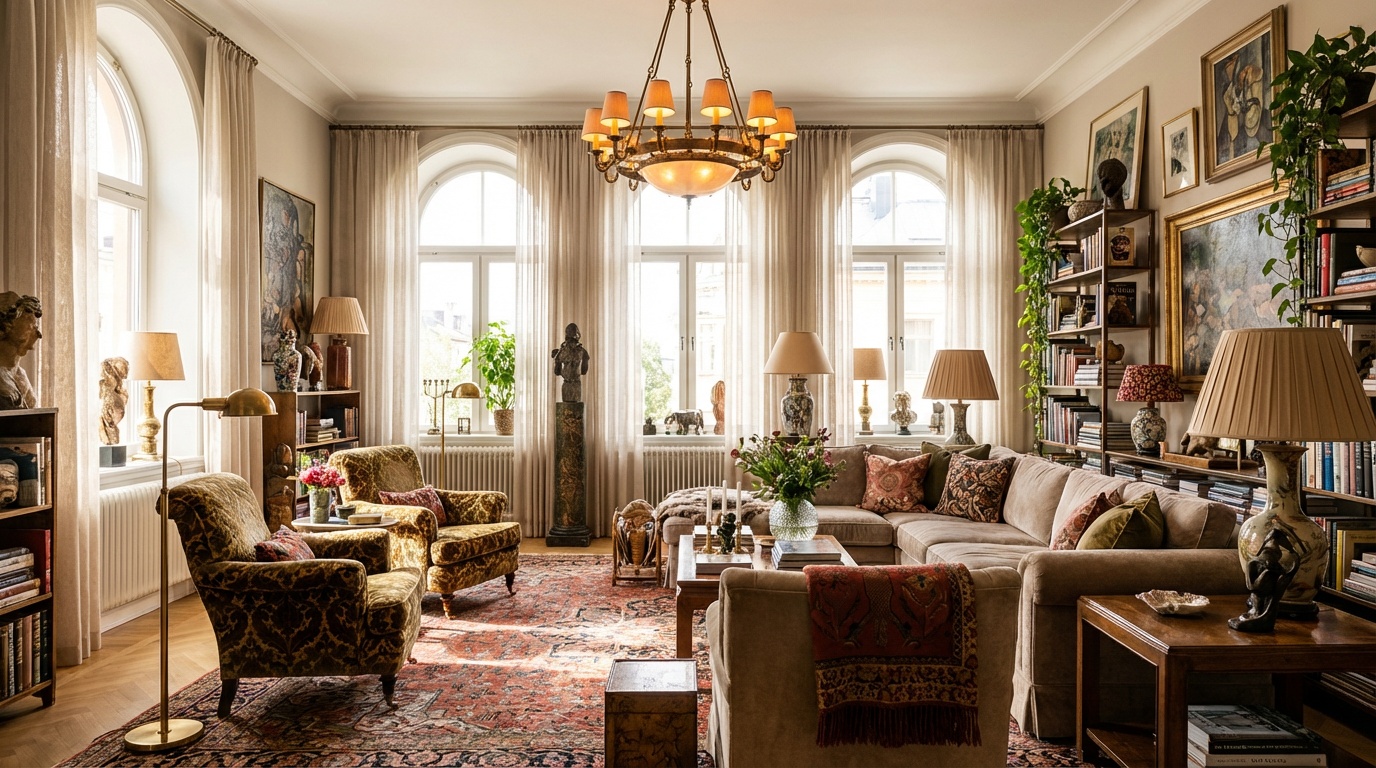
- A statement chandelier or pendant light as the room's centerpiece—think crystal, brass with multiple arms, or a dramatic oversized drum shade in patterned fabric
- Recessed lighting on dimmers to provide adjustable overall illumination
- Wall sconces that add both light and decorative interest (brass swing-arm styles or ornate baroque designs work beautifully)
Task lighting in living rooms focuses on reading areas and conversation zones:
- Substantial table lamps with decorative ceramic, brass, or sculptural bases and patterned or colored shades
- Floor lamps with adjustable arms positioned near reading chairs
- Picture lights to illuminate artwork and create focal points
Accent lighting is where maximalist design truly shines:
- LED strip lighting behind shelving to highlight collections
- Uplighting in corners to draw the eye upward and make ceilings feel higher
- Candlelight from decorative candelabras and varied candleholders
- String lights or decorative light sculptures for whimsy
The key to creating mood and atmosphere in a maximalist living room is ensuring no single light source does all the work. Instead, create multiple pools of light at different heights and intensities. This allows the eye to move around the room, discovering new details and creating the sense of depth that makes maximalist spaces feel rich rather than cluttered. Aim for warm-toned bulbs (2700-3000K) to enhance the cozy, collected feeling that maximalism celebrates.
Lighting & Ambiance
Furniture & Decor Shopping Guide
Building a maximalist living room doesn't require unlimited funds, but knowing where to invest and where to save makes the process more manageable and sustainable.
Key investment pieces worth splurging on:
The sofa: This is your largest furniture piece and primary seating. Invest in quality construction, comfortable cushions, and durable upholstery. A well-made velvet or patterned sofa will anchor your room for years. Budget: $1,500-$4,000
A statement rug: Large, high-quality rugs in bold patterns or rich colors ground the entire space. Look for wool or wool-blend options with intricate patterns. Persian, Turkish, or Moroccan styles work beautifully. Budget: $800-$3,000
One showstopper lighting fixture: Your chandelier or primary pendant light should be a conversation piece. This is where you can embrace drama and scale. Budget: $400-$1,500
Quality window treatments: Custom or semi-custom curtains in luxurious fabrics make an enormous impact. Budget: $500-$1,200 for a living room
Budget-friendly alternatives and dupes:
- Accent chairs: Vintage and secondhand shops often have unique chairs at a fraction of retail cost. Reupholster in bold fabric for a custom look. Budget: $100-$300 per chair plus $200-$400 for reupholstery
- Decorative objects: Thrift stores, estate sales, and antique malls are treasure troves for vases, frames, sculptures, and books. Budget: $5-$50 per piece
- Throw pillows: Make your own pillow covers from remnant fabrics or shop discount retailers like HomeGoods and TJ Maxx. Budget: $15-$40 per pillow
- Art: Frame vintage book pages, botanical prints, or your own photography. Mix with affordable prints from Etsy and Society6. Budget: $20-$100 per framed piece
Where to shop:
- Investment pieces: Article, Anthropologie Home, CB2, West Elm, Joybird
- Mid-range options: World Market, Target's Opalhouse line, Wayfair, Overstock
- Budget-friendly: IKEA (for basics to customize), HomeGoods, TJ Maxx, Marshalls
- Online vintage: Chairish, 1stDibs, Facebook Marketplace, Craigslist, OfferUp
- Textiles and patterns: Spoonflower (custom fabrics), Rifle Paper Co., Society6
- Lighting: Shades of Light, Rejuvenation, Schoolhouse Electric, Lamps Plus
Vintage and secondhand finds that work exceptionally well in maximalist living rooms:
- Ornate mirrors with gilded or carved frames
- Brass bar carts and serving pieces
- Ceramic table lamps and decorative vessels
- Wooden side tables and plant stands
- Framed artwork and vintage prints
- Persian and Oriental rugs
- Velvet or brocade upholstered pieces
DIY projects to achieve the look affordably:
- Create a gallery wall using thrifted frames spray-painted in coordinating colors (gold, black, white) with affordable prints and personal photos
- Reupholster a vintage chair using bold fabric from a fabric store or online retailer
- Make custom throw pillows from remnant fabrics, vintage scarves, or even framed textile art
- Paint existing furniture in bold, glossy colors like emerald, navy, or black with gold hardware
- Create DIY curtains from beautiful fabric (often cheaper than ready-made in quality materials)
- Style shelves with books arranged by color, interspersed with collected objects and plants
Furniture & Decor Shopping Guide
Common Mistakes to Avoid
Even experienced designers can struggle with maximalist spaces. Here are the top mistakes and how to correct them:
Mistake 1: Lack of cohesion or unifying element
The problem: Your living room looks chaotic rather than curated because nothing ties the disparate elements together.
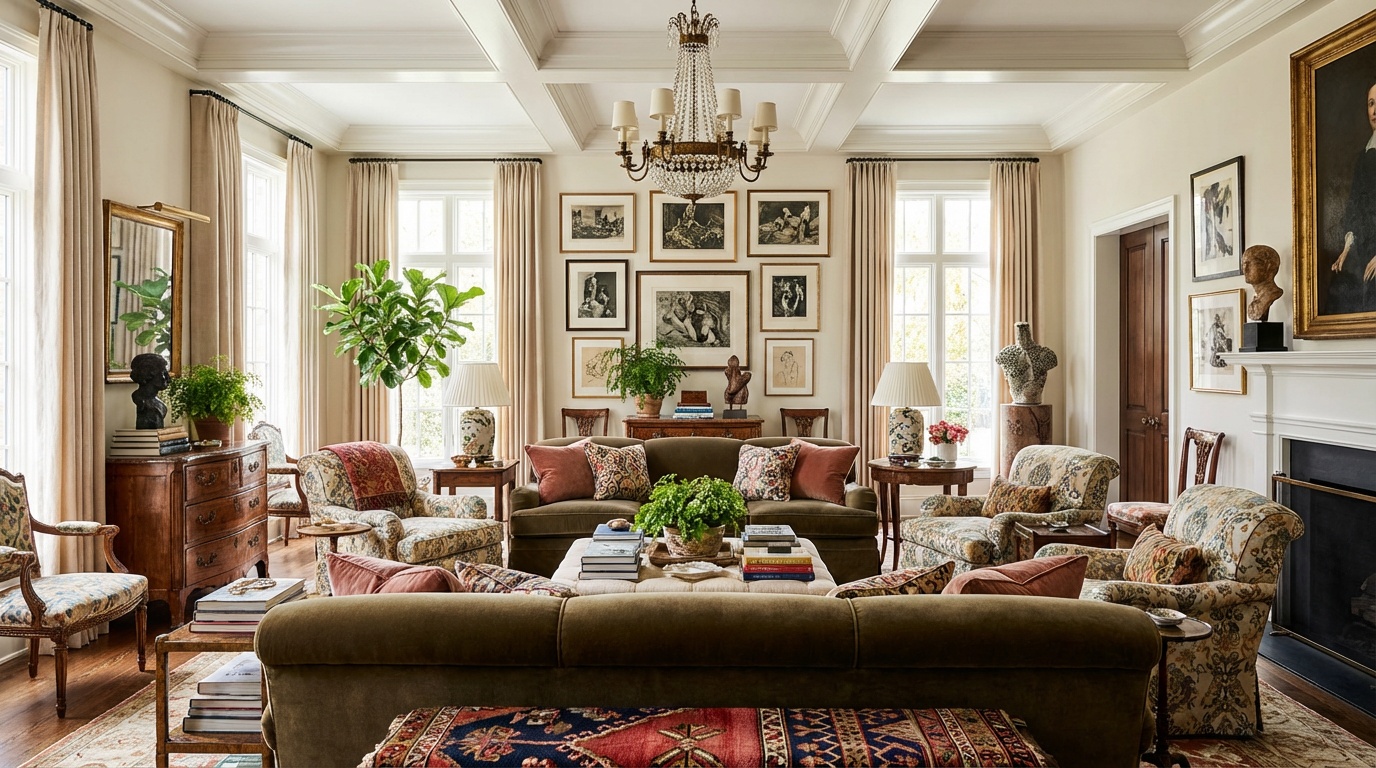
The fix: Identify a unifying thread—this could be a repeated color that appears in varying shades throughout the room, a metal finish (brass, for example) that shows up in lighting, hardware, and accessories, or a specific style era that influences most of your choices. Even the most eclectic maximalist rooms have an underlying logic.
Mistake 2: Ignoring scale and proportion
The problem: Everything is the same size, or conversely, nothing relates to anything else in scale, creating visual confusion.
The fix: Vary the scale of your decorative objects, artwork, and furniture. Pair oversized art with smaller gallery wall pieces, large floor lamps with smaller table lamps, substantial furniture with delicate accessories. This creates visual rhythm and prevents monotony. Also ensure furniture is appropriately sized for your room—an oversized sectional in a small space leaves no room for the layers that make maximalism work.
Mistake 3: Flat, one-dimensional layering
The problem: Everything sits at the same depth—art flush against walls, furniture pushed to perimeters, no sense of depth or dimension.
The fix: Pull furniture away from walls to create conversation areas. Layer textiles (rugs on rugs, throws over upholstery). Hang art at varying depths using different frame thicknesses. Place objects in front of mirrors. Use plants at different heights. This three-dimensional layering is what makes maximalist spaces feel rich and collected over time.
Mistake 4: Poor lighting creating visual heaviness
The problem: Your boldly colored, pattern-filled room feels dark, cave-like, or overwhelming because it's underlit.
The fix: Multiply your light sources. A single overhead fixture isn't enough in a maximalist space. Add table lamps, floor lamps, sconces, and accent lighting. Use mirrors strategically to bounce light around. Consider lighter or brighter wall colors if your space lacks natural light. Proper illumination makes bold choices feel intentional rather than oppressive.
Mistake 5: Forgetting negative space entirely
The problem: Every single surface is covered, every wall is filled, leaving nowhere for the eye to rest.
The fix: Maximalism doesn't mean zero empty space. Leave some breathing room—a clear section of wall, an uncluttered side table, or a solid-colored area in your rug. These moments of visual rest actually make your bold choices more impactful by providing contrast. Think of it as punctuation in a sentence; without pauses, even the most interesting story becomes exhausting.
Signs your space is missing the mark: If visitors seem overwhelmed rather than delighted, if you feel anxious rather than energized in the room, or if you can't find things because there's no organization to the abundance, you've likely crossed from maximalism into clutter. The difference is intentionality, cohesion, and maintaining some functionality and flow.
Common Mistakes to Avoid
Styling for Different Budgets & Spaces
Maximalist design is remarkably adaptable to various constraints. Here's how to approach it regardless of your space size or budget.
Small space adaptations:
Maximalism in small living rooms requires strategic choices to avoid overwhelming the space:
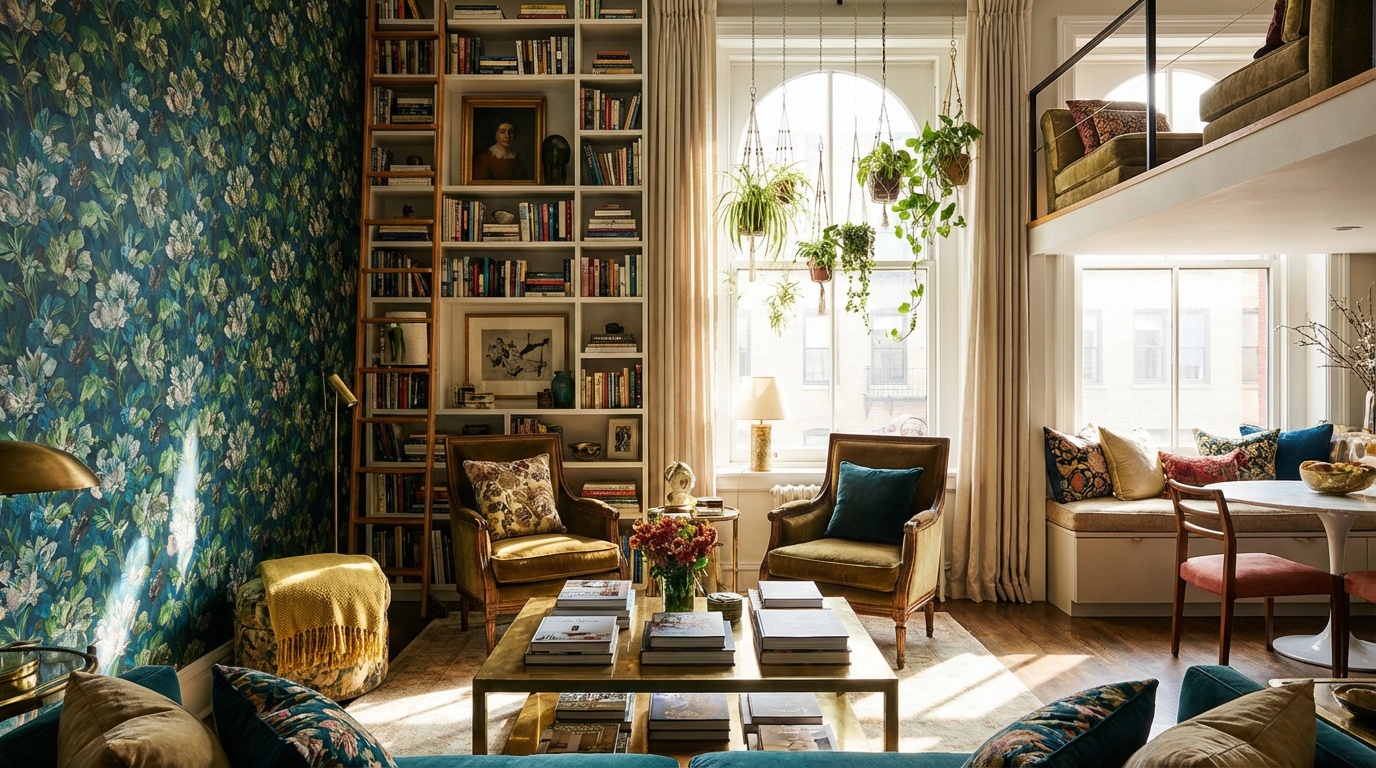
- Go vertical: Use tall bookcases, hang art high and in stacks, draw the eye upward to make ceilings feel higher
- Choose one large-scale pattern rather than many small ones (a bold wallpaper or large-pattern rug)
- Use mirrors generously to create the illusion of more space while adding to the layered aesthetic
- Select furniture with legs rather than skirted pieces to maintain visual flow and make the room feel less cramped
- Embrace wall-mounted storage and display to keep floor space more open
- Choose a cohesive color story to unify the space despite abundant patterns and textures
For more small-space design strategies, explore our modern apartment ideas article.
Rental-friendly approaches:
You can achieve maximalist style without permanent changes:
- Focus on furniture and decor rather than architectural changes
- Use removable wallpaper for bold pattern on one accent wall
- Invest in large area rugs to cover bland rental flooring
- Create gallery walls with Command strips or picture hanging systems that don't damage walls
- Layer textiles heavily—curtains, throws, pillows—for color and pattern without commitment
- Use freestanding pieces like screens, bookcases, and large plants to define space and add personality
Budget tiers for transformation:
Under $500:
- Paint existing furniture in bold colors ($50)
- Add throw pillows in various patterns and textures ($150)
- Create a gallery wall with thrifted frames and affordable prints ($100)
- Purchase a statement table lamp ($80)
- Invest in plants and decorative pots ($70)
- Add a patterned throw blanket ($50)
$500-$2,000:
- All of the above, plus:
- One quality accent chair, possibly vintage and reupholstered ($400-$600)
- A bold area rug ($300-$600)
- Window treatments with personality ($200-$400)
- Multiple lighting sources including a statement piece ($300-$400)
$2,000+:
- All of the above, plus:
- A statement sofa in velvet or bold pattern ($1,500-$3,000)
- Large-scale art or a collection of quality pieces ($500-$1,000)
- Custom or designer lighting fixture ($400-$1,000)
- High-quality textiles and window treatments ($500-$1,000)
- Unique vintage or antique pieces ($500+)
Phasing the transformation over time:
Maximalist rooms are meant to look collected over time, so a phased approach actually enhances authenticity:
Phase 1 (Months 1-2): Establish your color palette and invest in your largest piece (sofa or rug). Add paint or removable wallpaper if desired.
Phase 2 (Months 3-4): Layer in seating and lighting. Add accent chairs, floor lamps, and table lamps.
Phase 3 (Months 5-6): Build your textile layers with curtains, throws, and pillows.
Phase 4 (Months 7-12): Collect and curate decorative objects, art, books, and plants. This is the ongoing phase that never truly ends—part of maximalism's joy is the continuous evolution.
This approach also allows you to live with choices before committing to the next layer, ensuring everything works together cohesively.
Styling for Different Budgets & Spaces
Bringing Your Vision to Life
The leap from inspiration to implementation can feel daunting, especially with a bold style like maximalism. The risk of investing in colorful furniture, patterned textiles, and abundant decor without knowing how it will all come together stops many people before they start.
This is where visualization becomes invaluable. Before purchasing that emerald velvet sofa or committing to jewel-toned wallpaper, seeing your actual space transformed can provide the confidence to move forward or the insight to adjust your plan.
RoomStudioAI offers exactly this capability—the ability to see your living room reimagined in maximalist style (or any other aesthetic you're considering) before you buy a single item. Simply upload a photo of your current living room, select maximalist as your preferred style, and watch as AI technology transforms your space in seconds. You can experiment with different color palettes, furniture arrangements, and design intensities to find the perfect balance for your taste and lifestyle.
This risk-free experimentation is particularly valuable for maximalist design because:
- You can test bold color combinations without committing to paint or expensive furniture
- You'll see how patterns and textures layer in your specific space with your specific lighting
- You can gauge whether your room can handle abundant decor or needs a slightly more restrained approach
- You'll get concrete ideas for furniture placement and styling specific to your room's layout
The free tool takes the guesswork out of dramatic design changes, showing you multiple variations so you can choose the direction that excites you most. Whether you're working with a small apartment living room or a spacious family room, seeing the potential helps you make confident decisions about where to invest your budget.
Once you've visualized your ideal maximalist living room, you'll have a clear roadmap for shopping, a better sense of which pieces to prioritize, and the confidence that your bold choices will work together beautifully.
Maximalist design celebrates personality, creativity, and the joy of surrounding yourself with things you love. Your living room should tell your story through color, pattern, texture, and collected treasures. Whether you're starting from scratch or layering maximalist elements into an existing space, remember that this style rewards boldness, embraces imperfection, and evolves over time. Start with visualization, invest in key pieces, and build your layers gradually—your dream maximalist living room is closer than you think.